 how-to
7 Natural Ways to Prevent Seedling Damping Off
Last Updated: 26 October 2026
Quick Summary
Prevent damping off naturally by making conditions hostile to the pathogen: clean trays, tools and water thoroughly before sowing, use a fresh free-draining mix, and keep seedlings growing fast with steady warmth and moving air. Water from below and let the compost surface dry between drinks, because wet, cold, still conditions are what let damping off take hold.
- Wash trays and pots in warm soapy water and scrub the drainage holes before every sowing batch.
- Never reuse compost from failed trays, as the residue reintroduces the pathogen.
- Water from below and let the surface dry slightly between drinks to keep the stem base dry.
- A small fan moving air across the bench dries the compost surface and thickens stems.
- Remove the first collapsed seedling and its neighbours at once, the same day.
Table of Contents
- Why Damping Off Strikes and What It Costs You
- Start With Clean Trays, Tools and Water
- Seedling Care Best Practices That Starve the Pathogen
- Choosing a Potting Mix and Amendments That Resist Damping Off
- Improving Seedling Root Development Before Trouble Starts
- Natural Treatments: What Works and What Is a Waste of Money
- Common Mistakes That Let Damping Off Back In
- Building a Damping Off Prevention Plan for Your Nursery
- Frequently Asked Questions
Why Damping Off Strikes and What It Costs You
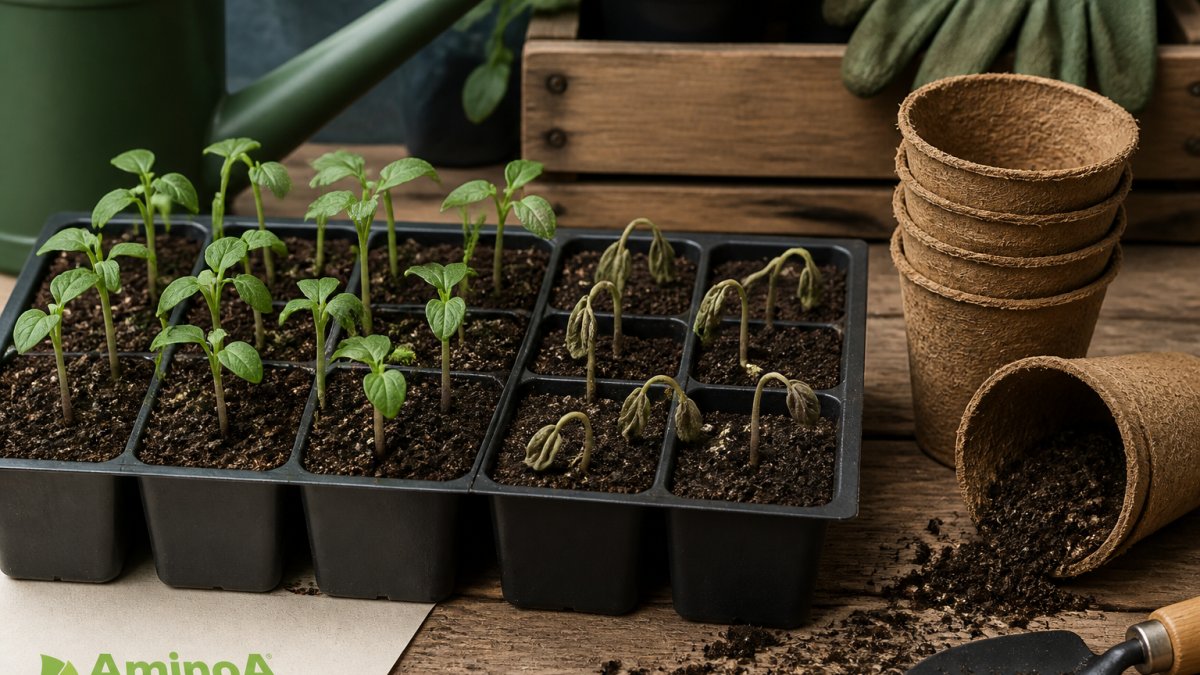
Damping off is a soil-borne disease that kills seedlings before or just after they emerge, causing stems to collapse at compost level. The pathogen is already present in most growing environments. Your job is not to sterilise everything. Your job is to make conditions hostile to it.
The cost is rarely the seed itself. It is the empty module in a tray you have already watered, heated and labelled. A gap in a batch means a gap in the planting schedule, and that gap follows you through the season.
Three conditions let damping off take hold:
- Compost that stays saturated for long periods
- Cool temperatures that slow seedling growth
- Still air around dense, crowded trays
Below, we break down seven natural ways to prevent seedling damping off, from tray hygiene through to root development. Most guides stop at "use clean compost." That is the easy part. The hard part is keeping the seedling growing fast enough to outrun the pathogen.
Start With Clean Trays, Tools and Water
Clean equipment is the cheapest control you have, and the most skipped. Damping off pathogens survive in compost residue on tray edges, in the drainage holes and on the rims of pots. A rinse is not enough.
Work through this list before every sowing batch:
- Wash trays and pots in warm soapy water, then rinse
- Scrub the drainage holes with a small brush
- Clean dibbers, labels and bench surfaces
- Empty and clean the water butt or tank
- Discard cracked trays that trap water
Water is the quiet carrier. Standing water in a butt or tank can hold pathogens and spores. Use clean mains water for seedlings where you can, and keep butts covered.
A common mistake is reusing compost from failed trays. Never do it. The residue is the inoculum.
Watch out: sharing a watering can between a tray with collapsed seedlings and a healthy batch spreads the problem in one pass. Keep a separate can for suspect trays, or water those last.
Seedling Care Best Practices That Starve the Pathogen
Seedling care best practices come down to one principle: keep plants growing fast and surfaces drying between waterings. Damping off thrives on slow growth and wet compost. Fast, steady growth is your best defence.
Watering, Temperature and Airflow
Water from below where possible, and let the surface dry slightly between drinks. Surface watering keeps the stem base wet, which is exactly where the disease attacks.
Temperature matters more than most growers allow for. Cold compost slows germination and gives the pathogen a head start. Hold a steady warmth under the tray and avoid overnight dips.
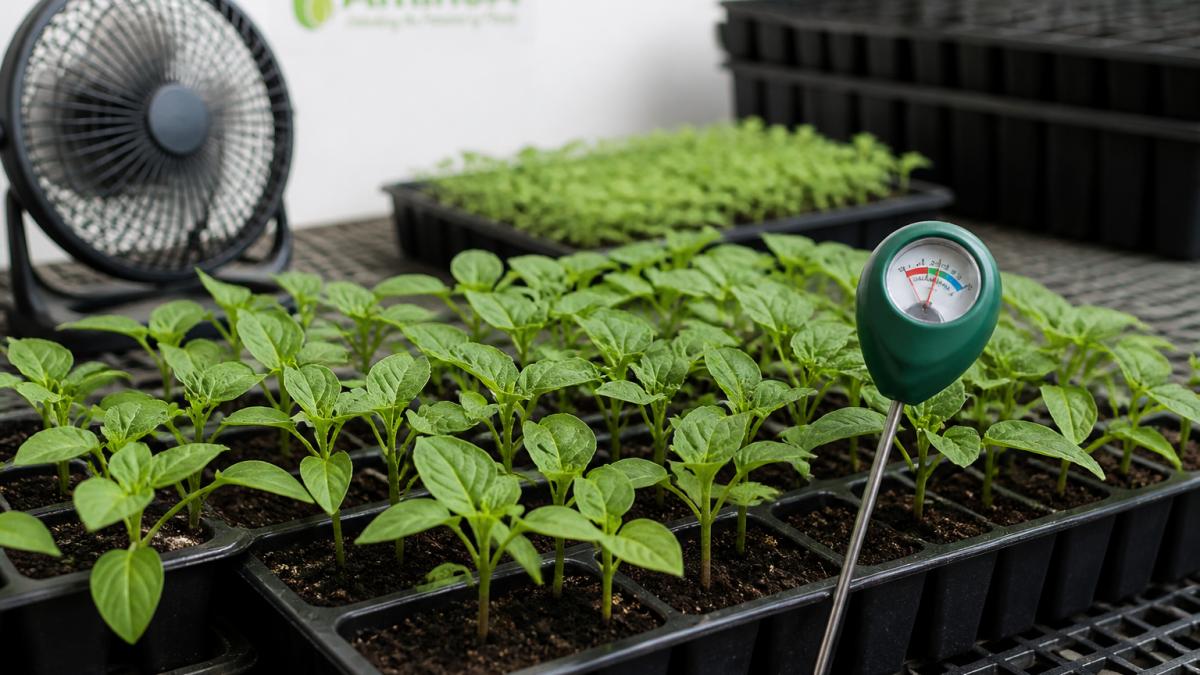
Airflow is the one people forget. A small fan moving air across the bench dries the compost surface and thickens stems. Crowded, still trays are where damping off does its worst work.
Sowing Depth and Spacing
Sow at the depth on the seed packet and no deeper. Deep sowing delays emergence and leaves seedlings in wet compost longer.
Space modules so leaves do not touch once they emerge. Thin or prick out early. Dense trays trap humidity at the stem base, and that humidity is the disease's entry point.
Choosing a Potting Mix and Amendments That Resist Damping Off
A free-draining mix is the single biggest lever you control. Look for a compost with good open structure, plenty of grit or perlite, and no heavy, claggy texture. Avoid reusing old mix.
Amendments worth considering:
- Humic acid: supports root health and soil structure. For practical guidance, see our guide on humic acid for root growth.
- Beneficial microbes: encourage the rhizosphere organisms that compete with pathogens. Our article on improving rhizosphere microbial activity covers how to build this up.
- Grit top-dressing: a thin layer on the surface keeps the stem base drier.
Avoid heavy, rich mixes for seedlings. High nutrient levels and dense texture both slow growth and hold water.
Improving Seedling Root Development Before Trouble Starts
Strong roots are the real insurance policy. A seedling with a fast-developing root system establishes quickly, takes up water efficiently and shrugs off early stress. Weak roots sit in wet compost and invite trouble.
For a full method, our step-by-step guide on managing seedling root establishment walks through the process from sowing to pricking out.
Amino Acid Biostimulants and Root Vigour
Our L-α amino acid products are produced through enzymatic hydrolysis and contain every essential amino acid in the L form, alongside nitrogen, potassium, iron and magnesium.
If you want a shortlist of options, see our roundup of the best natural biostimulants for early root development.
Natural Treatments: What Works and What Is a Waste of Money
Some natural treatments earn their place. Others are folklore with a price tag. Here is our honest read.
| Treatment | Verdict | Why |
|---|---|---|
| Clean trays and tools | Works | Removes the pathogen's starting point |
| Improved airflow | Works | Dries the stem base, thickens stems |
| Free-draining mix | Works | Cuts the wet conditions the disease needs |
| Chamomile or cinnamon surface dust | Limited | May help slightly, no substitute for hygiene |
| Weak chamomile tea drenches | Waste of money | No reliable effect on damping off |
| Reusing failed compost | Actively harmful | Reintroduces the pathogen |
If you want to move away from synthetic root promoters, our article on natural alternatives to synthetic root growth promoters sets out what is worth trying.
Fix the conditions first.
Common Mistakes That Let Damping Off Back In
- Overwatering "to be safe." Wet compost is the disease's best friend.
- Sowing too densely. Crowding traps humidity at the stem base.
- Cold benches. Slow growth gives the pathogen time to win.
- Reusing trays without scrubbing. A rinse leaves residue in the drainage holes.
- No airflow. Still air keeps the surface wet for hours.
- Ignoring the first collapsed seedling. Remove it and its neighbours at once.
The last one matters most. One collapsed seedling is a warning, not an isolated event. Act on it the same day.
Building a Damping Off Prevention Plan for Your Nursery
A prevention plan turns good habits into a routine. Write it down and pin it to the bench. The plan below covers a full sowing cycle.
- Before sowing: clean trays, tools and bench; check water source.
- At sowing: use fresh free-draining mix; sow at packet depth; space modules.
- During germination: hold steady warmth; keep airflow moving.
- After emergence: water from below; let the surface dry between drinks.
- Weekly: inspect for collapsed seedlings; remove suspect trays immediately.
- At pricking out: handle roots gently; support root development with an amino acid biostimulant.
Review the plan after each batch. Note where losses occurred and tighten that step. Over a season, the routine becomes second nature.
Damping off is a condition problem, not a seed problem. Get the airflow, watering and compost structure right, and the disease struggles to get a foothold. At AminoA, we provide 100% L-α amino acid biostimulants that support root development and stress resistance. Every essential amino acid is supplied in the L form, produced through enzymatic hydrolysis, with nitrogen, potassium, iron and magnesium built in.
Frequently Asked Questions
What is the main cause of damping off in seedlings?
Damping off is caused by soil-borne fungi and water moulds, commonly Pythium, Rhizoctonia and Phytophthora, that attack the stem at soil level. They thrive in cold, waterlogged compost with poor airflow and high sowing density. The seedling collapses because the stem tissue is destroyed before it can harden. Prevention therefore centres on drainage, warmth, air movement and clean equipment rather than on treating the plant after collapse, which is rarely successful.
Can you save seedlings once they have damping off?
Rarely. Once the stem has pinched and turned brown at compost level, that seedling will not recover. Act quickly on the rest of the tray: remove and bin affected seedlings, stop watering, increase airflow and lower humidity. If losses are already widespread, discard the tray, sterilise it and resow with fresh compost rather than trying to rescue the batch.
Does cinnamon prevent damping off in seedlings?
Use clean trays, free-draining compost and good airflow.
How do amino acid biostimulants support seedling resilience?
AminoA's L-α amino acid biostimulants support root development and stress resistance.