 how-to
How does root health impact crop stress tolerance?
Last Updated: October 25, 2026
Quick Summary
Root health crop stress tolerance determines how well plants withstand drought, heat, cold and other environmental pressures. When roots develop fully and function properly, crops access water and nutrients even under challenging conditions, producing higher yields and maintaining quality.
- Research shows modulating root growth improves plant tolerance to abiotic stress through better water uptake and nutrient absorption.
- Roots regulate leaf stomatal conductance and photosynthetic rate under stress, maintaining productivity when conditions become difficult.
- L-α amino acid biostimulants stimulate root cell division and elongation during early growth stages for more extensive root systems.
- Crops with deep root systems access water reserves during drought that shallow-rooted competitors cannot reach.
- Biostimulants work best when integrated into complete nutrition programmes providing adequate NPK and micronutrients.
Table of Contents
- How root health shapes crop stress tolerance
- How to improve crop root health for better resilience
- Root health and drought tolerance in crops
- Understanding root-to-shoot ratio in crop production
- Plant biostimulants for root growth and stress adaptation
- Stress types and root system responses
- Testing and monitoring root health on your farm
- Frequently Asked Questions
How root health shapes crop stress tolerance
Root health crop stress tolerance is the foundation of crop resilience. When roots develop fully and function properly, plants can access water and nutrients even under challenging conditions. This directly determines how well crops withstand drought, heat, cold, and other environmental pressures.
The science is clear: research on root development and stress tolerance in rice shows that modulating root growth and development improves plant tolerance to abiotic stress. Stronger root systems mean better water uptake, more nutrient absorption, and enhanced ability to survive difficult seasons.
Crops with strong root architecture simply perform better when conditions turn harsh. They produce higher yields, maintain quality, and reduce the need for emergency interventions.
Here's what matters most: root systems regulate how leaves respond to stress. Research led by MA Khan found that roots can indirectly regulate leaf stomatal conductance and photosynthetic rate under abiotic stress. This means root health isn't just about survival, it's about maintaining productivity when the environment becomes difficult.
How to improve crop root health for better resilience
Building stronger root systems requires a deliberate approach. The goal is to encourage deep, extensive root development that can access water and nutrients during stress periods.
Start with soil structure. Healthy soil allows roots to penetrate deeper and expand laterally. Compacted, poorly structured soil forces roots to stay shallow and weak. Practices that improve soil biology and reduce compaction pay dividends.
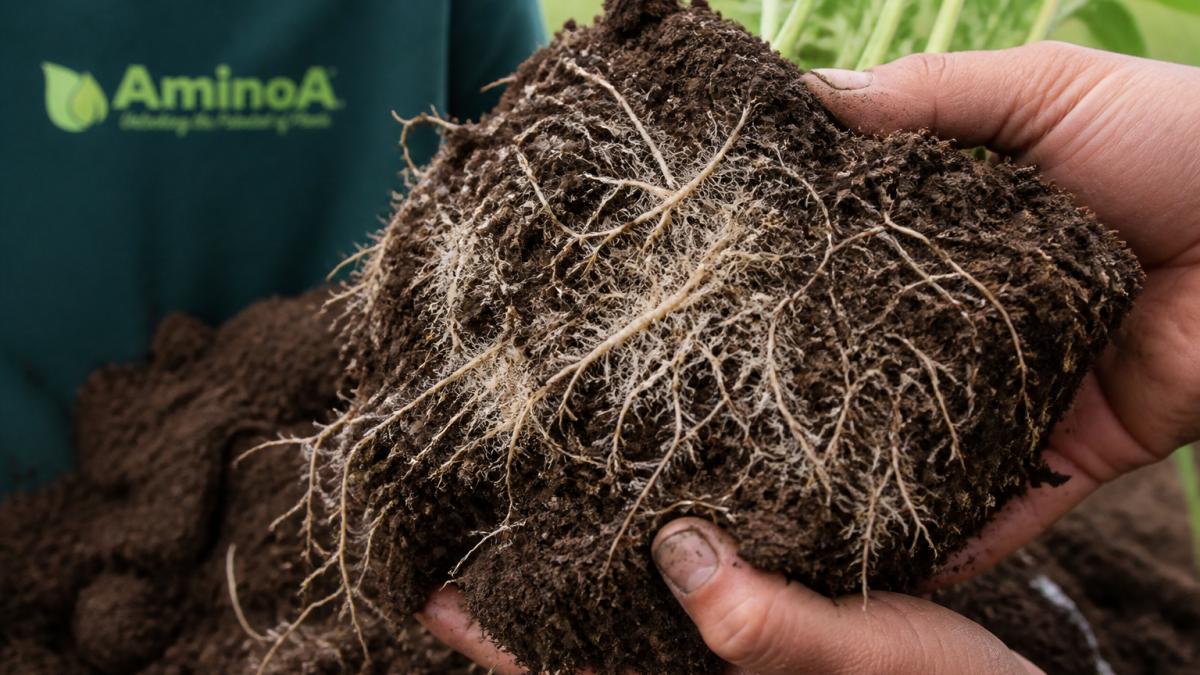
Key strategies for root development include: Improve Crop Stress Resistance Naturally provides practical approaches to naturally enhance crop stress resistance through root health optimisation.
- Reduce soil compaction through controlled traffic farming
- Increase organic matter to improve water-holding capacity
- Maintain consistent soil moisture during critical growth stages
- Apply biostimulants that trigger root elongation and branching
- Avoid excessive tillage that damages developing roots
- Ensure adequate potassium and phosphorus availability
Biostimulants play a specific role here. Products containing L-α amino acids stimulate root cell division and elongation. They signal the plant to invest energy in root architecture rather than just leaf growth. The result is more extensive root systems that can access resources competitors miss.
Research examining the potential for optimising root systems to improve crop tolerance to abiotic stress confirms this approach works. Crops with optimised root architecture show measurably better stress tolerance. AminoA's formulations contain every essential amino acid in the L form.
Timing matters. Apply root-promoting biostimulants during early growth stages when the plant is establishing its root system. This investment early in the season pays returns throughout the crop cycle.
Root health and drought tolerance in crops
Drought stress is where root health reveals its true value. When water becomes scarce, shallow-rooted crops fail quickly. Deep, extensive root systems access water reserves others cannot reach.
The mechanics are straightforward: roots must extend into deeper soil layers where moisture persists even during dry periods. This requires both root length and root density. A plant with 30 centimetres of root depth in dry soil can access water. One with only 10 centimetres cannot.
Drought also triggers specific root responses. Research led by J Kang found that drought stress can inhibit root growth while simultaneously activating regulatory mechanisms that alter root morphology. This creates a tension: the plant needs to grow roots deeper, but stress constrains that growth. The solution is supporting root development before drought arrives.
Building drought-resilient root systems means:
- Establishing deep root systems before stress occurs
- Maintaining soil moisture consistency during critical periods
- Applying amino acid biostimulants that enhance root function under stress
- Ensuring adequate potassium for drought resilience
- Monitoring soil moisture to time irrigation effectively
Crops with well-developed root systems show measurably better survival rates during dry periods. They maintain yield when shallow-rooted competitors decline. This is where the investment in root health delivers real financial returns.
For why root development affects plant stress resistance, understanding the link between root architecture and drought tolerance helps you make better agronomic decisions.
Understanding root-to-shoot ratio in crop production
The root-to-shoot ratio describes the balance between root biomass and above-ground plant material. This ratio changes based on stress conditions and plant development stage.
Under normal conditions, most crops maintain a relatively stable ratio. But under stress, plants shift resources toward roots. A plant experiencing drought stress allocates more energy to root expansion and less to leaf growth. This rebalancing is adaptive, it prioritises water access over immediate photosynthesis.
Farmers can influence this ratio through management decisions:
- Biostimulants shift the ratio toward roots by promoting root development
- Nitrogen management affects the balance; excess nitrogen favours shoots
- Water availability influences allocation; drought stress favours roots
- Potassium and phosphorus support root growth specifically
A higher root-to-shoot ratio indicates a plant better prepared for stress. It means more roots are available to extract water and nutrients, supporting the above-ground crop during difficult periods.
This matters for yield planning. Crops with stronger root-to-shoot ratios maintain productivity longer during stress. They recover faster after stress passes. The investment in root development through biostimulants reshapes this ratio in your favour.
Plant biostimulants for root growth and stress adaptation
Biostimulants are substances that enhance plant growth and stress tolerance without providing significant nutrition. They work by triggering internal plant signalling pathways that shift resource allocation and activate stress-response genes.
Amino acids function as biostimulants by signalling the plant to invest in specific structures. L-α amino acids are the active form plants recognise and utilise. They trigger root cell division, promote root hair development, and enhance nutrient uptake efficiency.
The advantage of amino acid biostimulants is specificity. They don't just add nitrogen; they signal the plant to build roots. This is fundamentally different from standard fertiliser approaches that provide nutrients but don't necessarily trigger the desired developmental response.
For integrating biostimulants into crop nutrition programmes, understanding how amino acids work helps you position them correctly within your overall nutrition strategy.
Key benefits of amino acid biostimulants include:
- Stimulated root cell division and elongation
- Enhanced root hair development for better nutrient uptake
- Improved stress tolerance across multiple stress types
- Increased blossom and fruit formation
- Better crop quality and extended shelf life
- Reduced reliance on agrochemical inputs
AminoA biostimulants contain 100% L-α amino acids produced through enzymatic hydrolysis. This process preserves the amino acids in their active L form. High content of nitrogen, potassium, iron, and magnesium supports both root development and overall plant function. This combination has delivered results across UK farms.
Watch out: biostimulants are not replacements for balanced nutrition. They work best when integrated into a complete nutrition programme that provides adequate NPK and micronutrients. Using amino acids without addressing fundamental nutrient deficiencies limits their effectiveness.
Stress types and root system responses
Different stress types trigger different root responses. Understanding these helps you anticipate what your crops need during specific challenges.
Drought stress prompts roots to grow deeper and develop more root hairs. The plant prioritises water access. Roots become more efficient at extracting moisture from dry soil.
Heat stress affects root function differently. High soil temperatures reduce root growth and can damage root cells. This is where deeper, cooler soil becomes valuable. Roots that extend into deeper layers access cooler conditions and continue functioning.
Cold stress slows root growth and reduces nutrient uptake. Roots become less efficient at low temperatures. This is why spring applications of biostimulants help, they support root function as soil temperatures rise.
Salinity stress damages roots through osmotic stress and ion toxicity. Roots must develop mechanisms to exclude salt while maintaining water uptake. This requires specific physiological adjustments.
For identifying crop stress symptoms early, recognising these root responses helps you diagnose what's actually happening in your crop.
The common thread across all stress types is this: root health crop stress management shows that well-developed root systems handle stress better. They have more resource reserves, deeper access to soil conditions, and greater physiological flexibility. This is why investing in root health before stress arrives pays consistent returns.
Different environmental stresses trigger distinct root system responses that affect crop survival and productivity.
| Stress type | Root system response | Crop impact |
|---|---|---|
| Drought | Roots grow deeper with more root hairs | Prioritises water access from dry soil |
| Heat | High soil temperatures reduce root growth | Deeper roots access cooler soil conditions |
| Cold | Root growth slows and nutrient uptake reduces | Spring biostimulants support function as soil warms |
| Salinity | Roots develop mechanisms to exclude salt | Requires physiological adjustments to maintain water uptake |
Testing and monitoring root health on your farm
Measuring root health directly gives you actionable data for decision-making. You don't have to guess whether your root development strategy is working.
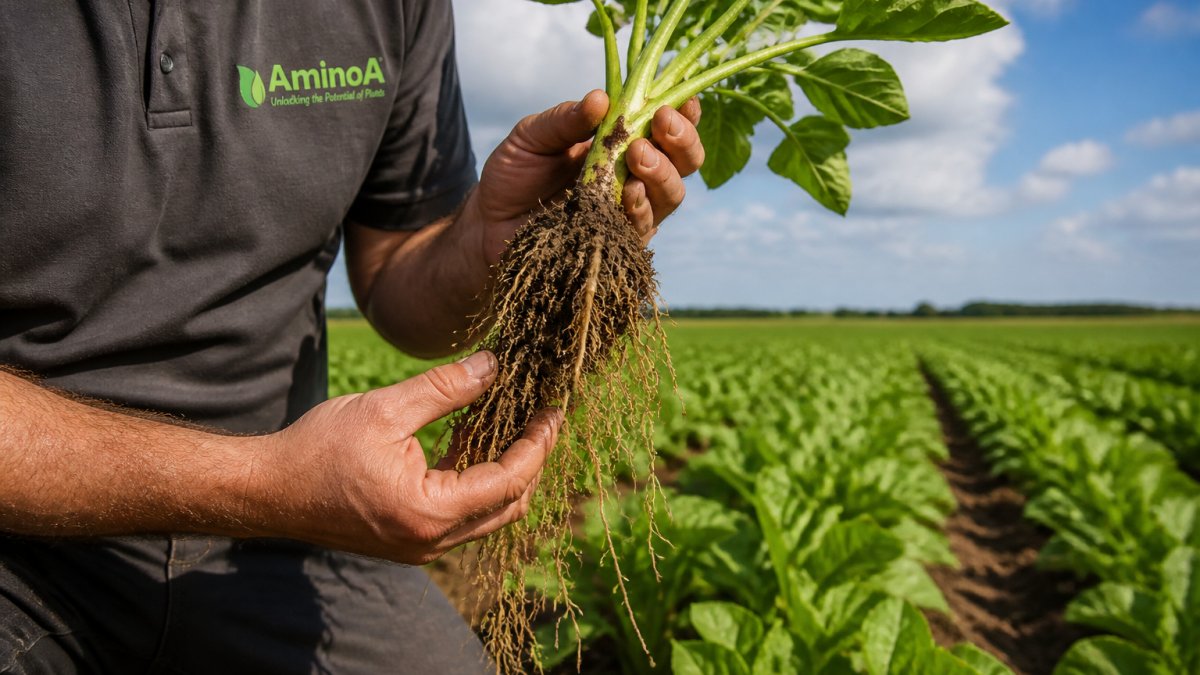
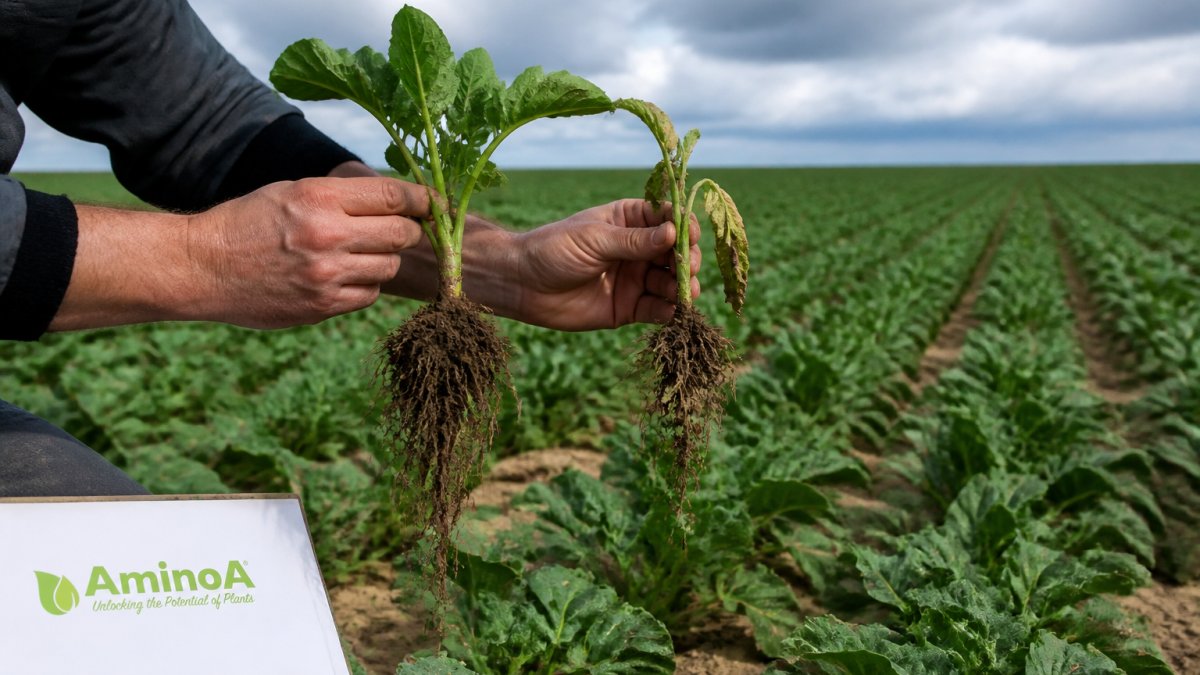
Simple field observations provide useful information. Dig soil pits during key growth stages and examine root depth, density, and colour. Healthy roots are white or light-coloured, firm, and extensive. Dark or mushy roots indicate disease or stress.
Root sampling at specific depths shows whether roots are reaching deeper soil layers. If roots stop at shallow depths, you know water access will be limited during dry periods.
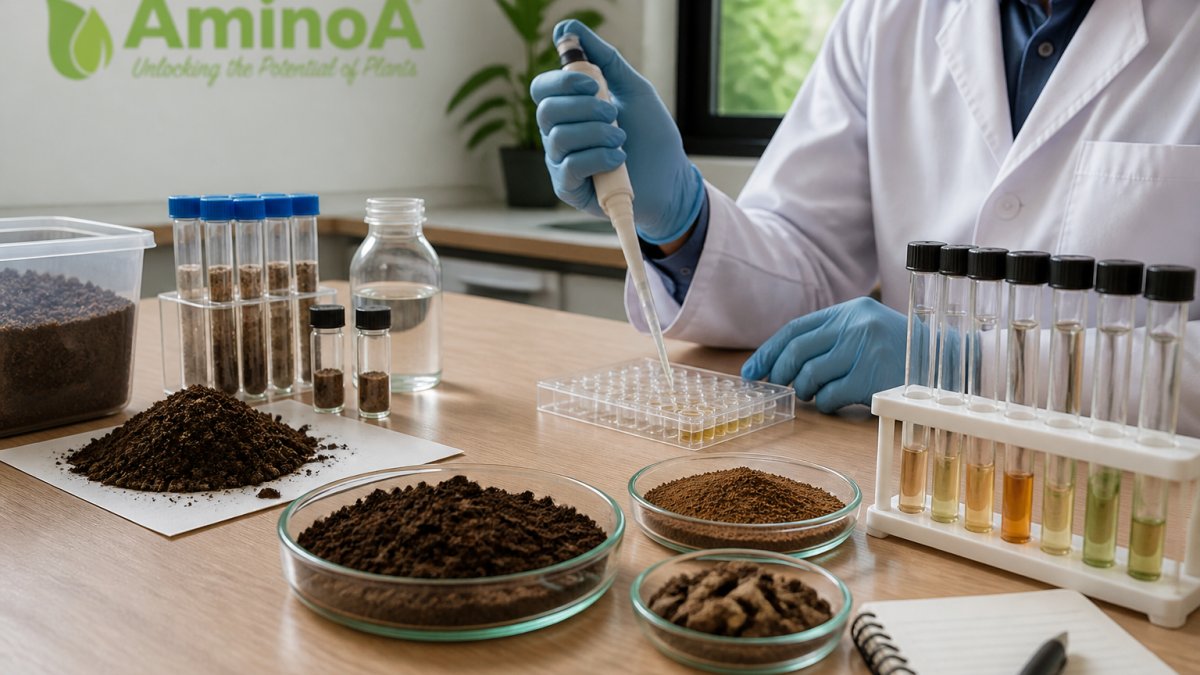
Soil microbial activity indicates biological health that supports root function. Active microbial populations improve nutrient availability and soil structure. Measuring soil microbial activity provides insight into biological conditions supporting root development. For measuring soil microbial activity for crop health, practical steps help you assess this critical factor.
Key monitoring practices include:
- Visual root assessment during growth stages
- Soil pit observations at multiple field locations
- Tissue testing to confirm nutrient status
- Soil testing for structure and biological activity
- Yield mapping to correlate with soil and root conditions
- Comparing treated and untreated field areas
Document your observations consistently. Over seasons, patterns emerge showing what practices improve root health on your specific soils and crops. This data guides future decisions about biostimulant application timing and rates.
Root health determines how well your crops handle stress. Strong root systems access water and nutrients others cannot reach, maintain productivity during difficult conditions, and deliver better yields and quality. Building this foundation requires deliberate management: soil structure improvements, biostimulant applications that trigger root development, and consistent monitoring to confirm progress. AminoA amino acid biostimulants support this strategy with proven root-development benefits backed by over a decade of UK farm experience. Start by assessing your current root health, then build a plan to deepen and extend your root systems. The investment returns throughout the crop cycle and compounds across seasons.
Frequently Asked Questions
How does root health affect crop stress tolerance?
Healthy roots regulate leaf stomatal conductance, leaf posture, and photosynthetic rate under stress, allowing crops to manage water loss and energy use more efficiently. Research shows that root development and morphology changes directly influence how well plants tolerate drought, heat, and salinity. Strong root systems also improve nutrient and water uptake, giving crops the resources to withstand environmental pressure.
How can I improve crop root health to reduce stress damage?
Optimise root-system architecture through soil management, drainage improvement, and targeted biostimulants. Root health depends on soil structure, microbial activity, and nutrient availability. Plant biostimulants containing amino acids stimulate root development and morphological changes that enhance stress adaptation. Combine these approaches with monitoring of root-to-shoot ratio to track whether your interventions are building resilience.
What is the relationship between root-to-shoot ratio and crop stress tolerance?
Root-to-shoot ratio reflects the balance between underground and above-ground biomass. A higher ratio indicates stronger root investment relative to leaf area, which supports better water and nutrient acquisition during stress. Crops with well-developed root systems relative to shoot size typically tolerate drought and heat more effectively because roots can supply sufficient water and nutrients even when conditions are adverse.
Can plant biostimulants really improve root growth and stress tolerance?
Yes. Research demonstrates that root-associated microorganisms and amino acid biostimulants positively influence root traits and stress responses. Amino acid biostimulants stimulate root development, increase stress tolerance to cold, heat, and drought, and improve overall crop yield and quality. Trial data from winter wheat shows that biostimulant-enhanced programmemes maintain yields even at reduced agrochemical rates.