 how-to
Integrating Biostimulants Into Crop Nutrition Programs
Table of Contents
- Why Add Biostimulants to a Conventional Crop Nutrition Programme
- Biostimulants for Nutrient Uptake: How They Work Alongside NPK
- Fertiliser Compatibility With Biostimulants: Tank Mix and Timing Checks
- Biostimulant Application Timing: Matching Growth Stages to Products
- Liquid Biostimulants vs Granular Fertilisers: Where Each Fits
- Step-by-Step: Integrating Biostimulants Into Your Existing Programme
- Common Mistakes When Adding Biostimulants to Conventional Programmes
- How to Measure the Results of a Biostimulant Programme
- Frequently Asked Questions
Last Updated: 13 October 2026
Why Add Biostimulants to a Conventional Crop Nutrition Programme
Integrating crop biostimulants into conventional crop nutrition programmes is one of the fastest ways to improve how your existing NPK inputs perform. At AminoA, we have spent ten years working with growers who want more from every hectare without abandoning the fertiliser regime they already trust. The logic is simple: NPK feeds the crop, but it does not always help the plant take that nutrition up or protect it when conditions turn. Biostimulants fill that gap. They work alongside your standard programme, not instead of it. Many growers find that adding a biostimulant improves root development, stress resistance and overall yield quality on the same base nutrition. Below, we break down how to integrate biostimulants step by step, what to check before you tank mix, and how to measure whether the investment paid off.
Biostimulants for Nutrient Uptake: How They Work Alongside NPK
Biostimulants for nutrient uptake are products that improve how efficiently a plant absorbs and moves nutrients, rather than supplying those nutrients directly. Amino acid-based biostimulants are a good example. They act as chelating agents, binding to nutrients and carrying them into the plant more effectively.
The role of L-alpha amino acids in chelating and transporting nutrients
L-alpha amino acids are the biologically active form of amino acids that plants can use directly. When applied as a foliar or root treatment, they chelate metal ions like iron, magnesium and potassium, keeping them available for uptake. This means less of your applied nutrition locks up in the soil and more reaches the crop. Every essential amino acid in the L form, which is what we produce at AminoA through enzymatic hydrolysis, gives the plant a ready-to-use transport system.
A common mistake is assuming any amino acid product works the same way. It does not. Products built on D-isomers or synthetic blends behave differently in the plant.
Fertiliser Compatibility With Biostimulants: Tank Mix and Timing Checks
Fertiliser compatibility with biostimulants comes down to two things: what you are mixing and when you apply it. Not every product plays well in the same tank, and getting it wrong can cost you a whole spray pass.
Before you mix anything:
- Check the label for pH range and mixing restrictions
- Test a small jar mix first to spot separation or precipitation
- Avoid mixing with high-copper or strongly alkaline products without guidance
- Apply biostimulants separately if you are unsure
Biostimulant Application Timing: Matching Growth Stages to Products
Crop biostimulants application timing matters more than most growers expect. The same product applied at the wrong stage does far less. Match your application to the growth stage where the crop needs the most support.
Key windows to target:
- Early establishment: supports root development
- Pre-flowering: stimulates blossom and fruit formation
- Stress periods: cold, heat or drought support
- After agrochemical stress: aids recovery
For winter cereals, an early application helps roots get established before cold sets in. For high-value horticultural crops, timing around flowering often gives the biggest return. The right product at the right stage beats a bigger dose at the wrong one.
Liquid Biostimulants vs Granular Fertilisers: Where Each Fits
Liquid biostimulants vs granular fertilisers is not a competition. They do different jobs and belong in the same programme. Granular fertilisers deliver bulk nutrition to the soil over time. Liquid biostimulants deliver targeted support that the plant can take up quickly through leaves or roots.
| Input Type | Primary Job | Best Applied | Speed of Effect |
|---|---|---|---|
| Granular fertiliser | Bulk NPK supply | Pre-drilling, base dressing | Slow release |
| Liquid biostimulant | Nutrient uptake and stress support | Foliar or fertigation at key stages | Fast |
| Liquid NPK | Quick nutrient top-up | During active growth | Fast |
Use granular to build your base. Use liquid biostimulants to fine-tune performance at the stages that decide yield.
Step-by-Step: Integrating Biostimulants Into Your Existing Programme
Integrating biostimulants into conventional crop nutrition programmes works best as a staged process, not an overnight switch. Here is how we would approach it on a working farm.
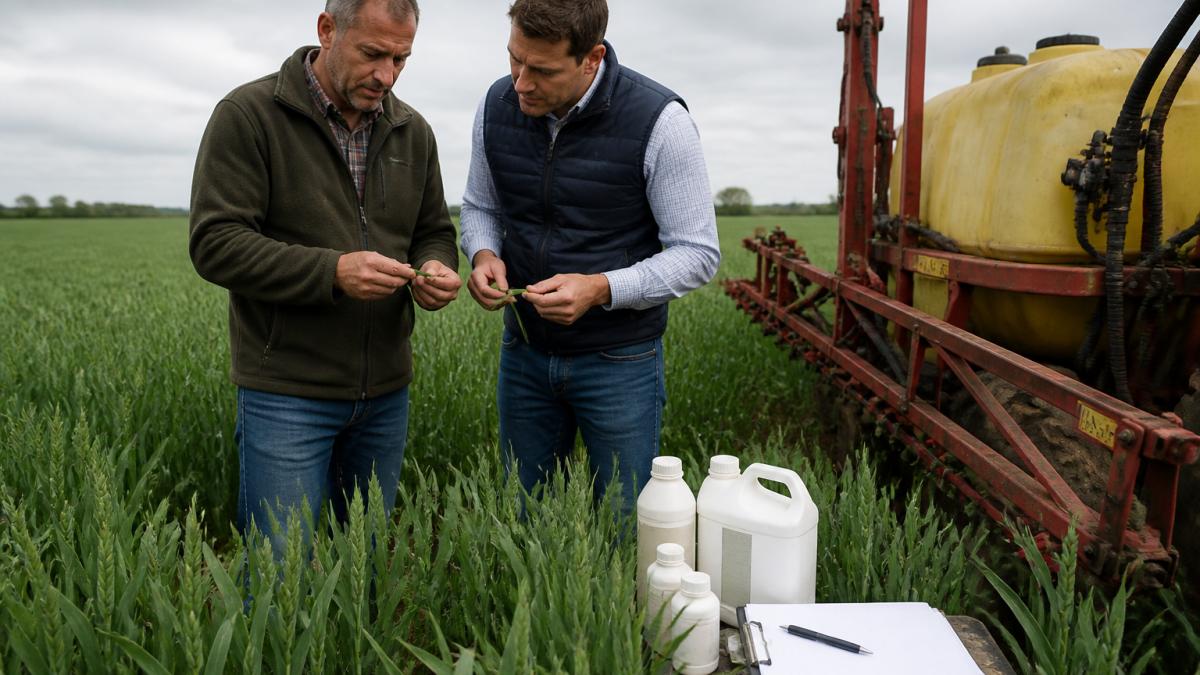
Step 1: Audit your current nutrition and spray plan
Write down every product you apply, the rate, the timing and the cost per hectare. Note where the crop struggles most, whether that is establishment, flowering or stress periods. This shows you where a biostimulant can add value.
Step 2: Select products and run a strip trial
Pick one or two products matched to your weakest stage. Run a strip trial on a small area, leaving an untreated strip for comparison. Keep everything else identical so the result is clean.
Step 3: Scale up and record the results
If the trial shows a gain, expand to more land the next season. Record yield, quality and input costs each time. Velcourt trials found that adding AminoA FLO to reduced fungicide rates maintained yields and improved green leaf area in winter wheat, which is exactly the kind of result a strip trial can confirm on your own ground.
Common Mistakes When Adding Biostimulants to Conventional Programmes
The biggest mistakes come from treating biostimulants like a fertiliser swap. They are not. Growers who get the best results keep their base nutrition intact and add biostimulants on top.
Watch for these:
- Cutting NPK too fast and blaming the biostimulant for the shortfall
- Applying at the wrong growth stage
- Skipping the jar test and risking a bad tank mix
- Judging results after one season with no untreated strip
What most guides miss is that biostimulants reward consistency. A single application rarely tells the full story.
How to Measure the Results of a Biostimulant Programme
Measuring results properly is what separates growers who stick with biostimulants from those who drop them. You need a baseline and a comparison, or you are just guessing.
Track these across treated and untreated strips:
- Yield per hectare
- Crop quality and green leaf area
- Input costs, especially reduced agrochemical use
- Crop condition through stress periods
Over a full season, the picture becomes clear. Many growers find the return comes from a mix of maintained yield and reduced input spend, not yield alone. For guidance on sustainable input use, the Agriculture and Horticulture Development Board (AHDB) resources offer practical, independent advice.
Adding biostimulants to a conventional programme is a test-and-measure job, not a leap of faith. The challenge is choosing products that fit your crops and your existing plan without disrupting what already works. AminoA makes this straightforward with 100% L-alpha amino acid biostimulants, produced through enzymatic hydrolysis and carrying nitrogen, potassium, iron and magnesium. Our products support root, leaf and bud development and help crops resist cold, heat and drought stress. Get started with AminoA and see how a well-placed biostimulant lifts your existing nutrition programme.
Frequently Asked Questions
How do you integrate biostimulants into a crop nutrition programme?
Start by auditing your current fertiliser and spray plan, then select a biostimulant that matches your crop and growth stage. Run a strip trial alongside your existing practice to check compatibility and response. Once you have data, scale up and apply at key timings such as early root development or stress periods. Keep records of rate, timing and tank mix partners so you can refine the programme season by season.
Can biostimulants be applied with conventional fertilisers?
Many biostimulants can be tank mixed with conventional fertilisers, but compatibility depends on the product formulation and the specific fertiliser. Check the label for tank-mix guidance, and always do a jar test before spraying a full tank. High-salt fertilisers or those with extreme pH can affect some biostimulants, so if in doubt, apply separately or consult your supplier for a compatibility chart.
When should biostimulants be applied during the growing season?
Timing depends on the crop and the product. Common windows include seed treatment or early root establishment, rapid vegetative growth, and before or during stress events such as drought, cold or heat. For fruiting crops, applications around flowering and fruit set can support yield and quality. Follow the product label and local trial data, and avoid spraying during the hottest part of the day to reduce evaporation and leaf burn risk.
How can you check whether a biostimulant is compatible with a fertiliser?
Always read the product label first. Then run a simple jar test: mix the intended rates of biostimulant and fertiliser in a clear container with water, stir, and leave for 30 minutes. Look for separation, sedimentation, excessive foaming or heat. If the mixture stays uniform, it is likely safe to tank mix. For complex mixes, consult your agronomist or the manufacturer for written compatibility advice.