 ultimate-guide
Why Root Development Affects Plant Stress Resistance
Table of Contents
- How Root Development Drives Plant Stress Resistance
- Understanding Abiotic Stress in Agriculture
- Root System Architecture and Drought Tolerance
- How Biostimulants for Root Growth Support Stress Resilience
- Early Root Development: The Critical Establishment Window
- Mistakes That Weaken Root Systems and Reduce Stress Tolerance
- Conclusion
- Frequently Asked Questions
Last Updated: 17 September 2026
How Root Development Drives Plant Stress Resistance
Root development is the single most decisive factor in whether a crop survives a hard season or folds under it. A plant with a deep, well-branched root system can reach moisture and nutrients that a shallow-rooted neighbour simply cannot access, which is why root development affects plant stress resistance more than almost any above-ground intervention. This guide from AminoA explains the mechanisms at work and how to build roots that hold up when conditions turn.
The principle is straightforward: roots are the plant's supply line and its stress buffer. When drought, heat, salinity or waterlogging hit, the plant's ability to draw on reserves depends on how much root volume it built before the stress arrived. Below, we break down the architecture that matters, the stresses that test it, and the practical steps that strengthen it.
The Hidden Cost of Shallow Roots
A shallow root system is a hidden liability until the season exposes it. Plants that establish roots only in the top few centimetres of soil are entirely dependent on rainfall and surface irrigation, and they lose access to nutrients that leach downward after heavy rain.
The consequences compound over a season. Shallow-rooted crops dry out faster in a dry spell, lodge more easily, and recover poorly from any interruption in water supply. Their stress resistance is structurally limited, no matter how good the nutrition programme looks on paper.
What most growers miss is that shallow rooting is often a management outcome, not a soil fate. Compaction layers, poor drainage, and over-reliance on surface-applied nutrients all push roots upward. Correct those and you change the plant's entire stress profile.
Understanding Abiotic Stress in Agriculture
Abiotic stress in agriculture is the physical and chemical pressure a crop faces from its environment rather than from pests or disease. It covers drought, heat, cold, salinity, waterlogging, nutrient imbalance, and chemical damage from agrochemical applications.
Because these stresses act on supply and demand at the same time, the plant's root system becomes the deciding factor. Drought reduces water uptake while heat raises transpiration. Salinity makes it harder for roots to draw water even when soil moisture is present. Waterlogging starves roots of oxygen, limiting their function.
The common thread is that every one of these stresses is mediated through the root zone. That is why root-focused management tends to pay off across multiple stress types at once, rather than addressing one in isolation.
Root System Architecture and Drought Tolerance
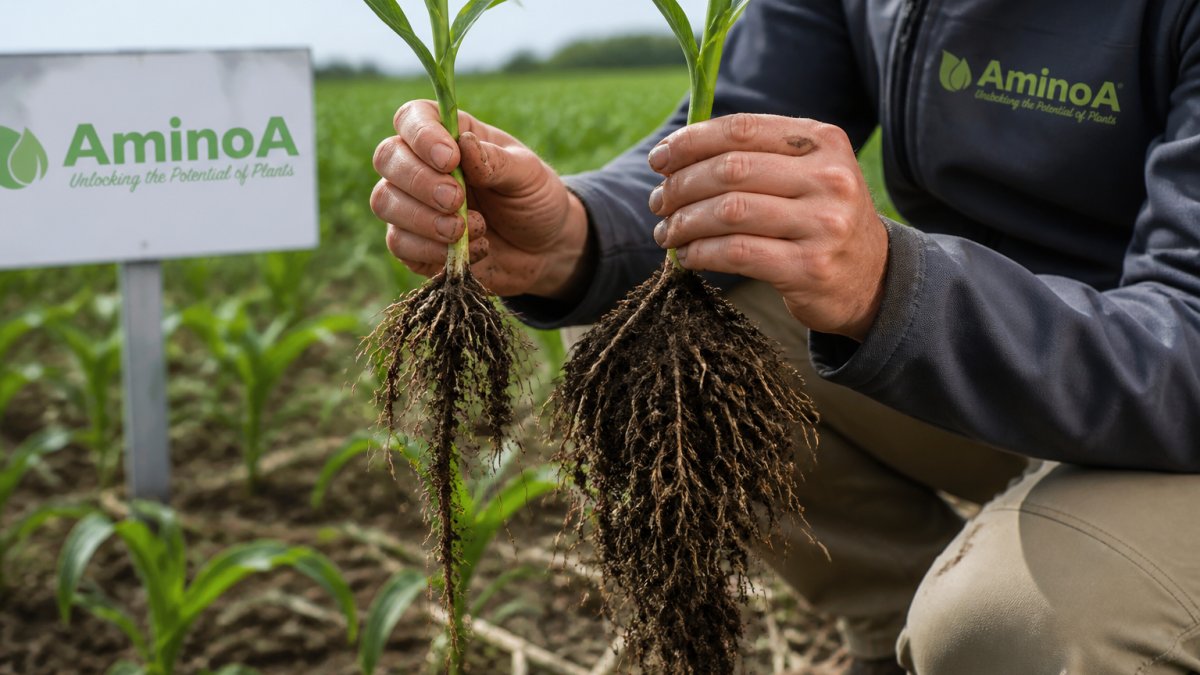
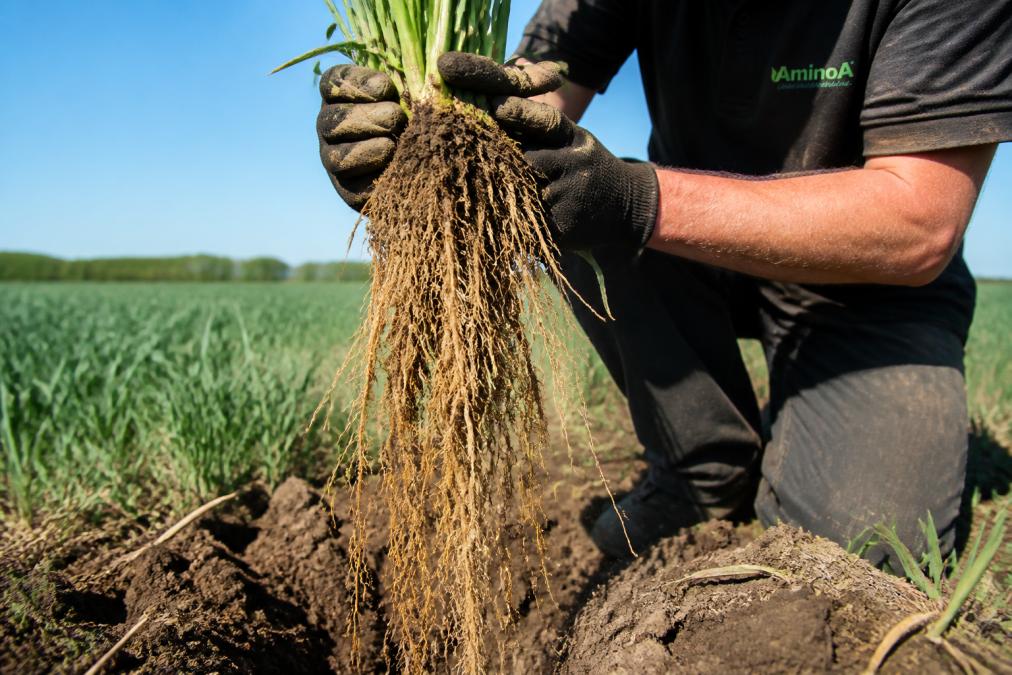
Root system architecture is the physical arrangement of a plant's roots: how deep they go, how widely they spread, how densely they branch, and how fine the root hairs are. Architecture determines drought tolerance because it sets how much soil volume the plant can actually exploit.
Why Root Depth and Branching Matter
Depth buys access to subsoil moisture that surface roots never reach. Branching and fine root hairs multiply the surface area available for water and nutrient uptake, which matters most when moisture is scarce and every contact point counts.
A plant with deep primary roots and dense lateral branching can sustain itself through a dry spell that would stall a shallow-rooted crop. It also recovers faster when rain returns, because the root network is already in place to capitalise on the moisture. Depth and branching together give the plant options; either alone is a partial advantage.
How Biostimulants for Root Growth Support Stress Resilience
Biostimulants for root growth work by supporting the plant's own root expansion rather than replacing soil nutrients. Amino acid-based products, particularly L-α amino acids, provide readily available building blocks that the plant can direct towards root development, especially during early establishment. Ensuring this rapid expansion remains healthy is essential, as vigorous root systems are far more capable of preventing root rot in containers where moisture management is often compromised.
This is where the choice of product matters. AminoA manufactures 100% L-α amino acid biostimulants through enzymatic hydrolysis, with a high content of nitrogen, potassium, iron, and magnesium. Because every essential amino acid is supplied in the L form, the plant can use them directly rather than converting them first. The result is support for root, leaf and bud development, and improved resistance to cold, heat, drought, and agrochemical phytotoxicity.
For growers weighing this against conventional nutrient programmes, the distinction is one of function. Standard NPK feeds the plant; amino acid biostimulants support the physiological processes that let the plant build a stronger root system in the first place. The two are complementary, not competing.
| Stress Type | Root Response | What Supports Recovery |
|---|---|---|
| Drought | Deeper rooting, more branching | Amino acid supply at establishment |
| Heat | Reduced root respiration efficiency | Balanced nutrition, root volume |
| Salinity | Restricted water uptake | Strong root architecture |
| Waterlogging | Oxygen starvation in root zone | Drainage plus root health |
| Chemical damage | Impaired root function | L-α amino acids for recovery |
Early Root Development: The Critical Establishment Window
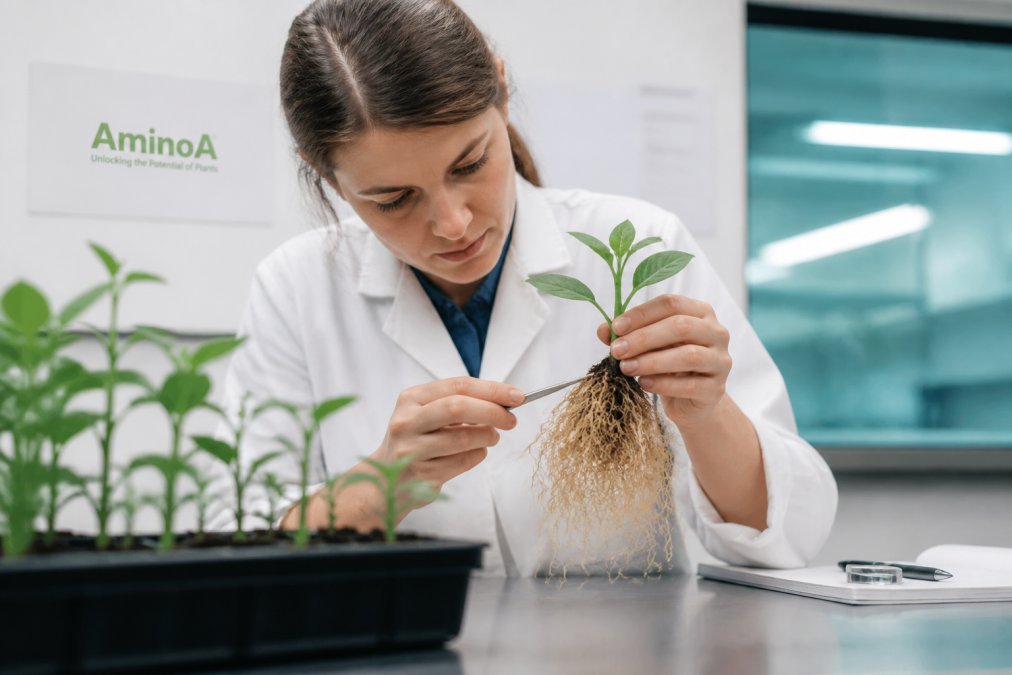
Early root development is the period when a seedling or young transplant builds the root framework it will rely on for the rest of the season. Get it right and the plant has reserves to draw on; get it wrong and no amount of later intervention fully compensates.
In practice, this window is short. Roots establish fastest in the first weeks after germination or transplanting, when the plant is allocating most of its energy below ground. Anything that limits root expansion during this phase, whether compaction, cold soil, or nutrient imbalance, has an outsized effect on the final root system.
This is also where biostimulant timing pays off most. Supplying L-α amino acids during establishment gives the young plant the materials it needs to push roots outward and downward while conditions are favourable. Later applications support maintenance; early applications build the structure.
Mistakes That Weaken Root Systems and Reduce Stress Tolerance
The most common mistake is treating roots as an afterthought. Growers focus on canopy health and visible symptoms, then wonder why a crop collapses under drought despite looking healthy weeks earlier.
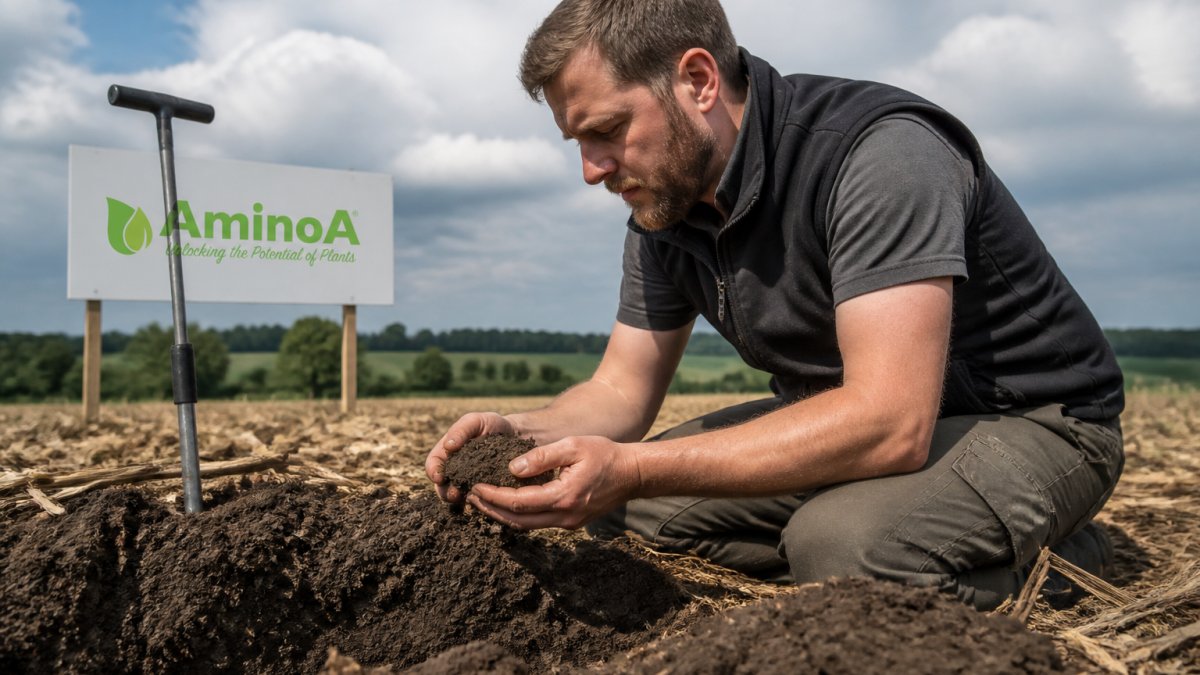
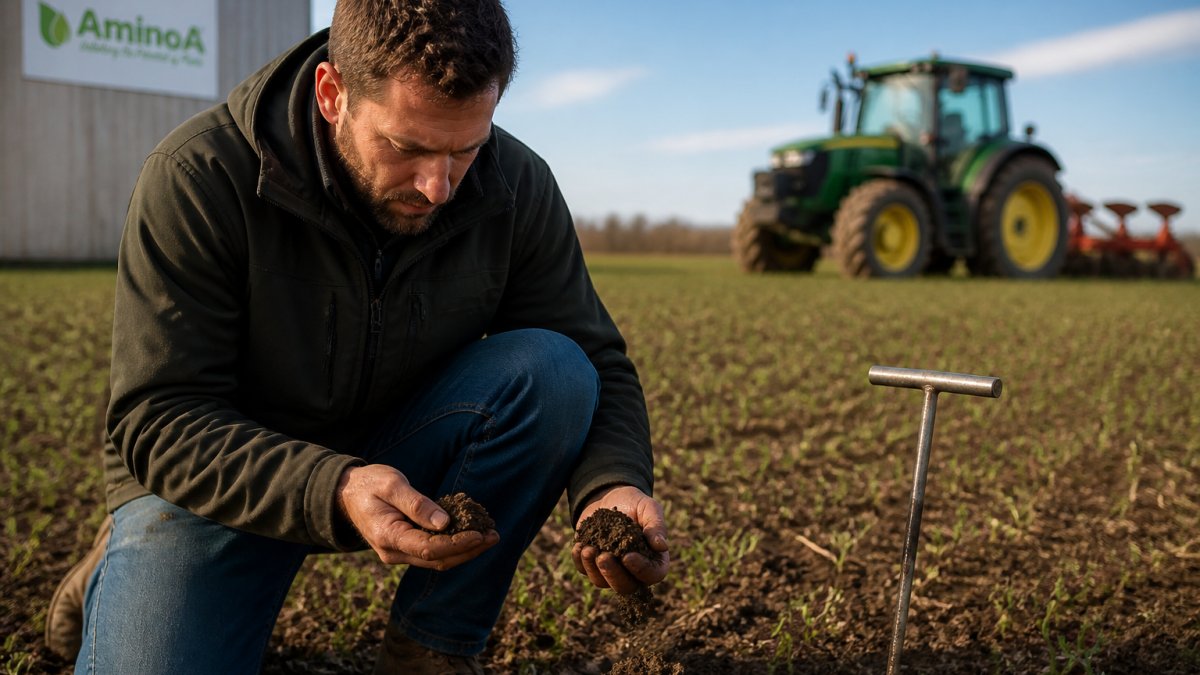
A second error is over-applying surface nutrients while ignoring soil structure. Compacted or poorly drained soil physically prevents roots from expanding, regardless of how much nutrition is available. Roots cannot grow into soil they cannot penetrate.
Mixing agrochemicals carelessly is a third pitfall. Tank mix errors can cause phytotoxicity that damages root function, and the damage often goes unnoticed until the plant fails to recover from a later stress event. Checking compatibility before application avoids a problem that is difficult to reverse.
- Correct compaction before chasing yield gains
- Apply amino acid support during establishment, not after stress appears
- Test tank mixes before spraying to avoid root-damaging phytotoxicity
- Match nutrient programmes to soil conditions, not just crop targets
Conclusion
Building stress-resistant crops starts below the surface, and the window to influence root development is narrower than most growers assume. AminoA supplies 100% L-α amino acid biostimulants, produced through enzymatic hydrolysis with high nitrogen, potassium, iron, and magnesium content, to support root, leaf and bud development and improve resistance to cold, heat, drought, and agrochemical phytotoxicity. For growers managing arable, horticultural or organic systems, that means a practical route to stronger roots and more resilient crops.
Subscribe to our newsletter for trial updates and practical guidance on building root systems that hold up under pressure.
Frequently Asked Questions
How does root system architecture influence drought tolerance?
Deeper, more branched root systems reach moisture reserves that shallow roots cannot access. When topsoil dries out, plants with extensive root networks continue drawing water from lower soil layers. Root system architecture and drought tolerance are directly linked: a plant with roots penetrating 60cm or more can survive dry spells that would stress a plant rooted only in the top 15cm. Improving architecture through early nutrition and soil management gives crops a buffer against unpredictable rainfall.
Can biostimulants improve root development for better stress resistance?
Yes. Biostimulants for root growth, particularly those based on L-α amino acids, supply the building blocks plants need for root cell division and elongation. Applied early in the season, they encourage faster root establishment and more extensive branching. Healthier roots then support the plant through cold snaps, heat events, and drought periods. AminoA products, for example, are formulated with 100% L-α amino acids produced through enzymatic hydrolysis, and Velcourt trials showed maintained yields and improved green leaf area in winter wheat when FLO was added to reduced fungicide programmes.
What are the primary abiotic stressors that impact root physiology?
The main abiotic stress in agriculture factors affecting roots are drought, waterlogging, temperature extremes (both cold and heat), soil salinity, and nutrient imbalance. Each triggers different responses: drought pushes roots deeper, waterlogging limits oxygen and causes root death, and cold soils slow nutrient uptake. Understanding which stressors your crops face helps you target root development strategies. For example, in drought-prone fields, building deeper roots before the dry period arrives is more effective than reacting once stress symptoms appear.
Why is early-stage root development critical for long-term crop health?
Roots establish their architecture in the first few weeks after germination. A plant that develops a deep, well-branched root system early can access more water and nutrients throughout the season. If early root development is limited by cold, compaction, or poor nutrition, the plant enters its rapid growth phase with a restricted root network, making it more vulnerable to mid-season stress. Investing in root health at establishment, whether through soil preparation or early biostimulant application, pays off when stress conditions arrive later.