 ultimate-guide
Best Soil Health Practices for Sustainable Farming
Table of Contents
- Why Soil Health Is the Foundation of Sustainable Farming
- Soil Organic Matter Improvement Techniques That Work
- Liquid Biostimulants vs Granular Fertilisers: What Actually Works
- Benefits of L-α Amino Acid Biostimulants for Soil and Crops
- Reduced Tillage and Cover Crops: Protecting Soil Structure
- How to Monitor Soil Health and Measure Progress
- Building a Practical Soil Health Plan for Your Farm
- Conclusion
- Frequently Asked Questions
Last Updated: October 2, 2026
Why Soil Health Is the Foundation of Sustainable Farming
Soil health is the capacity of soil to function as a living ecosystem that sustains plants, animals, and people. For arable and horticultural growers, the best soil health practices for sustainable farming start with treating soil as a biological system rather than an inert growing medium. This guide from AminoA covers the techniques that consistently deliver results in the field, from organic matter management to reduced tillage and biostimulant use.
The stakes are straightforward. Degraded soil compacts, sheds water, locks up nutrients, and yields less for every pound spent on inputs. Healthy soil cycles nutrients, holds moisture through dry spells, and supports the root architecture that underpins yield. The Agriculture and Horticulture Development Board's soil health guidance frames soil as a long-term asset requiring the same management discipline as machinery or livestock.
Below, we break down what actually works, what to skip, and how to measure whether your soil is improving or quietly declining.
Soil Organic Matter Improvement Techniques That Work
Soil organic matter improvement techniques fall into three practical categories: adding organic material, minimising losses, and supporting the biology that converts one into the other. Most farms underperform on the second and third.
- Organic additions: Farmyard manure, compost, and digestate applied at realistic rates
- Minimised losses: Reduced tillage, cover cropping, and avoiding bare overwintered ground
- Biological support: Biostimulants and microbial foods that accelerate decomposition
The mistake most growers make is focusing entirely on the first category. Adding organic matter is expensive and slow. Protecting what you already have is cheaper and faster. A field that overwinters bare can lose a meaningful share of its topsoil carbon to erosion and oxidation before spring drilling. Maintaining consistent ground cover throughout the dormant months remains the most effective strategy for preventing soil erosion while simultaneously preserving the structural integrity of the earth.
Liquid Biostimulants vs Granular Fertilisers: What Actually Works
Liquid biostimulants and granular fertilisers do different jobs, and framing them as competitors misses the point. Granular fertilisers deliver bulk nutrition: nitrogen, phosphate, potash. Liquid biostimulants, particularly amino acid formulations, influence how efficiently the plant accesses and uses that nutrition.
| Approach | Primary Role | Application Timing | Best For |
|---|---|---|---|
| Granular fertiliser | Bulk N, P, K supply | Pre-drilling, top dressing | Baseline crop nutrition |
| Liquid biostimulant | Nutrient uptake and stress support | Foliar at key growth stages | Yield quality, stress resilience |
| Combined programme | Nutrition plus efficiency | Season-long | Most arable and horticultural systems |
The practical question is not which to use, but how much granular input you can reduce without losing yield. Many growers find that pairing a biostimulant with a modest reduction in conventional inputs maintains output while lowering cost per hectare.
Benefits of L-α Amino Acid Biostimulants for Soil and Crops
L-α amino acid biostimulants deliver amino acids in the form plants can use directly, without the conversion steps that limit other nitrogen sources. AminoA manufactures 100% L-α amino acid products through enzymatic hydrolysis, with high content of nitrogen, potassium, iron, and magnesium.
The benefits growers report in practice:
- Increased root, leaf, and bud development
- Stimulated blossom, fruit formation, and growth
- Increased resistance to cold, heat, drought, and agrochemical phytotoxicity
- Boosted crop yield and quality
That last point matters for tank mixing. Phytotoxicity from a poorly judged tank mix is one of the most common and costly mistakes in a spray programme. Amino acids can help the crop recover from that stress, though prevention remains better than cure.
Reduced Tillage and Cover Crops: Protecting Soil Structure
Reduced tillage and cover cropping protect the soil structure that organic matter builds. Every pass with a cultivator breaks aggregates, exposes carbon to oxidation, and damages the fungal networks that move nutrients to roots.
The transition takes planning. Moving to direct drilling requires suitable machinery, such as a single-disc coulter drill designed for high-residue conditions, and a rotation that manages volunteers and grass weeds. AHDB's guidance on cultivations and soil structure is a useful starting point for growers weighing up the change.
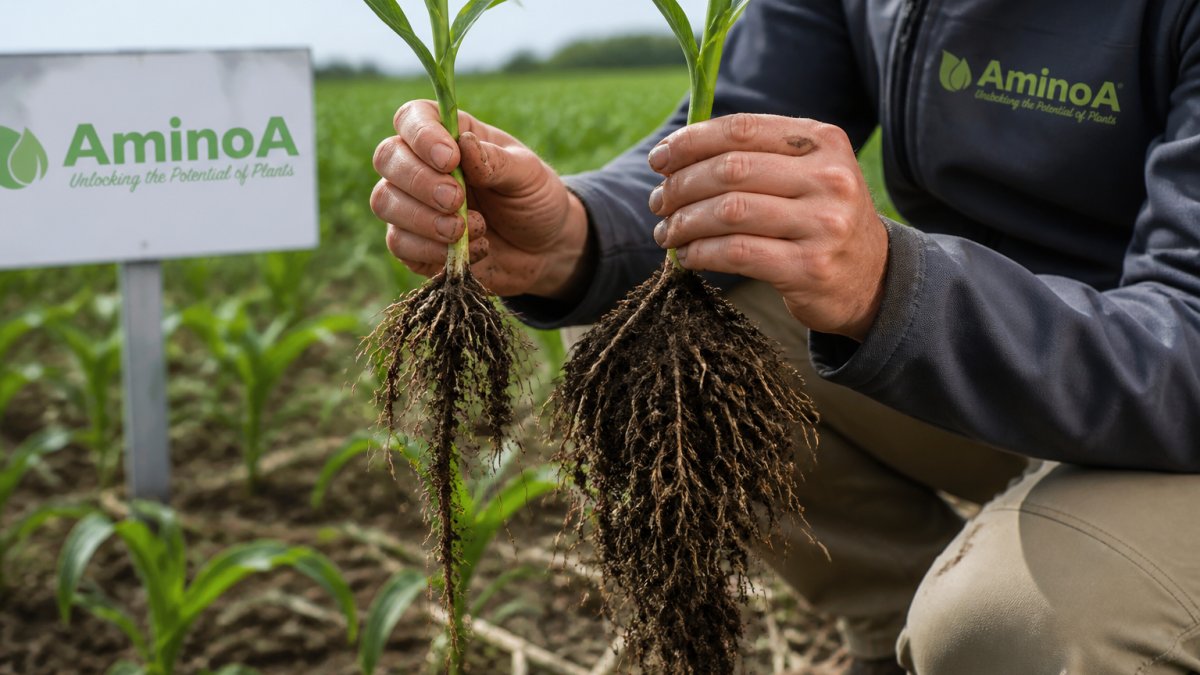
Cover crops do the other half of the job. A deep-rooting mix aerates compacted layers, scavenges leftover nitrogen, and keeps living roots in the ground through winter. Leguminous species fix nitrogen for the following crop.
How to Monitor Soil Health and Measure Progress
Monitoring soil health means measuring the same indicators, in the same way, at the same time each year. Without that consistency, you are collecting data, not tracking progress.
A practical monitoring set:
- Laboratory analysis: Organic matter, pH, and available nutrients through a UKAS-accredited laboratory
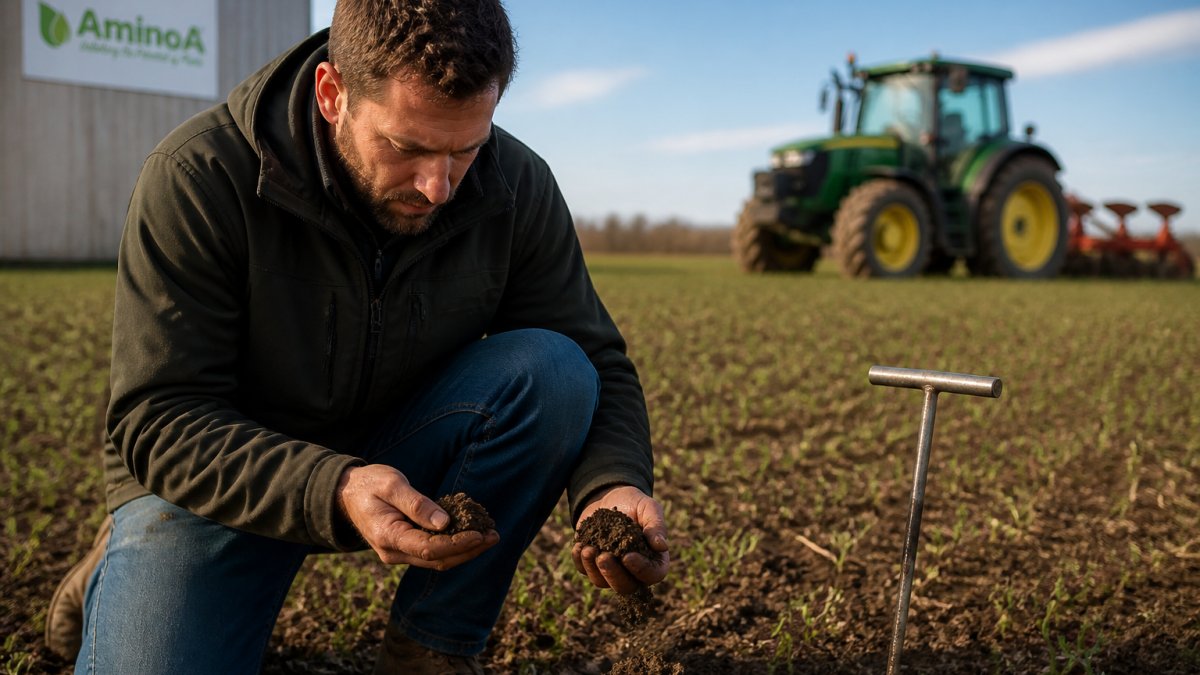
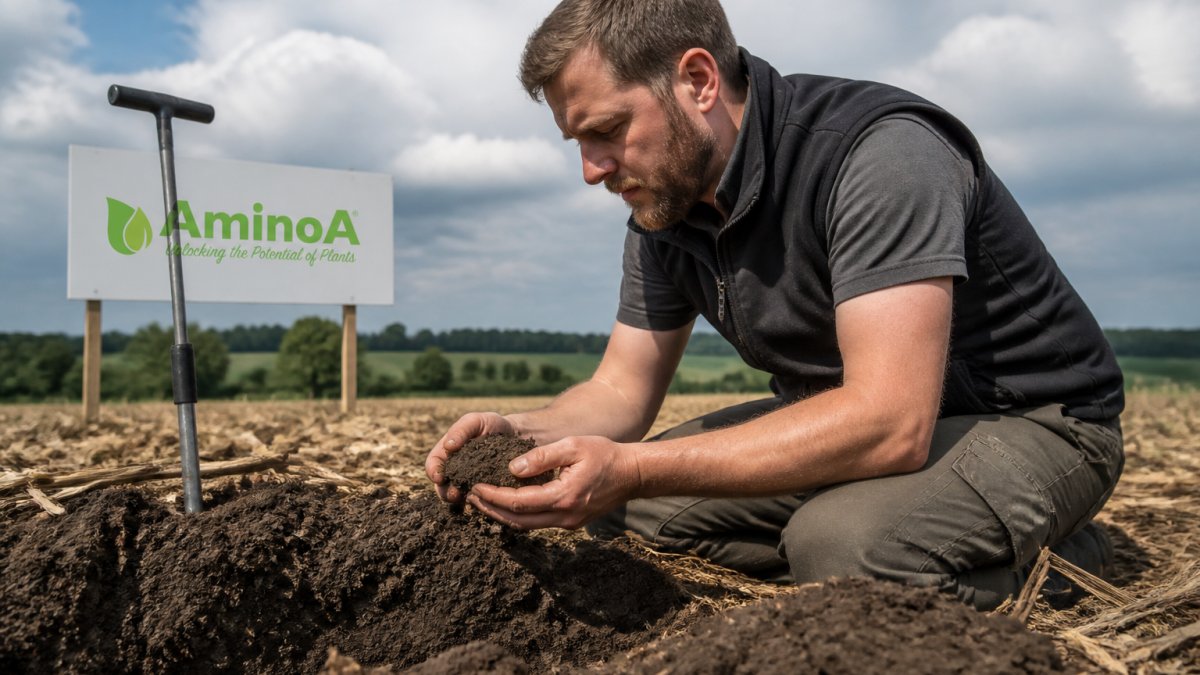
- Visual assessment: VESS-style structure scoring in a spade pit
- Biological indicators: Earthworm counts and root health checks
- Digital tracking: Apps such as Soilmentor for photo-based condition records over time
Baseline data is what makes the case for investment. Tools such as the Retrospective Soil Health Economic Calculator help growers run a partial budget comparing soil-health-focused management against conventional practice, using their own farm records.
Building a Practical Soil Health Plan for Your Farm
A workable soil health plan fits your rotation, machinery, and labour, or it will not survive contact with harvest. Start with one or two fields rather than the whole farm.
Step 1: Baseline. Sample every field for organic matter, pH, and nutrients before changing anything.
Step 2: Identify the limiting factor. Compaction, low organic matter, and poor drainage need different fixes.
Step 3: Change one practice. Add a cover crop, reduce a cultivation pass, or introduce a biostimulant into the spray programme.
Step 4: Measure. Resample at the same point next year and compare like for like.
Step 5: Scale what works. Expand only once the data supports it.
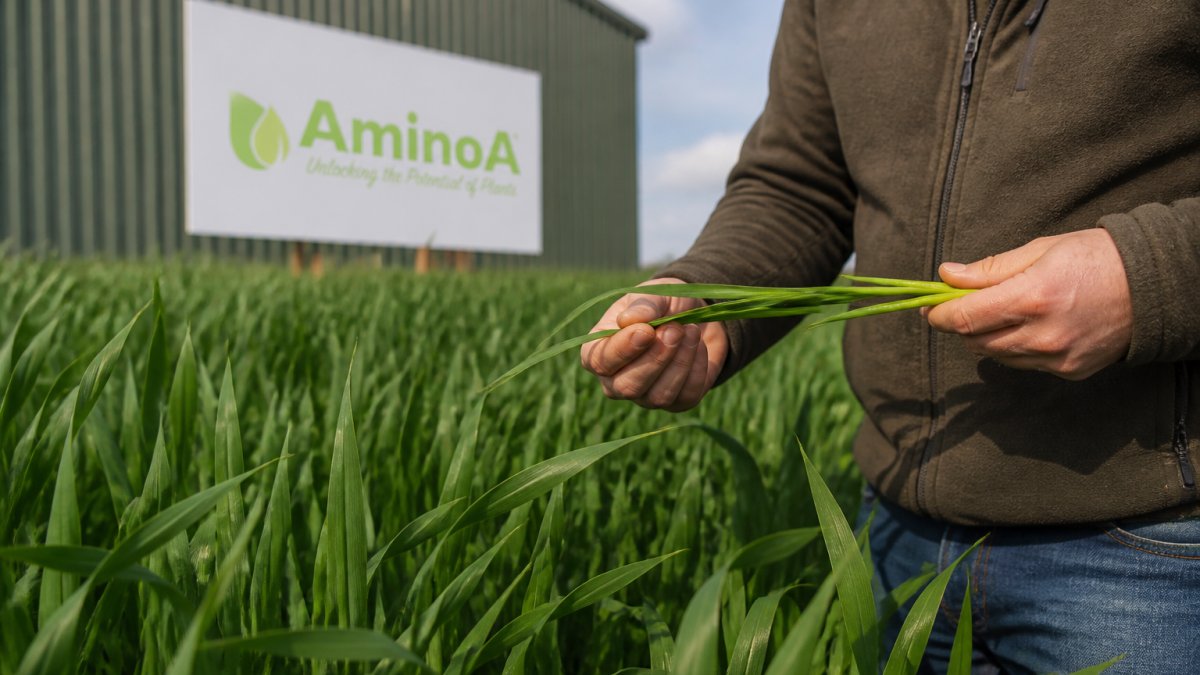
Velcourt trials found that adding AminoA FLO to reduced fungicide rates maintained yields and improved green leaf area in winter wheat.
Conclusion
The hardest part of soil health is not knowing what to do. It is sustaining the changes long enough for the biology to respond, through seasons that do not cooperate. AminoA has spent ten years supplying L-α amino acid biostimulants to growers navigating exactly that challenge, with products built on 100% L-α amino acids and every essential amino acid in the L form. Our formulations support root development, stress resistance, and yield quality while helping you reduce reliance on conventional inputs. Subscribe to our Newsletter for practical guidance on building soil health into your rotation.
Frequently Asked Questions
What are the five core principles of soil health?
The five principles are: keep the soil covered, minimise disturbance, maintain living roots, diversify crop rotations, and integrate livestock where possible. These principles work together to build organic matter, protect soil structure, and support microbial life. In practice, this means using cover crops, reducing tillage passes, and planning rotations that include deep-rooting species. Each principle reinforces the others, so adopting even two or three consistently will show measurable improvements in soil condition over time.
How do biostimulants contribute to sustainable soil management?
Biostimulants support soil biology and plant nutrition without relying solely on synthetic inputs. L-α amino acid products, for example, feed beneficial microbes and help plants take up nutrients more efficiently. This can reduce the volume of granular fertiliser needed while maintaining yield. AminoA biostimulants are produced through enzymatic hydrolysis and contain every essential amino acid in the L form, which plants can absorb directly. The result is healthier root systems, better stress tolerance, and a lower environmental footprint per hectare.
What are the best methods for monitoring soil organic matter levels?
Laboratory analysis through a UKAS-accredited provider gives the most accurate organic matter figures. Pair this with visual assessments: look for darker colour, crumb structure, earthworm counts, and water infiltration rates. Digital tools like Soilmentor let you track these observations over time with standardised scorecards. Test the same fields at the same time each year to build a reliable picture. Organic matter changes slowly, so expect to measure trends over three to five years rather than season to season.
How does reduced tillage impact long-term soil structure?
Reduced tillage preserves the soil's natural aggregation, fungal networks, and pore spaces that support water movement and root growth. Over time, this builds a more stable structure that resists compaction and erosion. The transition takes patience: in the first few years, you may need to manage increased residue and adjust drilling equipment. No-till drills designed for high-residue conditions help. After three to five seasons, most farms see improved infiltration, better drought resilience, and lower fuel and labour costs per hectare.
What role do cover crops play in sustainable farming systems?
Cover crops protect bare soil from erosion, scavenge leftover nutrients, and add organic matter when they decompose. Leguminous species fix nitrogen naturally, reducing the need for bagged fertiliser. Deep-rooting varieties break up compaction and improve water infiltration. Choose mixes suited to your soil type and rotation. Timing is critical: establish them early enough to get good ground cover before winter. Terminate them at the right stage to avoid competition with the following cash crop.
How can farmers reduce reliance on synthetic fertilisers through soil health?
Start by testing soil to establish a baseline, then apply nutrients based on actual crop need rather than habit. Build organic matter with cover crops, reduced tillage, and organic amendments. Biostimulants such as L-α amino acids improve nutrient uptake efficiency, so you can maintain yields with lower input rates. Velcourt trials found that adding AminoA FLO to reduced fungicide rates maintained yields and improved green leaf area in winter wheat. Transition gradually and monitor results field by field.