 ultimate-guide
How to Choose the Right Foliar Fertiliser
Table of Contents
- What Makes Foliar Fertiliser Different from Soil Application
- Is Foliar Feeding Worth It for Stress Resistance
- Types of Foliar Fertiliser and When to Use Each
- Benefits of Amino Acid Biostimulants in Agriculture
- Best Time to Apply Foliar Fertiliser for Maximum Effect
- Key Factors to Consider When Selecting a Foliar Fertiliser
- Making Your Decision: A Practical Framework
- Conclusion
- Frequently Asked Questions
Last Updated: September 29, 2026
What Makes Foliar Fertiliser Different from Soil Application
Foliar fertiliser bypasses soil and enters plants through leaf surfaces, delivering nutrients directly into the vascular system and reaching growing tissues within hours rather than days.
Foliar feeding operates independently of soil moisture, temperature, and microbial activity, allowing plants experiencing drought or cold stress to absorb nutrients efficiently, making foliar fertiliser valuable when soil conditions are suboptimal.
Soil nutrients face immobilisation challenges; iron, zinc, and manganese bind to soil particles and become unavailable to roots. Foliar application avoids this, ensuring higher bioavailability.
Leaves absorb nutrients through stomata and directly through the waxy leaf surface, enabling efficient delivery during periods of high demand.
Is Foliar Feeding Worth It for Stress Resistance
Foliar fertiliser delivers measurable stress resilience, particularly during challenging seasons.
Plants receiving foliar applications during heat stress, drought, or cold exposure show improved survival, maintained productivity, less leaf scorching, reduced bud drop, and faster recovery. Amino acids and micronutrients strengthen cell walls and enhance osmotic adjustment.
Foliar feeding reduces crop vulnerability to agrochemical phytotoxicity; amino acids and micronutrients accelerate recovery from fungicide or insecticide damage, particularly during intensive spray programmes.
For high-value crops like strawberries, tomatoes, and specialist vegetables, foliar fertiliser typically justifies its cost. For cereals, strategic use during predictable stress periods, post-frost, post-drought, or intensive spray windows, often delivers positive ROI.
Types of Foliar Fertiliser and When to Use Each
Macro and Micronutrient Formulations
Nitrogen-dominant foliar sprays support vegetative growth during establishment; phosphorus-potassium combinations promote reproductive development and stress tolerance.
Iron, manganese, and zinc are common micronutrient applications, particularly in high-pH soils. Boron supports fruit set; molybdenum improves nitrogen utilisation efficiency.
Early-season applications emphasise nitrogen and phosphorus; mid-season shifts toward potassium and boron; late-season focuses on micronutrients and stress-protective elements.
Amino Acid Biostimulants
Amino acid biostimulants contain free amino acids plus micronutrients and organic compounds, stimulating plant metabolism and stress-response pathways unlike simple nutrient solutions.
Amino acids trigger increased enzyme activity and activate defence systems, producing improved root development, stronger buds, and enhanced disease resistance within 7-10 days.
Amino acids improve tank-mix compatibility, reducing phytotoxicity risk and supporting plant recovery from spray stress.
Benefits of Amino Acid Biostimulants in Agriculture
Amino acid biostimulants deliver multiple performance benefits that extend beyond simple nutrient supplementation. Crops receiving amino acid applications show measurable improvements across yield, quality, and stress resilience metrics.
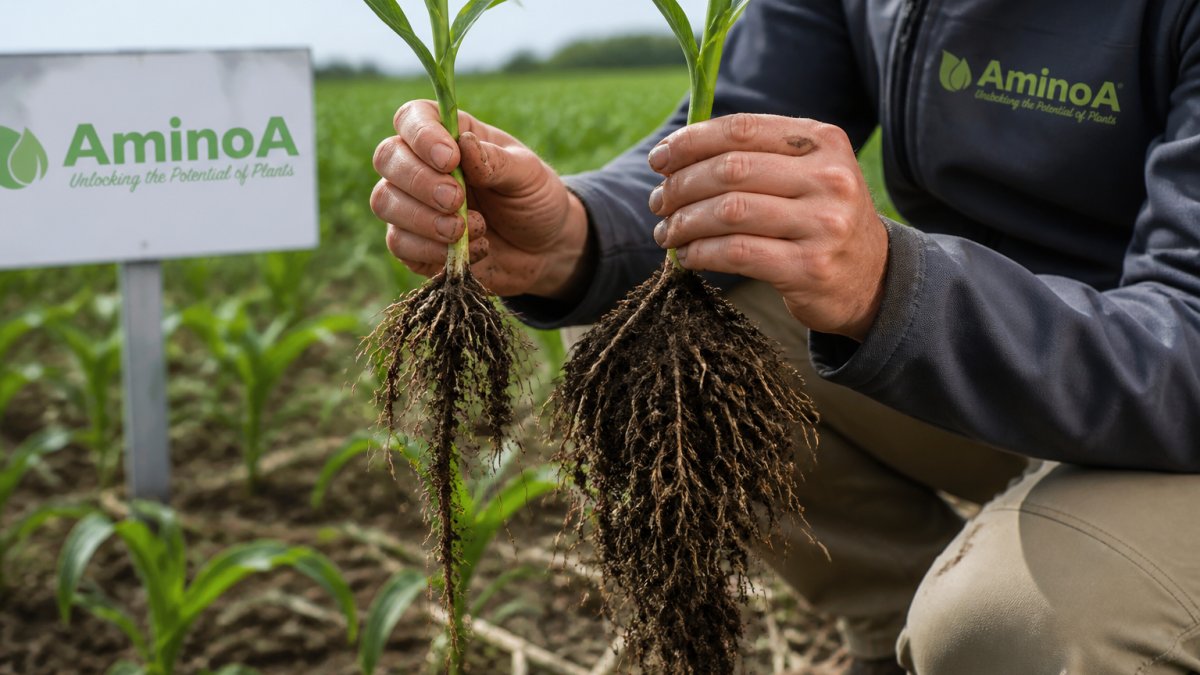
Root development accelerates significantly following amino acid application. Enhanced root systems improve water and nutrient uptake efficiency, which translates to better performance during moisture-limited periods and reduced reliance on additional fertiliser inputs.
Leaf and bud development intensifies with amino acid treatment. The increased cell division and expansion results in larger leaves with greater photosynthetic capacity. Buds develop more uniformly, reducing flower and fruit abortion. For reproductive crops, this means more consistent fruit set and higher yield potential.
Stress resistance improves markedly. Crops treated with amino acids show greater tolerance to cold temperatures, heat exposure, and drought conditions. The mechanism involves enhanced osmotic adjustment and improved cell membrane integrity. In practical terms, this means crops maintain productivity during adverse weather rather than experiencing yield loss.
Agrochemical phytotoxicity becomes less problematic. When amino acids are applied alongside fungicides or insecticides, or shortly after spray programmes, crop recovery accelerates. Leaf damage resolves faster, and growth checks prove less severe. This benefit alone justifies amino acid inclusion during intensive spray seasons.
Yield and quality improvements follow consistently. Trials across multiple crop types show yield increases when amino acids are incorporated into management programmes. Quality metrics, including fruit size, colour development, and post-harvest storage life, typically improve alongside yield.
Best Time to Apply Foliar Fertiliser for Maximum Effect
Timing determines whether your foliar fertiliser investment delivers meaningful returns or becomes an inefficient expense. The optimal application window depends on crop growth stage, environmental conditions, and the specific nutrient or biostimulant you're applying.
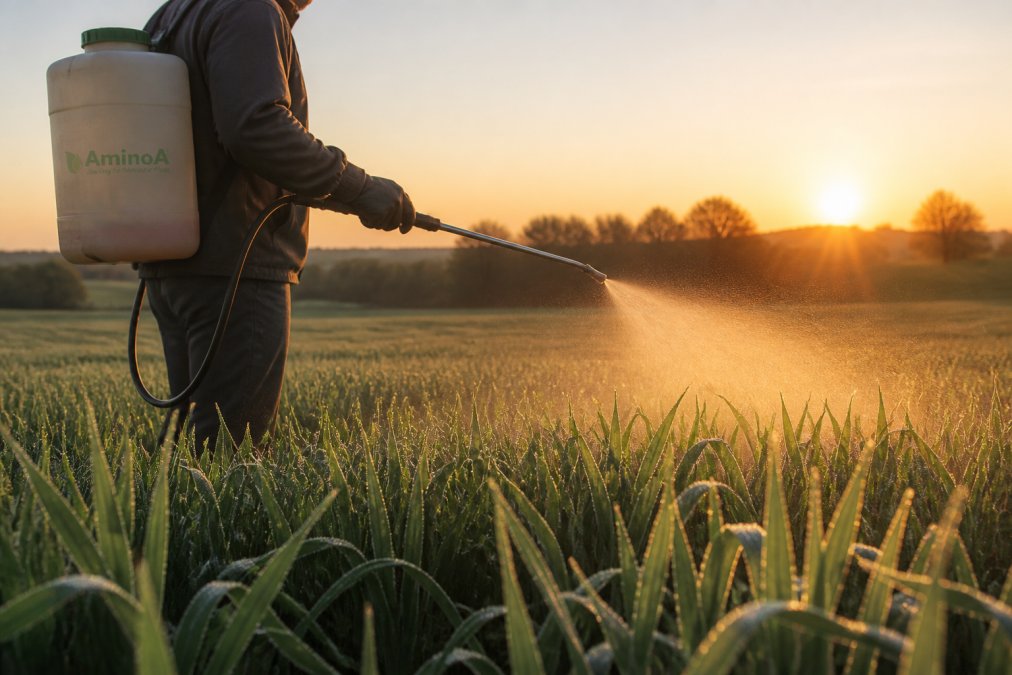
Early morning applications, between 06:00 and 09:00, maximise absorption. Leaf stomata remain open during early morning hours, and the cooler temperatures reduce evaporation from the spray droplet. Dew on the leaf surface extends the absorption window by keeping droplets moist longer. Avoid applications after 14:00 when stomata begin closing as temperatures rise.
Growth stage timing matters equally. Apply foliar fertiliser during active growth phases, establishment, flowering, and early fruit development, when nutrient demand peaks. Applications during dormant periods or late in the season produce minimal response because metabolic activity is low. For cereals, optimal timing aligns with the growth stage timeline: GS13-16 for early nitrogen applications, GS32-39 for micronutrient applications, and GS39-49 for stress-protective treatments.
Environmental conditions must support absorption. Avoid applications when rain is forecast within 4 hours, as washoff reduces efficacy. Wind speeds above 15 mph create drift and reduce coverage. Relative humidity above 70% enhances absorption, so overcast days often outperform sunny ones. Soil moisture also influences response, plants experiencing mild water stress typically show better foliar uptake than those at full turgor.
Stress timing creates a distinct application window. Apply foliar fertiliser 24-48 hours before anticipated stress (frost forecast, heat wave, intensive spray programme) to prime the plant's defence systems. Alternatively, apply within 24 hours after stress exposure to accelerate recovery. This preventative and recovery timing often delivers disproportionate benefits relative to routine applications.
Key Factors to Consider When Selecting a Foliar Fertiliser
Crop Type and Growth Stage
Different crops respond to different nutrient ratios and biostimulant formulations. Cereal crops benefit from nitrogen-dominant early-season applications followed by potassium and micronutrient focus during grain fill. Horticultural crops, strawberries, tomatoes, peppers, respond well to balanced formulations with emphasis on boron and calcium for fruit quality.
Growth stage determines both the nutrient requirement and the absorption capacity. Young seedlings absorb foliar nutrients readily but require balanced formulations to avoid burning tender leaves. Mature plants tolerate higher concentration sprays but may show reduced absorption due to thicker leaf cuticles. Reproductive-stage crops show maximum responsiveness to foliar applications because nutrient demand is highest.
Consider your crop's known deficiency history. If your soil consistently produces iron-deficient plants, iron-focused foliar applications become essential. If your region experiences regular boron deficiency, including boron in every foliar programme prevents crop losses. Tailoring formulations to your specific crop and soil conditions maximises efficacy.
Environmental Conditions and Stress Factors
Seasonal weather patterns influence both the need for foliar fertiliser and the optimal application strategy. Dry springs favour early foliar applications because soil nutrient availability declines during drought stress. Wet autumns support increased foliar feeding because soil waterlogging restricts root uptake. Cold springs delay soil nutrient availability, making foliar applications particularly valuable during the establishment phase.
Anticipated stress events should trigger increased foliar fertiliser investment. If weather forecasts predict frost, heat, or drought, schedule preventative foliar applications to enhance crop resilience. If your spray programme involves multiple fungicide applications, incorporate amino acid biostimulants to reduce phytotoxicity risk.
Soil conditions also matter.
Compatibility with Your Existing Spray Programme
Integration with your current fungicide and insecticide schedule determines practical feasibility. Some foliar fertilisers mix safely with all agrochemicals; others show incompatibility with specific products. Amino acid biostimulants typically improve tank-mix safety, but conventional nutrient sprays sometimes increase phytotoxicity risk when combined with certain fungicides.
Certification and Compliance Requirements
Organic certification imposes strict limitations on permitted inputs. If you operate under organic standards, ensure your foliar fertiliser carries organic certification. Synthetic amino acids derived from petroleum feedstock are prohibited; only naturally derived amino acids from plant or animal sources meet organic requirements. AminoA products produced through enzymatic hydrolysis meet organic certification requirements, making them suitable for certified operations.
Making Your Decision: A Practical Framework
Start by defining your primary objective. Are you seeking yield improvement, stress resilience, quality enhancement, or phytotoxicity reduction? Each objective suggests different foliar formulations and timing strategies.
Conclusion
Choosing the right foliar fertiliser requires matching formulation, timing, and application strategy to your specific crop, soil conditions, and management objectives. The decision isn't simply about which product performs best in isolation, it's about integrating foliar feeding into your existing programme in ways that deliver measurable returns.
Frequently Asked Questions
What are the key benefits of foliar fertiliser for crops under environmental stress?
Foliar fertiliser delivers nutrients directly to leaves, bypassing soil conditions that may restrict uptake. During drought, heat, or cold stress, this rapid nutrient availability helps crops maintain photosynthesis and metabolic function when root activity is compromised. Amino acid biostimulants in particular enhance the plant's natural stress response mechanisms, improving resilience and recovery speed compared to soil-only nutrition programmes.
How do L-α amino acid biostimulants differ from standard foliar fertilisers?
Standard foliar fertilisers provide essential nutrients like nitrogen, potassium, and micronutrients in mineral form. L-α amino acid biostimulants contain all essential amino acids in their bioavailable L form, which plants can absorb and utilise directly for protein synthesis, hormone production, and stress signalling. This targeted approach stimulates root development, bud formation, and disease resistance more effectively than nutrient-only products, whilst reducing reliance on synthetic agrochemicals.
When is the best time to apply foliar fertiliser to achieve the strongest results?
Apply foliar fertiliser during cool conditions, early morning or late evening, when stomata are open and humidity is high, maximising leaf absorption. Avoid midday heat or rain within 4 hours of application. For stress recovery, apply immediately after identifying damage or stress symptoms. For growth promotion, time applications to key crop stages: tillering and stem elongation in cereals, flowering in horticultural crops, and post-harvest in perennial systems to support recovery and next-season vigour.
Can foliar fertiliser replace soil-applied nutrition entirely?
No. Foliar fertiliser complements but does not replace soil nutrition. Soil-applied nutrients build the foundation for sustained root health and nutrient availability throughout the season. Foliar applications address acute deficiencies, stress recovery, and targeted growth boosts at specific crop stages. A balanced programme combines both methods: soil nutrition for baseline plant health, foliar application for stress mitigation and yield optimisation.