 how-to
How to Increase Nutrient Uptake in Plant Roots
Last Updated: 23 October 2026
Quick Summary
To increase nutrient uptake in plant roots, test and correct soil pH so key nutrients stay available, then remove compaction so roots can explore more soil. Keep moisture steady with oxygen at the root zone, and confirm deficiencies with tissue tests before spraying.
- Target pH 6.0 to 6.5 on sandy soils and 6.5 to 7.0 on loams and clays.
- Stay off wet ground and keep living roots in the soil year-round.
- Irrigate little and often, and check drainage in low-lying areas before winter.
- Confirm suspected deficiency with a tissue test before you act.
- Amino acid biostimulants support root development but do not replace fertiliser.
Table of Contents
- Step 1: Test Soil pH and Adjust for Nutrient Uptake
- Step 2: Build Root Growth and Nutrient Uptake with Soil Structure
- Step 3: Manage Water and Oxygen at the Root Zone
- Step 4: Read Plant Nutrient Deficiency Symptoms Before You Spray
- Step 5: Use Amino Acid Biostimulants for Plants to Support Uptake
- Step 6: Support Roots with Mycorrhizal Fungi and Targeted Nutrition
- Common Mistakes That Limit Nutrient Uptake in Plant Roots
- Conclusion
- Frequently Asked Questions
Step 1: Test Soil pH and Adjust for Nutrient Uptake
Nutrient uptake is the process by which plant roots absorb essential minerals from the soil solution and move them into the plant's tissues. Get the pH wrong and that process stalls, no matter how much fertiliser you apply.
Most arable soils sit between pH 6.0 and 7.0. Outside that window, key nutrients lock up. Phosphorus binds tightly in acid soils. Manganese and iron become less available as pH climbs.
So test before you spread. A basic soil test costs little and tells you exactly where you stand.
Target pH by soil type:
- Sandy soils: 6.0 to 6.5
- Loams: 6.5 to 7.0
- Clay soils: 6.5 to 7.0
If pH is low, apply lime and work it into the topsoil. If it is high, elemental sulphur or organic matter will bring it down slowly. Neither fix is instant, so plan a season ahead.
The soil-root nexus review shows how soil health shapes uptake through mass flow and diffusion. pH sits at the centre of both.
For a deeper look at how pH affects the rhizosphere, read our guide on soil pH and rhizosphere health.
Step 2: Build Root Growth and Nutrient Uptake with Soil Structure
Compacted soil is the quiet killer of yield. Roots cannot push through it, so they explore less soil and intercept fewer nutrients.
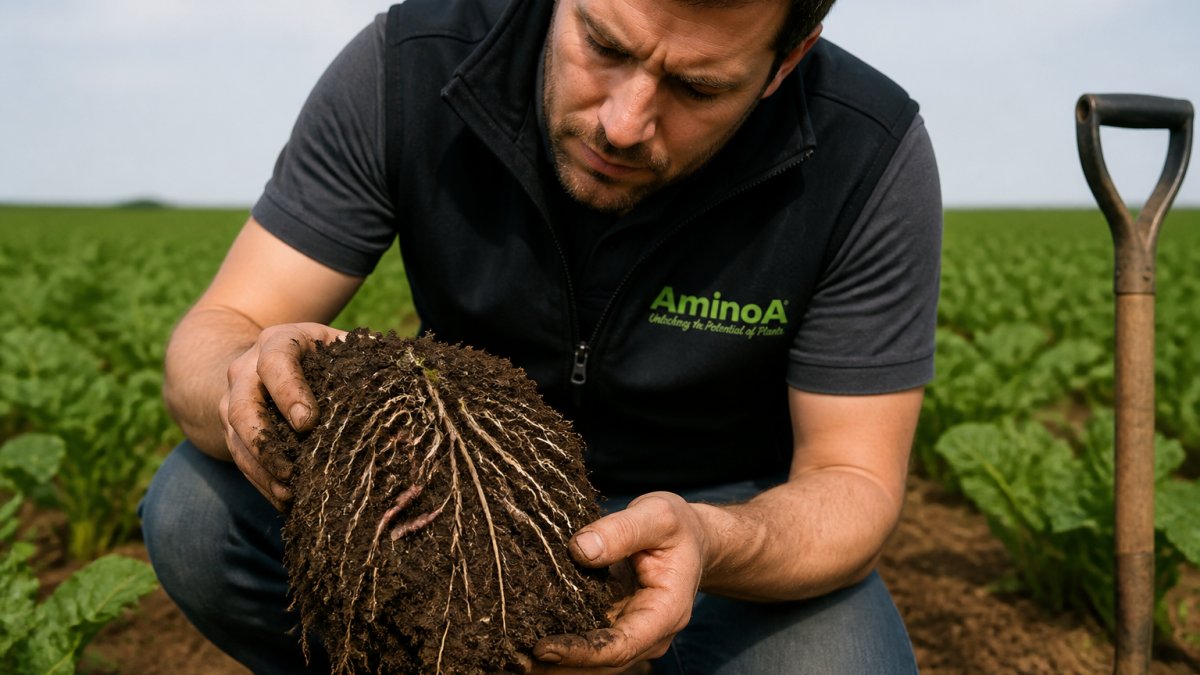
Research from Purdue University's root growth publication found that restricted root growth directly limits the volume of soil from which nutrients can be extracted. That is the whole game.
Avoid compaction and keep living roots in the soil
Two rules matter most. First, stay off wet ground. Tyre pressure and timing cause more damage than most growers realise. Second, keep something growing year-round. Living roots feed the soil biology that cycles nutrients.
Practical steps:
- Use controlled traffic lanes to limit compaction
- Drill cover crops rather than leaving bare stubble
- Add organic matter to improve aggregate structure
- Avoid tillage when soils are saturated
Our guide on improving root growth in compacted soils walks through the practical fixes in more detail.
Step 3: Manage Water and Oxygen at the Root Zone
Roots need oxygen as much as water. Waterlogged soils suffocate roots, and dry soils stop nutrient movement altogether.
Nutrients move to roots in two ways: mass flow with water, and diffusion along a concentration gradient. Both depend on moisture. Too little water and diffusion slows. Too much and roots run out of air.
Aim for steady moisture, not extremes:
- Irrigate little and often rather than heavy and rare
- Check drainage in low-lying areas before winter
- Avoid overwatering after heavy rain
Oxygenation technology is gaining ground. According to Agrona Group's oxygenation overview, micro- and nanobubbles deliver high concentrations of oxygen to the root zone to support uptake. It is early-stage for most arable systems, but worth watching.
Step 4: Read Plant Nutrient Deficiency Symptoms Before You Spray
Yellowing leaves do not always mean a nutrient shortage. Stress, disease and waterlogging produce similar symptoms, and spraying the wrong fix wastes money.
Key signs to check:
- Nitrogen: pale older leaves, slow growth
- Phosphorus: purple-tinged leaves, weak roots
- Potassium: scorched leaf edges
- Magnesium: yellowing between veins on older leaves
Confirm with a tissue test before you act. A leaf sample costs far less than a wasted pass.
Our article on signs of nutrient deficiency in stressed plants helps you separate true deficiency from stress symptoms.
Step 5: Use Amino Acid Biostimulants for Plants to Support Uptake
Amino acid biostimulants for plants are natural products that supply L-form amino acids to support root development and stress tolerance. They do not replace fertiliser. They help the plant use what is already there. Integrating these biostimulants alongside organic plant nutrients creates a more robust foundation for root systems to thrive in confined environments.
At AminoA, we manufacture 100% L-α amino acid biostimulants through enzymatic hydrolysis. Every essential amino acid is present in the L form, with high content of nitrogen, potassium, iron and magnesium.
What that means in practice:
- Stronger root, leaf and bud development
- Better resistance to cold, heat and drought stress
- Reduced phytotoxicity risk from tank mixes
- Improved yield and quality over the season
Velcourt trials found that adding AminoA FLO to reduced fungicide rates maintained yields and improved green leaf area in winter wheat. That is the kind of result that changes how you plan a spray programme.
For a full integration guide, read integrating amino acid biostimulants.
Step 6: Support Roots with Mycorrhizal Fungi and Targeted Nutrition
Mycorrhizal fungi extend the root system and help with phosphorus uptake. Nature's plant-soil knowledge library explains how these fungi effectively widen the root network.
Pairing fungi with targeted nutrition works better than either alone. The fungi reach more soil. The nutrition feeds the plant. Together they lift uptake efficiency.
Steps to get started:
- Choose a mycorrhizal product matched to your crop
- Apply at drilling or transplant where possible
- Reduce phosphate applications where fungi are established
- Monitor root colonisation through the season
Our practical guide on mycorrhizal fungi in crop nutrition covers product choice and application timing.
Common Mistakes That Limit Nutrient Uptake in Plant Roots
The biggest error is over-fertilising. The Royal Horticultural Society's guidance notes that most plants can source sufficient nutrients from the soil, and excessive fertilisation may be redundant and environmentally damaging.
Other frequent mistakes:
- Spreading fertiliser without a soil test
- Ignoring pH drift over several seasons
- Working wet ground and creating compaction
- Spraying before confirming a deficiency
- Overlooking oxygen at the root zone
| Mistake | Fix | Impact |
|---|---|---|
| No soil test | Test pH and nutrients yearly | Targets spend correctly |
| pH out of range | Lime or sulphur, planned ahead | Unlocks locked nutrients |
| Compaction | Controlled traffic, cover crops | Deeper root exploration |
| Waterlogging | Check drainage, irrigate lightly | Roots get oxygen |
| Spraying blind | Tissue test first | Avoids wasted passes |
Conclusion
Improving nutrient uptake is not about buying more inputs. It is about fixing the conditions that let roots do their job: correct pH, open soil, steady moisture and oxygen.
AminoA has spent 10 years supplying L-α amino acid biostimulants to growers who want exactly that. Our products support root development, stress resistance and yield, backed by trial data from real farms.
Subscribe to our Newsletter for practical guidance on building a nutrition programme that gets more from every hectare.
Frequently Asked Questions
How do plant roots absorb nutrients from the soil?
Roots take up nutrients mainly through mass flow, where water movement carries dissolved nutrients to the root surface, and diffusion, where nutrients move from high to low concentration. Root hairs and mycorrhizal fungi extend the absorptive surface area. Uptake peaks during active growth stages; research from Purdue University shows nutrient uptake per acre rises rapidly from the four-leaf stage to just before tasseling. Healthy root growth and nutrient uptake depend on good soil structure, oxygen, and moisture, so compaction or waterlogging directly reduces how much nutrition the crop can access.
What soil pH helps plants absorb nutrients?
Most arable crops perform best between pH 6.0 and 7.0, where phosphorus, potassium, and micronutrients remain available. Below pH 5.5, phosphorus locks up and aluminium can become toxic; above pH 7.5, iron, manganese, and zinc become less soluble. Regular soil testing every three to four years, or more often on light land, lets you adjust with lime or sulphur before deficiency appears. Correcting pH is one of the most reliable ways to increase nutrient uptake in plant roots without adding more fertiliser.
Can amino acid biostimulants help plants absorb nutrients?
Amino acid biostimulants for plants supply L-alpha amino acids that support root development and stress tolerance, giving roots a larger, healthier surface to take up nutrients. Research in MDPI (2026) notes that biostimulant applications can increase chlorophyll content and support nutrient uptake. They do not replace a soil test or correct pH, but they help crops make better use of available nutrition, particularly during cold, drought, or post-herbicide stress. Apply according to label rates and tank-mix guidance, and check compatibility before mixing with fungicides or insecticides.
How can I tell if a plant is not taking up nutrients?
Look for plant nutrient deficiency symptoms such as yellowing between veins, purple tinges on older leaves, stunted growth, or poor root development. Because similar symptoms can come from pH lock-up, compaction, or waterlogging rather than a true shortage, dig a spade pit and test soil before applying more fertiliser. The Royal Horticultural Society advises that most plants source sufficient nutrients from the soil and that unnecessary fertilisation can be wasteful and environmentally damaging. Treat the cause, not just the symptom.