 how-to
Improve Root Growth in Compacted Soils: A Practical Guide
Table of Contents
- Why Root Growth Suffers in Compacted Soil
- Assess Your Soil Compaction: What to Look For
- Soil Compaction Management Strategies That Work
- Benefits of Amino Acid Biostimulants for Root Development
- Organic Soil Conditioners for Commercial Farms
- Implementing Your Root Growth Strategy: Step-by-Step
- Common Mistakes to Avoid When Addressing Soil Compaction
- Frequently Asked Questions
Last Updated: September 19, 2026
Why Root Growth Suffers in Compacted Soil
Compacted soil blocks root development, making it essential to improve root growth in compacted soils for better crop performance. When soil particles pack tightly together, roots cannot penetrate, expand, or access water and nutrients. The result is stunted growth, weak plants, and lower yields.
Compaction happens gradually. Heavy machinery, repeated foot traffic, and livestock trampling all compress soil over time. Rain and irrigation can worsen it by sealing the surface. Once established, compaction becomes a serious barrier to crop performance.
The problem affects farms of all sizes. Whether you're managing conventional systems or regenerative operations, compacted soil limits what your crops can achieve. Roots need space to grow, and compacted soil denies them that space.
Assess Your Soil Compaction: What to Look For
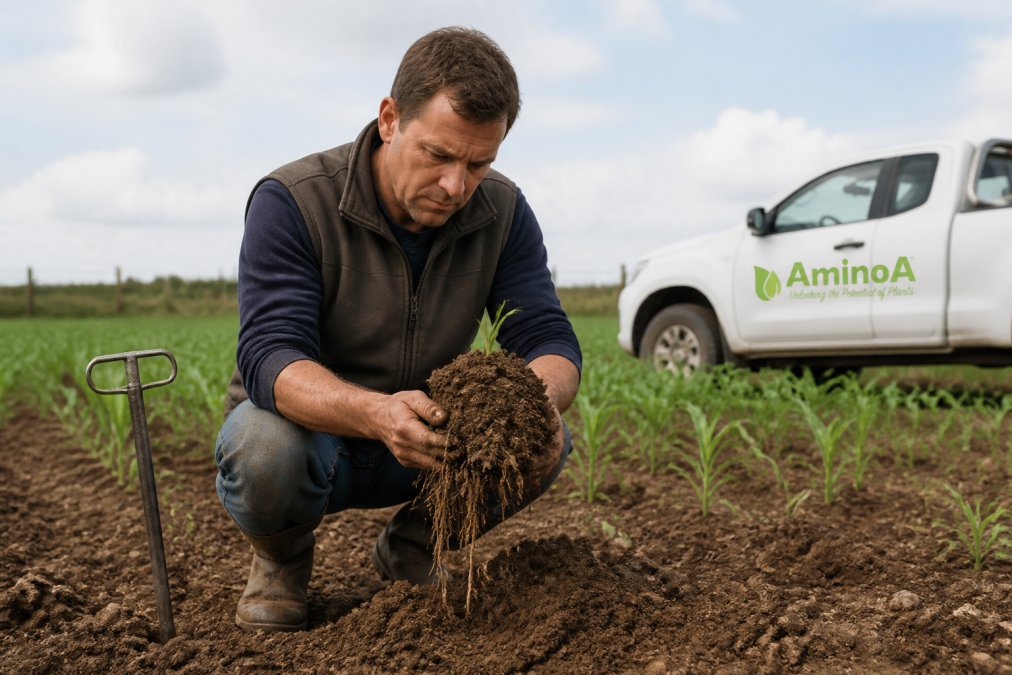
Identifying compaction is straightforward. Dig a soil pit to about 30 centimetres depth and examine the structure. Compacted soil feels hard and dense. Roots stop abruptly at the compaction layer instead of extending deeper.
Look for these physical signs:
- Shallow root systems, roots cluster near the surface instead of reaching down
- Hard, crusty surface, soil resists digging and water penetration
- Poor water drainage, water pools on the surface or runs off instead of soaking in
- Reduced plant vigour, crops appear stressed, yellowed, or stunted despite adequate moisture
- Visible soil layering, distinct bands of dense soil mark compaction zones
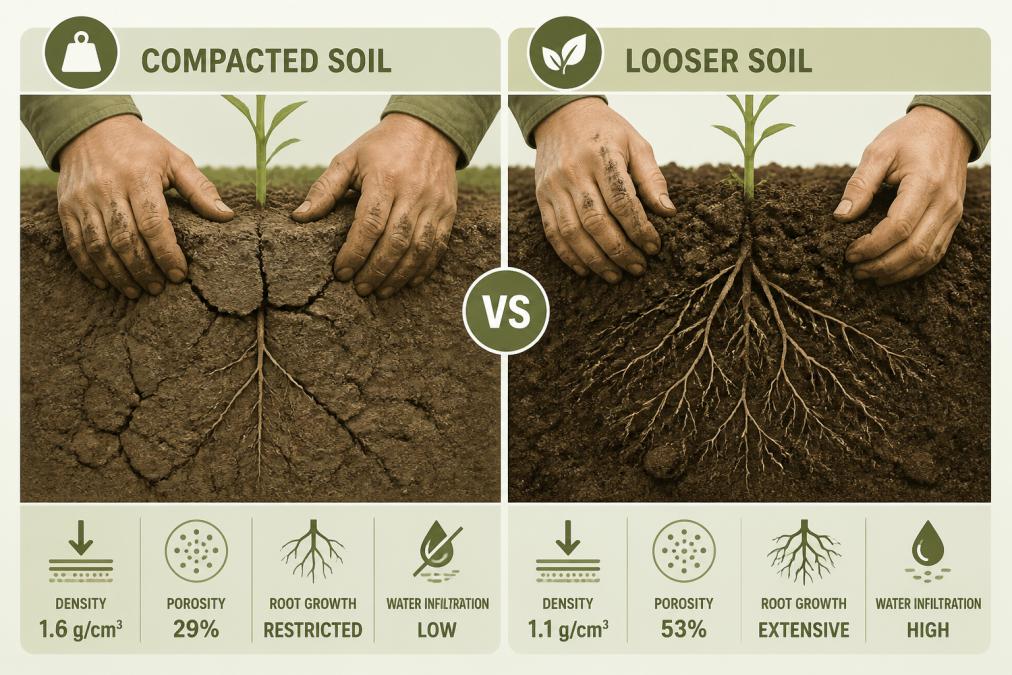
A simple test confirms compaction. Push a metal rod or soil probe into the ground. Compacted soil stops the probe at a shallow depth. Loose soil allows it to penetrate deeper without resistance. This tells you exactly where compaction begins and how severe it is.
Soil Compaction Management Strategies That Work
Several proven approaches improve root growth in compacted soils and restore productivity. The strategy you choose depends on your soil type, crop, and available equipment.
Mechanical loosening breaks up compacted layers. Deep tillage or subsoiling shatters hard soil without fully inverting it. This creates space for roots to penetrate. However, mechanical methods can be costly and temporary, compaction returns if you don't address the underlying cause.
Reduced traffic prevents new compaction. Limit machinery passes over fields. Use lighter equipment when possible. Concentrate traffic on permanent pathways rather than spreading it across the entire field. This simple change stops the problem from worsening.
Cover crops and organic matter improve soil structure over time. Plant deep-rooted species like alfalfa or chicory. Their roots break through compacted layers naturally. When you incorporate plant material, it increases soil porosity and water-holding capacity.
Biological soil conditioners work with soil microbes to improve structure. These products stimulate microbial activity, which binds soil particles and creates stable aggregates. Better aggregation means more pore space and easier root penetration.
The best approach combines multiple strategies. Mechanical loosening provides immediate relief. Reduced traffic prevents recurrence. Organic inputs and biological products rebuild soil health long-term. Together, they create lasting improvement.
Benefits of Amino Acid Biostimulants for Root Development
Amino acid biostimulants enhance root growth directly. They provide building blocks that plants use to develop stronger, more extensive root systems. When roots grow more vigorously, they penetrate compacted soil more effectively.
AminoA biostimulants contain L-α amino acids in their most bioavailable form. Plants absorb these amino acids rapidly and use them for protein synthesis and cell growth. The result is more root biomass and deeper root penetration, exactly what compacted soils require.
Strong roots do more than just grow deeper. They improve water and nutrient uptake. They increase stress resistance, helping crops withstand drought, cold, and heat. They also enhance recovery from agrochemical damage, making them valuable when you're adjusting spray programmes.
Trials have demonstrated real results. Velcourt trials found that adding AminoA FLO to reduced fungicide rates maintained yields and improved green leaf area in winter wheat. The amino acids compensated for lower chemical inputs by strengthening plant physiology.
Organic Soil Conditioners for Commercial Farms
Commercial farms need soil conditioners that deliver measurable results without compromising certification or profitability. Organic options work within regulatory frameworks whilst improving soil structure. Consistent application of these amendments fosters a resilient subterranean environment, which remains the most effective method for improving soil quality when managing the unique demands of tropical plant cultivation.
Compost and aged manure add organic matter and beneficial microbes. They're cost-effective at scale and improve soil biology over seasons. The downside is volume, you need significant quantities to treat large areas, and transport costs can be substantial.
Biochar improves water retention and microbial habitat. It's particularly useful in sandy soils or drought-prone regions. However, it requires proper application rates to avoid nutrient lock-up.
Humic and fulvic acids enhance nutrient availability and stimulate microbial activity. They're concentrated products, so transport and application costs are lower than bulk organic matter. Results appear within a season.
Mycorrhizal fungi and bacterial inoculants colonise roots and extend their effective reach. They help roots access nutrients in compacted soil by expanding the zone they can draw from. Effectiveness depends on soil conditions and proper application timing.
For certified organic operations, all these options are approved. The key is matching the conditioner to your soil type and budget. Sandy soils benefit more from water-retaining products. Clay soils need structure-building inputs. Loamy soils respond well to microbial inoculants.
Implementing Your Root Growth Strategy: Step-by-Step
A structured approach ensures you address compaction systematically and measure progress.
Step 1: Assess your soil thoroughly
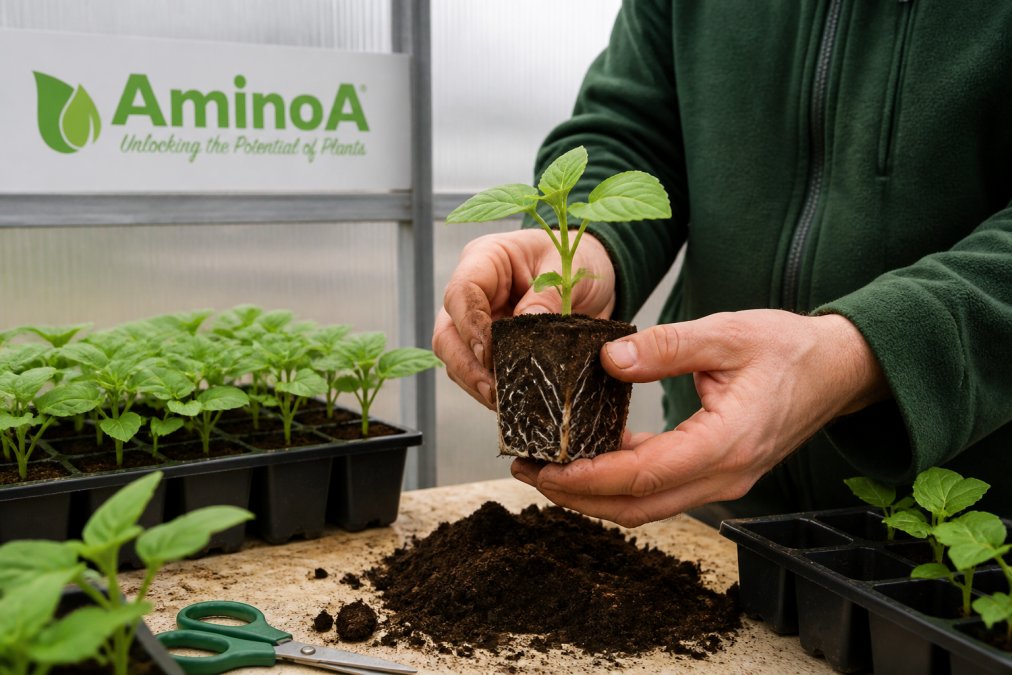
Dig test pits at multiple locations. Record depth of compaction, soil texture, and current root depth. Photograph the results. This baseline lets you measure improvement later.
Step 2: Choose your primary mechanical approach
Decide between subsoiling, deep tillage, or no-till strategies. Consider equipment availability and cost. Plan timing, autumn or early spring is ideal in most regions, when soil moisture is optimal.
Step 3: Apply biological or chemical inputs
If using amino acid biostimulants like AminoA products, apply them according to label rates. Timing matters, apply when roots are actively growing. Spring applications support new root development. Repeat applications through the season maintain vigour.
Step 4: Implement traffic management
Mark permanent machinery pathways. Brief your team on the new protocol. Concentrated traffic prevents compaction spread and allows untouched areas to recover.
Step 5: Plant cover crops or organic matter crops
Select species suited to your climate and soil. Deep-rooted varieties like lucerne or chicory penetrate compacted layers naturally. Incorporate plant material before the next cash crop.
Step 6: Monitor and reassess
After 8-12 weeks, dig new test pits in the same locations. Compare root depth, soil structure, and plant vigour to your baseline. If improvement is visible, continue the strategy. If progress is slow, adjust inputs or application rates.
Step 7: Document results
Keep records of what you did, when, and what changed. This data guides future decisions and helps you refine your approach over multiple seasons.
Common Mistakes to Avoid When Addressing Soil Compaction
Expecting overnight results is unrealistic. Soil structure improves gradually. Mechanical loosening works quickly, but biological recovery takes months. Set realistic timelines, expect to see measurable improvement within a season, not weeks.
Treating compaction once and forgetting it wastes effort. If you don't change your practices, compaction returns. Ongoing traffic management and regular organic inputs prevent recurrence.
Applying inputs at the wrong time reduces effectiveness. Biostimulants work best when roots are actively growing. Mechanical loosening is ineffective in frozen or waterlogged soil. Match your actions to the growing season.
Ignoring soil type leads to poor choices. Sandy soils and clay soils need different approaches. What works for one won't necessarily work for the other. Know your soil before investing in treatment.
Over-relying on single solutions is common but ineffective. Compaction is a complex problem. Mechanical, biological, and management strategies together outperform any single approach alone.
Skipping the assessment phase means you don't know if your treatment worked. Without baseline measurements, you can't prove improvement or adjust your strategy. Always measure before and after.
Compacted soil limits crop potential, but it's not permanent. A combination of mechanical relief, biological enhancement, and ongoing management restores root growth and soil health. AminoA amino acid biostimulants strengthen root development and improve stress resistance, making them a valuable tool in any compaction recovery strategy. Start with a clear assessment of your soil, apply targeted interventions, and monitor progress through the season. Over time, you'll rebuild soil structure and unlock the productivity your crops are capable of achieving.
Frequently Asked Questions
What are the signs of soil compaction affecting my crops?
Compacted soil restricts root growth, leading to shallow root systems, poor nutrient uptake, and stunted plant development. Look for yellowing leaves, wilting despite adequate moisture, reduced yields, and difficulty penetrating the soil with a spade. Heavy clay soils and repeated trafficking from machinery are common causes. Amino acid biostimulants help roots overcome these barriers by enhancing their ability to penetrate dense soil and improving nutrient availability in restricted rooting zones.
How do amino acid biostimulants assist root growth in dense soil?
Amino acids provide essential building blocks for root cell development and strengthen cell walls, enabling roots to push through compacted layers more effectively. They also enhance nutrient uptake efficiency, meaning roots can access more nutrition even in poor soil conditions. The L-α amino acids in biostimulants stimulate root branching and lateral growth, creating a more extensive root system capable of accessing deeper soil layers and moisture reserves.
Can organic soil conditioners really improve root penetration in heavy clay?
Yes. Organic matter improves soil structure by increasing porosity and reducing bulk density, making it easier for roots to penetrate. Combined with mechanical aeration and biological approaches, organic conditioners create conditions where roots can establish more effectively.
How long does it take to see improvements in root growth after treatment?
Initial improvements in root development can be observed within 2-4 weeks of applying amino acid biostimulants, particularly when combined with soil aeration. Measurable yield improvements and sustained soil structure benefits typically appear across the growing season and become more pronounced in subsequent seasons. Long-term benefits include reduced compaction recurrence, improved water infiltration, and enhanced nutrient cycling that compounds over multiple crop rotations.