 how-to
Foliar Application Techniques for Better Absorption
Table of Contents
- Why Foliar Application Techniques Matter for Crop Performance
- Best Time to Apply Foliar Fertiliser for Maximum Uptake
- Foliar Spray Droplet Size and Its Effect on Leaf Coverage
- Understanding Foliar Fertiliser Absorption Time
- Preventing Foliar Fertiliser Leaf Burn During Application
- Step-by-Step Guide to Effective Foliar Application
- Common Mistakes to Avoid When Using Foliar Application Techniques
- Frequently Asked Questions
Last Updated: 5 October 2026
Why Foliar Application Techniques Matter for Crop Performance
Foliar application techniques deliver nutrients directly to plant leaves, where they are absorbed quickly and efficiently. This method bypasses soil uptake limitations and provides fast nutrient availability when crops need it most. Growers use foliar application techniques to address nutrient deficiencies, enhance stress tolerance, and improve overall crop yield and quality.
Traditional soil-applied fertilisers can take weeks to become available to plants. Foliar feeding works differently. Nutrients enter through leaf surfaces in days, sometimes hours. This speed matters when crops face stress or when growth stages demand rapid nutrient access.
The science is straightforward: leaves have cuticles and stomata that allow nutrient penetration. When you apply the right product at the right time using the right technique, absorption rates improve dramatically. Poor technique wastes product and reduces results.
At AminoA, we've worked with growers across the UK for over a decade, and we've observed how technique transforms outcomes. The difference between a mediocre foliar application and an effective one often comes down to understanding absorption mechanics and timing.
Best Time to Apply Foliar Fertiliser for Maximum Uptake
The best time to apply foliar fertiliser is early morning or late evening when leaf stomata are most open. Stomata close during midday heat, which blocks nutrient absorption. Temperature, humidity, and light all influence when uptake occurs most efficiently.
Early morning applications work well because:
- Dew on leaves increases moisture for better absorption
- Stomata remain open as temperatures rise slowly
- Plants have overnight recovery time before stress
- Wind speeds are typically lower, reducing drift
Late evening applications also perform well:
- Cooler temperatures reduce water loss from spray
- Stomata stay open longer as light fades
- Overnight moisture settles the product on leaves
- Reduced UV exposure protects nutrient integrity
Avoid midday applications between 10 AM and 4 PM. Heat stress closes stomata and causes rapid water evaporation, leaving nutrients stranded on leaf surfaces.
Weather conditions matter equally. Apply foliar fertiliser when:
- Air humidity exceeds 60%
- Rainfall isn't forecast within 4 hours
- Wind speed stays below 15 km/h
- Temperatures sit between 15°C and 25°C
Timing within the crop cycle also affects results. Apply during active growth phases when demand is highest: early leaf expansion, pre-flowering, and fruit development stages. These periods see the fastest nutrient uptake and the strongest growth response.
Foliar Spray Droplet Size and Its Effect on Leaf Coverage
Droplet size determines how much leaf surface area receives coverage. Smaller droplets spread further and coat more leaf area. Larger droplets concentrate product in fewer spots and may run off without being absorbed.
The optimal droplet size for foliar application techniques ranges between 100 and 200 microns. This size balances coverage, absorption time, and drift risk. Droplets smaller than 100 microns drift easily and miss target plants. Droplets larger than 200 microns don't spread across leaf surfaces effectively.
How to achieve the right droplet size:
- Use nozzles rated for medium spray patterns
- Operate at recommended pressure settings (2-3 bar for most equipment)
- Match nozzle type to your sprayer model
- Check nozzle wear and replace worn nozzles regularly
Flat-fan nozzles produce medium droplets suitable for most foliar work. Air-induction nozzles reduce drift and work well in windy conditions. Hollow-cone nozzles create finer droplets for dense crops with thick canopies.
Water volume also affects droplet formation. Lower volumes with higher pressure create smaller droplets. Higher volumes with lower pressure create larger droplets. Adjust both to match your target coverage needs.
Poor droplet size leads to wasted product and uneven crop response. Some plants receive excess nutrient whilst others receive none. This creates patchy growth and reduces overall yield benefit.
Understanding Foliar Fertiliser Absorption Time
Foliar fertiliser absorption begins within minutes of application but continues over hours. The speed depends on product type, leaf condition, and environmental factors.
Most nutrients start entering leaves within 5-15 minutes of contact. Peak absorption typically occurs between 2 and 8 hours after application. Some uptake continues for 24 hours, though the rate slows significantly after 12 hours.
Water and humidity speed absorption. Wet leaves absorb nutrients faster than dry ones. High humidity keeps leaf surfaces moist longer, extending the absorption window. Dry conditions cause rapid water evaporation, which halts nutrient movement into leaf cells.
Temperature influences absorption rate. Warmer leaves (within the 15-25°C range) absorb faster than cold ones. Below 10°C, absorption slows dramatically. Above 30°C, heat stress closes stomata and blocks uptake.
Leaf age affects uptake speed. Young, actively growing leaves absorb nutrients faster than mature leaves. Older leaves have thicker cuticles that slow penetration. Target young growth areas for best results.
Nutrient type matters too. Some nutrients move through leaf tissue faster than others. This is why products like AminoA's L-α amino acid biostimulants deliver faster results than larger nutrient molecules.
Preventing Foliar Fertiliser Leaf Burn During Application
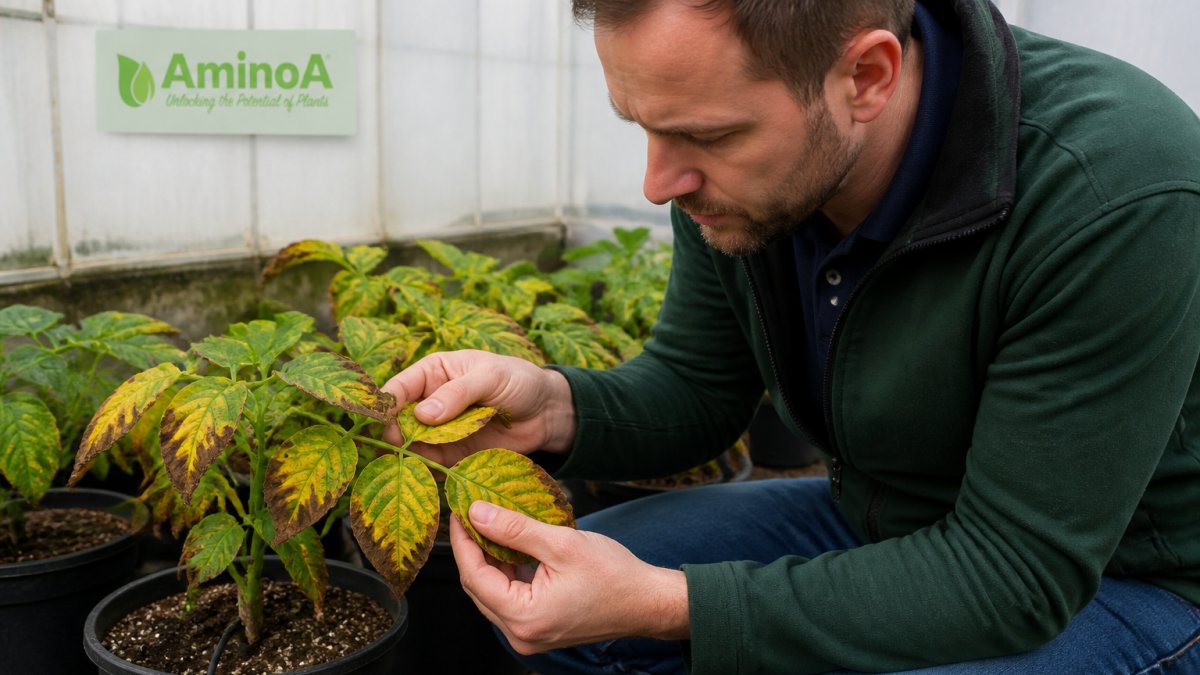
Leaf burn occurs when nutrient concentration on leaf surfaces becomes too high, damaging cell tissue. This appears as brown spots, bleached patches, or scorched leaf edges. Prevention requires careful attention to product rate, water volume, and application conditions.
Follow these rules to avoid leaf burn:
- Use product rates specified on the label (never exceed recommendations)
- Mix thoroughly with adequate water volume (higher water volumes dilute concentration)
- Avoid applications during heat stress or extreme temperatures
- Never apply to drought-stressed plants without pre-irrigation
- Test on a small area first if using a new product
Water volume is critical. Concentrated solutions burn leaves. Diluting the same nutrient dose across more water reduces leaf surface concentration and prevents damage. A 100-litre water volume per hectare is safer than 50 litres for the same nutrient amount.
Leaf surface condition affects burn risk. Dusty or waxy leaves resist nutrient penetration, allowing product to sit on the surface and concentrate. Clean leaves with water spray before application to improve uptake and reduce burn risk.
Avoid tank-mixing incompatible products. Some fungicides, insecticides, or growth regulators interact with fertilisers and increase phytotoxicity risk. Check product labels for compatibility before mixing. When in doubt, apply products separately with a 7-10 day gap between applications.
Young seedlings and newly emerged leaves are more sensitive to burn than mature foliage. Reduce application rates by 25-50% on young crops. Increase water volume to spread the dose across more leaf area.
Step-by-Step Guide to Effective Foliar Application
Effective foliar application techniques require preparation, correct execution, and post-application monitoring. Follow this structured approach to maximise absorption and results.
Pre-application Preparation
Start by checking weather conditions. Confirm that temperature sits between 15°C and 25°C, humidity exceeds 60%, and no rain is forecast within 4 hours. If conditions aren't ideal, reschedule to early morning or evening.
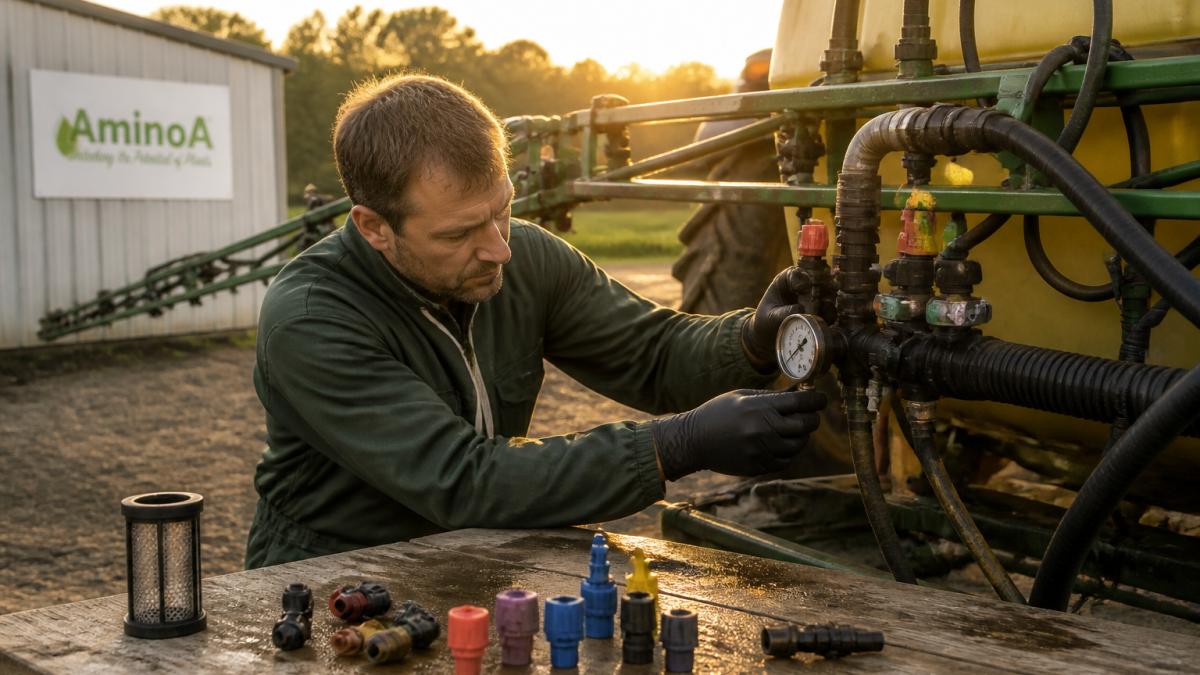
Inspect your sprayer equipment. Check nozzles for wear or blockages. Clean the tank and lines to remove residue from previous applications. Verify that pressure gauges work accurately and that hoses show no cracks or leaks.
Prepare the spray solution. Fill the tank with clean water first. Add product according to label rates. Mix thoroughly for 2-3 minutes. If using AminoA's L-α amino acid biostimulants, ensure complete dissolution before adding any tank-mix partners.
Test the sprayer on a small area away from the target crop. Observe spray pattern, droplet size, and coverage. Adjust nozzles or pressure if coverage looks uneven or droplets appear too large.
Application Method and Equipment
Start spraying in early morning or late evening when conditions are optimal. Begin at one edge of the field and move systematically across, overlapping passes slightly to ensure complete coverage.
Maintain consistent sprayer speed and pressure throughout application. Variable speed or pressure creates uneven coverage. Most growers find 5-7 km/h walking speed works well with standard boom equipment.
Spray height matters. Position the boom 45-60 cm above the crop canopy. Too high and droplets drift before reaching leaves. Too low and you risk hitting soil or creating run-off.
Direct spray toward the underside of leaves where stomata are most concentrated. Underside coverage improves absorption significantly. Adjust boom angle or use air-assisted nozzles to direct spray upward into the canopy.
For hand-held or knapsack sprayers, use smooth, even motions. Avoid concentrating spray in one area. Move the nozzle in a pattern that covers all leaf surfaces, tops and undersides.
Monitor tank pressure continuously. Pressure drops as the tank empties. Adjust throttle or nozzle settings to maintain consistent pressure and droplet size throughout application.
Post-application Monitoring
Observe crop response over the following 24-48 hours. Healthy leaf absorption shows no visible damage. Leaves may appear slightly wet or glossy immediately after application, but this dries within 2-4 hours.
Check for leaf burn symptoms starting 6 hours after application. Brown spots, bleached patches, or scorched edges indicate phytotoxicity. If burn appears, note the severity and investigate the cause: excessive rate, incompatible tank mix, or poor environmental conditions.
Monitor crop growth over the following 7-14 days. Nutrient response shows as improved leaf colour, faster growth, or better stress tolerance depending on the product and crop stage.
Record application details: date, time, product used, rate, water volume, weather conditions, and any observed results. This data helps you refine technique and timing for future applications.
If using AminoA amino acid biostimulants, expect to see enhanced root development, improved stress resistance, and stronger bud and blossom formation. Results compound with repeated applications at recommended intervals.
Common Mistakes to Avoid When Using Foliar Application Techniques
Most growers make the same errors repeatedly. Learning what not to do saves product cost and improves results.
Spraying during midday heat. Stomata close when temperatures exceed 25°C. Nutrients sit on leaf surfaces and wash off without absorption.
Using too little water. Concentrated solutions burn leaves and reduce absorption. Higher water volumes dilute concentration and improve coverage.
Ignoring nozzle wear. Worn nozzles produce uneven droplet sizes and poor coverage.
Applying to drought-stressed crops. Stressed plants have closed stomata and reduced absorption capacity.
Mixing incompatible products. Tank-mixing fungicides, insecticides, or growth regulators without checking compatibility increases phytotoxicity risk.
Applying excessive rates. More product doesn't equal better results. Excessive rates cause leaf burn and waste money.
Spraying without checking weather forecasts. Rain within hours of application washes off unabsorbed nutrients. Wind above 15 km/h causes drift.
Neglecting equipment maintenance. Blocked nozzles, corroded tanks, and worn seals reduce performance and reliability.
Timing applications incorrectly. Applying too early or too late in crop development reduces response.
Mastering foliar application techniques transforms crop nutrition strategy.
| Technique Element | Optimal Condition | Why It Matters |
|---|---|---|
| Application timing | Early morning or evening | Open stomata allow faster absorption |
| Temperature | 15-25°C | Optimal for stomatal function and uptake |
| Humidity | Above 60% | Extends leaf wetness and absorption window |
| Droplet size | 100-200 microns | Balances coverage and absorption efficiency |
| Water volume | 100+ litres/hectare | Prevents leaf burn and ensures even coverage |
| Leaf surface | Underside preferred | Higher stomatal density improves uptake |
| Weather | No rain within 4 hours | Prevents nutrient wash-off before absorption |
Frequently Asked Questions
What is the best time of day to apply foliar fertiliser?
Early morning or late afternoon are optimal for foliar application. These times minimise water loss through evaporation and reduce the risk of leaf burn from direct sunlight. Apply when temperatures are below 25°C and humidity is high, allowing the spray to remain on leaf surfaces long enough for absorption. Avoid midday applications when heat stress and rapid drying reduce nutrient uptake significantly.
How long does foliar fertiliser absorption take?
Nutrient absorption through foliar application typically begins within 15-30 minutes under optimal conditions, with significant uptake occurring within 2-4 hours. Complete absorption can take 24-48 hours depending on environmental conditions, leaf surface characteristics, and the specific nutrient formulation. Rainfall or irrigation within the first 4 hours can wash off unabsorbed nutrients, so timing applications before dry periods improves effectiveness.
Can foliar fertiliser cause leaf burn on my crops?
Yes, leaf burn can occur if concentrations are too high, temperatures exceed 25°C during application, or products are applied in strong sunlight. Amino acid biostimulants like AminoA are formulated to minimise this risk, but always follow label rates and avoid tank-mixing incompatible products. Test on a small area first, especially when combining with fungicides or insecticides, as some combinations increase phytotoxicity risk.
What droplet size should I use for foliar spray applications?
Fine droplets of 100-200 micrometres are ideal for foliar application, providing optimal leaf coverage and absorption. Droplets smaller than 100 micrometres risk drift and reduced coverage, whilst larger droplets may not adhere to leaf surfaces effectively. Modern nozzles allow precise control of droplet size; select equipment rated for fine mist production and calibrate regularly to maintain consistent application quality.