 ultimate-guide
Natural Alternatives to Synthetic Root Growth Promoters
Table of Contents
- How Synthetic and Natural Root Growth Promoters Differ
- Liquid Biostimulants vs Granular Fertilisers: What Actually Reaches the Roots
- Natural Alternatives to Synthetic Root Growth Promoters: Traditional Options
- L-α Amino Acid Biostimulants for Crops: A Commercial-Grade Natural Option
- Reducing Agrochemical Reliance in Farming Without Losing Yield
- How to Apply Natural Root Growth Promoters for Best Results
- Conclusion
- Frequently Asked Questions
Last Updated: September 10, 2026
How Synthetic and Natural Root Growth Promoters Differ
Synthetic root growth promoters are formulated, concentrated compounds, typically auxin-based, designed to force a specific hormonal response in a plant. Natural alternatives to synthetic root growth promoters work differently: they supply the raw materials a plant already uses to build its own root tissue, rather than overriding its internal signalling.
That distinction matters more than most growers realise.
Synthetic rooting products usually contain indole-3-butyric acid (IBA) or naphthaleneacetic acid (NAA) at high concentration. Applied to a cutting, they push rapid callus formation and root initiation. The effect is fast and predictable, which is why they dominate commercial propagation. The trade-off is that they bypass the plant's own regulation, and they do nothing for the soil biology or the plant's longer-term stress response.
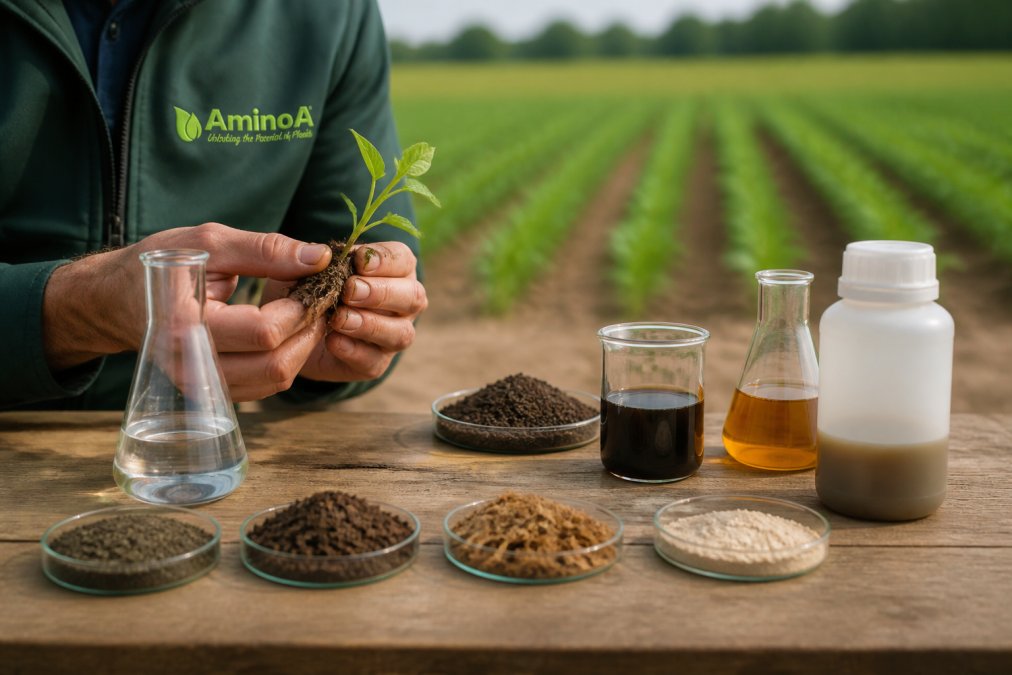
Natural options fall into two broad groups. The first is traditional DIY preparations, such as willow water, aloe vera gel, honey, and cinnamon, which supply mild natural auxins, salicylic acid, or antifungal protection. The second is commercial biostimulants, particularly L-α amino acid formulations, which feed the plant's own hormone precursors and support root architecture over a full season rather than a single propagation event.
The practical difference: synthetics are a one-off trigger. Natural promoters are a nutritional programme.
Liquid Biostimulants vs Granular Fertilisers: What Actually Reaches the Roots
Liquid biostimulants deliver nutrition and bioactive compounds directly to leaf and root tissue, while granular fertilisers release bulk nutrients slowly into the soil solution. The two are not interchangeable, and confusing them is one of the most common mistakes in crop nutrition planning.
Granular products, whether straight NPK or compound blends, depend on soil moisture, temperature, and microbial activity to break down and become plant-available. That release is slow, which suits base nutrition but makes granular products poorly suited to correcting a deficiency or supporting a plant through a stress event.
Liquid applications, by contrast, are taken up through the leaf within hours and through the root zone almost immediately. For amino acid biostimulants, this speed is the point. A foliar or fertigated application timed before a heat spike or a cold snap gives the plant usable building blocks when it needs them most.
| Factor | Liquid Biostimulants | Granular Fertilisers |
|---|---|---|
| Uptake speed | Hours to days | Weeks, moisture-dependent |
| Primary role | Support stress response, root and tissue development | Bulk nutrient supply |
| Application timing | Reactive, matched to growth stage | Planned, pre-drilled or broadcast |
| Soil biology impact | Supports microbial activity | Indirect, can imbalance biology |
| Best used for | Targeted intervention | Base fertility programme |
The sensible approach is not to choose between them. Granular maintains the baseline. Liquid biostimulants handle the moments that decide yield.
Natural Alternatives to Synthetic Root Growth Promoters: Traditional Options
Before commercial biostimulants existed, growers used what they had. Several of these traditional methods still hold up, though each has real limits worth understanding before you commit a crop to them.
Willow Water
Willow water is a homemade extract steeped from fresh willow shoots, and it contains natural salicylic acid alongside indolebutyric acid analogues. Salicylic acid supports the plant's own immune response, while the auxin-like compounds encourage rooting in cuttings.
The method is simple: cut young willow stems into short lengths, steep them in water for several days, and use the resulting liquid as a soak for cuttings. The Royal Horticultural Society's propagation guidance covers the underlying principles of cutting propagation well.
Its weaknesses are consistency and scale. Potency varies with the age of the shoots and the steep time, and there is no reliable way to standardise the concentration. It suits a home grower with a few dozen cuttings. It does not suit a field-scale programme.
Aloe Vera Gel and Raw Honey
Aloe vera gel and raw honey are both used as cutting dips, and they work for different reasons. Aloe contains glucomannans, plant sterols, and amino acids that support cellular development, and it forms a protective barrier against soil-borne bacteria. Honey is naturally antibacterial and antifungal, which reduces rot in soft-stemmed cuttings while they establish (peer-reviewed research).
Both are readily available and safe for organic systems. Neither contains meaningful concentrations of rooting hormones, so expect slower root initiation than a synthetic dip would give. Fresh application matters, particularly with aloe, which loses potency once opened.
Cinnamon as a Fungal Guard
Cinnamon is a fungicide, not a rooting hormone. Applied as a powder to the cut surface of a stem, it suppresses the fungal pathogens responsible for damping off during propagation.
Use it as a supporting measure, not a primary treatment. Applied too heavily, cinnamon draws moisture from the stem and can set a cutting back. A light dusting is enough.
L-α Amino Acid Biostimulants for Crops: A Commercial-Grade Natural Option
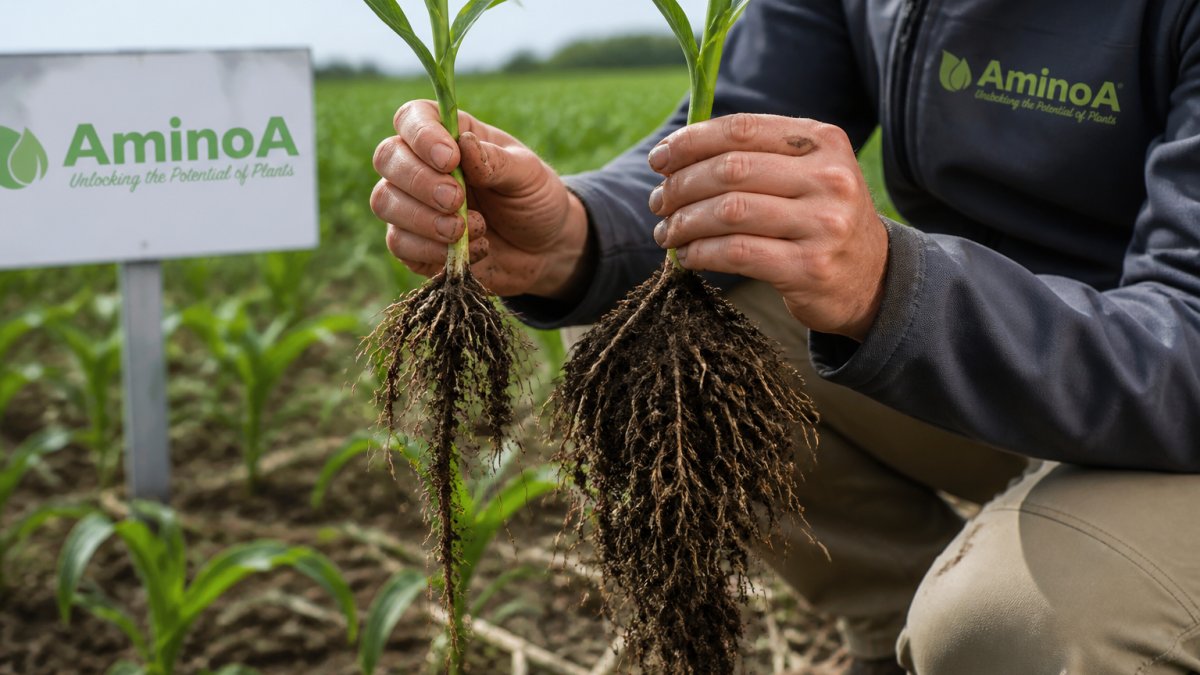
L-α amino acid biostimulants are free-form amino acids in the L-configuration, the form plants can absorb and use directly without conversion. This is the category where natural root promotion becomes practical at field scale.
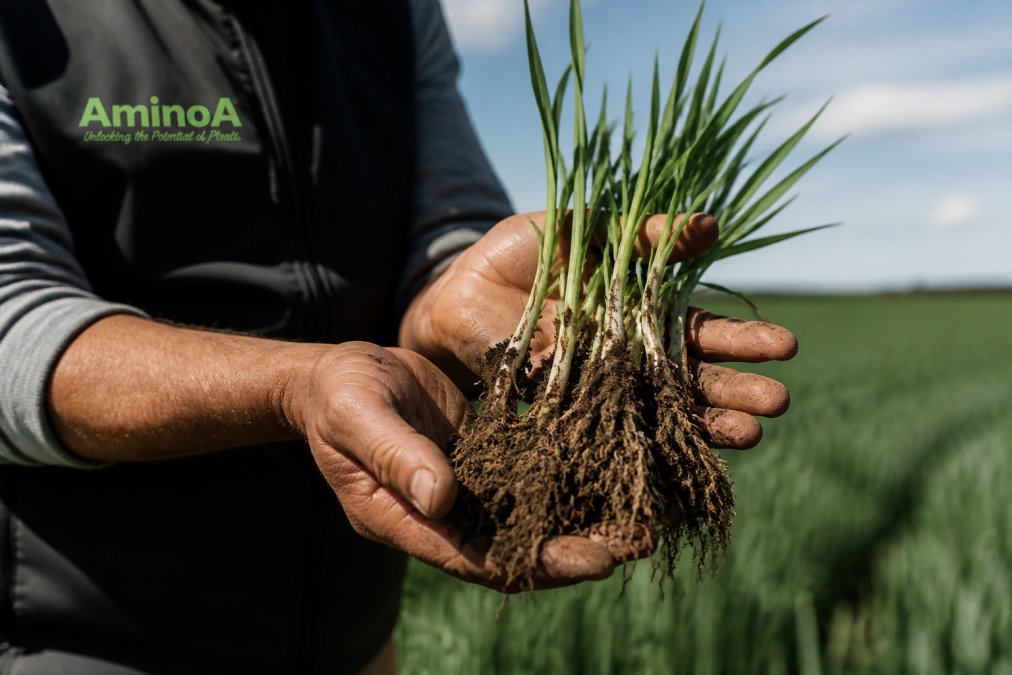
The mechanism is straightforward. Plants build proteins from roughly twenty amino acids, and they synthesise those amino acids themselves using energy that would otherwise go into growth. When you supply them ready-made, the plant redirects that energy into root development, tillering, and stress defence. Tryptophan, for example, is a precursor to auxin production, so supplying it supports the plant's own rooting signalling rather than replacing it (peer-reviewed research).
AminoA manufactures L-α amino acid biostimulants through enzymatic hydrolysis, producing a product where every essential amino acid is present in the L form, alongside nitrogen, potassium, iron, and magnesium. The company has operated in this market for a decade, working with arable, horticultural, and organic growers.
The case for this category over traditional DIY methods comes down to consistency. A manufactured biostimulant has a known concentration and a known amino acid profile. You can build it into a spray programme and predict what it will do. That is not true of willow water.
The case for it over synthetics is subtler. Synthetic rooting hormones act on a cutting over days. Amino acid biostimulants support the plant across a whole season, improving root architecture, helping it through cold, heat, and drought stress, and reducing the phytotoxicity damage that follows a poorly timed tank mix. For a grower trying to reduce agrochemical reliance without losing yield, that broader support is the more useful tool.
Reducing Agrochemical Reliance in Farming Without Losing Yield
Reducing agrochemical reliance is not the same as eliminating inputs. The growers who manage it successfully treat it as a gradual substitution, replacing the products that do least for yield first, and using biostimulants to hold the line on plant health while they do.
The realistic sequence looks like this:
- Identify the sprays in your programme that deliver the least marginal yield benefit
- Reduce those rates first, in a controlled block, and monitor
- Support the crop with a biostimulant programme timed to its stress windows
- Compare green leaf area and yield against your standard programme before extending the change
That last step is where most growers stop short, and it is the one that matters. Velcourt trials found that adding AminoA FLO to reduced fungicide rates maintained yields and improved green leaf area in winter wheat. That is the pattern to look for: not a yield increase from the biostimulant on its own, but a yield that holds while the chemical input comes down.
What most guides miss is that the biostimulant is doing two jobs at once. It is supporting the plant through the stress of reduced chemical protection, and it is improving the root system's ability to take up what nutrition is there. Both effects compound over a season.
How to Apply Natural Root Growth Promoters for Best Results
Application timing and tank compatibility decide whether a natural root promoter earns its place in the programme. Get either wrong and you have spent money for nothing.
Timing and Application Rates
Apply amino acid biostimulants at the growth stages where the plant is building root or reproductive tissue, and ahead of known stress events rather than after them.
Key windows for arable crops:
- Early establishment, to support root architecture before the plant commits to its structure
- Pre-flowering, to support blossom and fruit formation
- Ahead of a forecast heat or cold event, so the plant has usable amino acids available when stress hits
- After a phytotoxic tank mix, to help the crop recover
Rates depend on crop, growth stage, and water volume, so work from the product label and your agronomist's recommendation rather than a generic figure. Over-application does not improve results and adds cost.
Tank Mixing and Compatibility
Amino acid biostimulants are generally compatible with many fungicides and insecticides, but compatibility is a property of the specific mix, not the category. Always jar-test before committing a full sprayer load.
Three rules reduce the risk:
- Never mix more than two or three products in a single tank unless the combination is documented as compatible
- Add products in the correct order, following the label sequence
- Test on a small area first if you are introducing a new combination to the programme
If you had phytotoxicity damage from a tank mix last season, the cause was almost certainly the combination or the order of addition, not the biostimulant alone. A jar test takes twenty minutes and costs nothing.
Conclusion
The shift away from synthetic root growth promoters is not a leap of faith. It is a substitution you can measure, block by block, season by season, with the right product and the right trial design behind it.
AminoA manufactures L-α amino acid biostimulants through enzymatic hydrolysis, with every essential amino acid in the L form and a high content of nitrogen, potassium, iron, and magnesium. Our products support root, leaf, and bud development, improve resistance to cold, heat, and drought stress, and help maintain yield when you reduce chemical inputs. With ten years serving growers in this market, we can help you design a programme that fits your rotation and your risk appetite.
Get started with AminoA and build a crop nutrition programme that holds yield while you cut back on agrochemicals.
Frequently Asked Questions
Are natural rooting alternatives as effective as synthetic hormones?
It depends on the alternative. Willow water and aloe vera contain natural auxins and salicylic acid that can encourage root initiation, but their potency varies. For commercial crops, L-α amino acid biostimulants offer consistent results by providing ready-to-use amino acids that support root development and stress resistance. Trials such as those with AminoA FLO in winter wheat have shown maintained yields even with reduced fungicide inputs, suggesting that natural options can perform well when matched to the crop and conditions.
How do L-α amino acid biostimulants support root development?
L-α amino acids are the building blocks of proteins and are taken up directly by plant roots and leaves. They stimulate cell division in root tips, enhance nutrient uptake, and help the plant produce auxins and other growth regulators. This leads to a larger, more branched root system that can access water and nutrients more efficiently. AminoA products contain all essential amino acids in the L form, produced through enzymatic hydrolysis, which makes them readily available to the plant.
What are the environmental benefits of moving away from synthetic growth promoters?
Synthetic growth promoters and high-input fertilisers can leach into watercourses, disrupt soil biology, and contribute to greenhouse gas emissions. Natural alternatives, particularly biostimulants based on amino acids or plant extracts, support soil microbial life and reduce the risk of nitrate pollution. They also help farmers comply with UK regulations such as the Farming Rules for Water. By improving nutrient use efficiency, they can lower the total volume of agrochemicals applied, benefiting both the environment and long-term soil health.
Can organic biostimulants improve crop yield compared to traditional chemicals?
In many cases, yes, especially when used as part of an integrated programme. Biostimulants are not a replacement for all fertilisers, but they can enhance the efficiency of applied nutrients and reduce stress-related yield losses. For example, AminoA FLO has been shown in Velcourt trials to maintain yields in winter wheat when fungicide rates were reduced. The key is to match the product to the crop's growth stage and to monitor results over a season. Organic certification must also be verified for the specific product.
How does root architecture benefit from natural biostimulant application?
Natural biostimulants can promote finer, more fibrous root systems with more root hairs, increasing the surface area for water and nutrient absorption. This improved architecture helps plants withstand drought and access nutrients that would otherwise be unavailable. Amino acid biostimulants also stimulate beneficial soil microbes that work with roots to release locked-up nutrients. The result is a more resilient plant that can maintain growth under stress, which is particularly valuable in variable UK weather conditions.