 how-to
Using Cover Crops to Reduce Soil Compaction: A Practical Guide
Last Updated: 1 November 2026
Quick Summary
Using cover crops to reduce soil compaction works by sending deep roots through compacted layers, creating channels that stay open once the plants decay. Choose deep-rooted species such as tillage radish, sow soon after harvest while soil is warm, and measure the compacted layer first with a penetrometer or spade.
- Measure compaction first by pushing a penetrometer or spade into soil at several points.
- Tillage radish is the standout choice for breaking a plough pan with its taproot.
- Sow brassicas by late summer for maximum taproot growth before winter.
- Keep mixtures to two or three species so aggressive plants do not crowd out the rest.
- Fix drainage first, because cover crops cannot outwork standing water.
Table of Contents
- Why Cover Crops Work on Compacted Soil
- How to Measure Soil Compaction Before You Sow
- The Best Cover Crops for Compacted Soil
- Cover Crop Sowing Time: Getting the Window Right
- Cover Crop Mixtures for Soil Health
- Common Mistakes That Undo the Work
- Supporting Roots With Amino Acid Biostimulants
- Planning Your First Cover Crop Season With AminoA
- Frequently Asked Questions
Why Cover Crops Work on Compacted Soil
Using cover crops to reduce soil compaction works because certain plants drive roots deep into the soil, creating channels that let air and water move again. This guide from AminoA explains how to choose species, time your sowing and measure the results.
Compaction is a physical problem. Machinery passes, livestock graze and heavy rainfall all squeeze soil particles together. Roots then struggle to push through.
Cover crops tackle this from below. Deep-rooted plants force a path through compacted layers. When they decay, those channels stay open.
Research reported in Soil Use and Management on cover crop effects on soil physical properties found that cover crops can reduce compaction and improve short-term soil structure. The same review noted no short-term fall in soil loss or runoff. That matters. Expect structural gains first, erosion benefits later.
How to Measure Soil Compaction Before You Sow
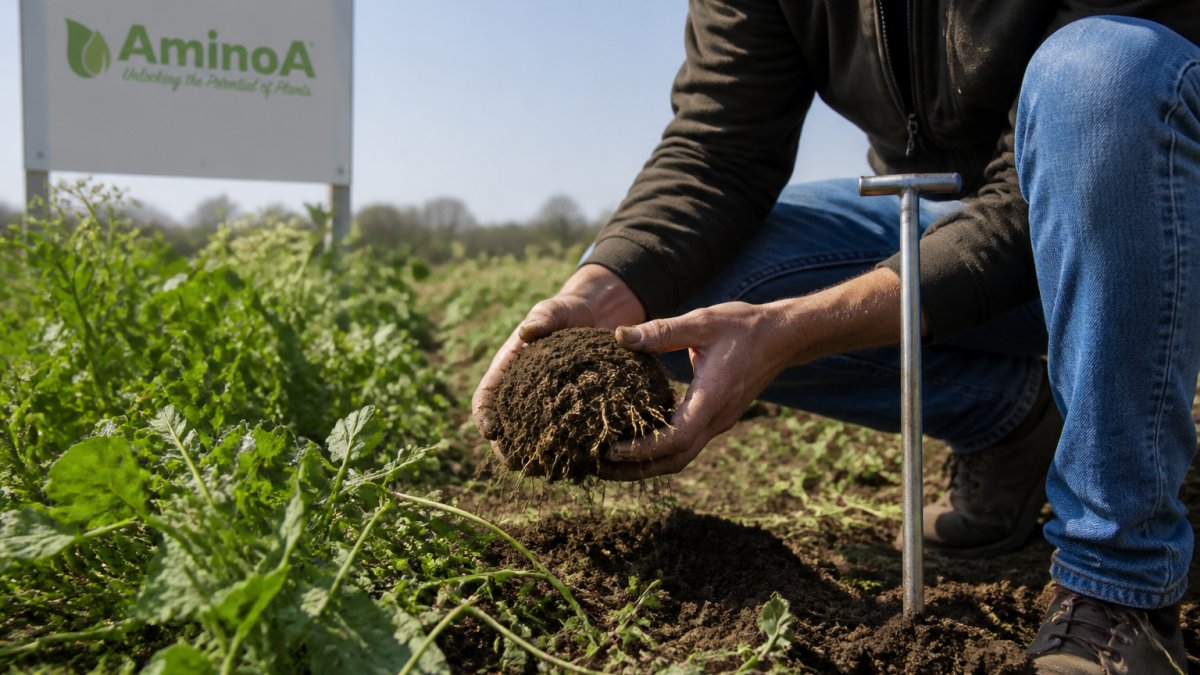
Measure soil compaction before sowing by pushing a penetrometer or spade into the soil at several points across the field. Record where resistance spikes. That layer is your target.
A simple field test takes minutes:
- Penetrometer readings: push steadily and note the depth where resistance jumps
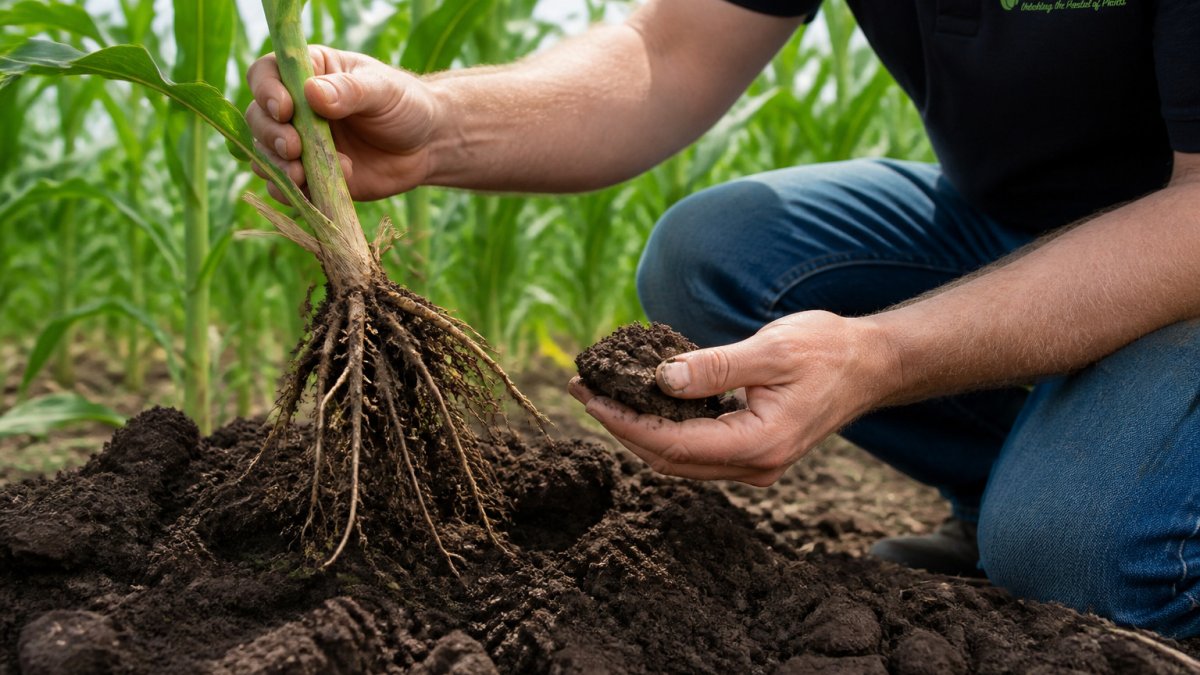
- Spade test: lift a block of soil and look for flat, plate-like structure
- Root inspection: check last season's roots for flattened, stubby growth
- Infiltration check: pour water into a ring and time how fast it drains
Sample in a W pattern across the field. Test when soil is moist, not soaked.
If you also want to check biological health alongside physical structure, our guide on measuring soil microbial activity for crop health walks through a practical method.
The Best Cover Crops for Compacted Soil
The best cover crops for compacted soil are those with aggressive, deep roots. Brassicas lead for taproot penetration. Legumes and grasses add different benefits.
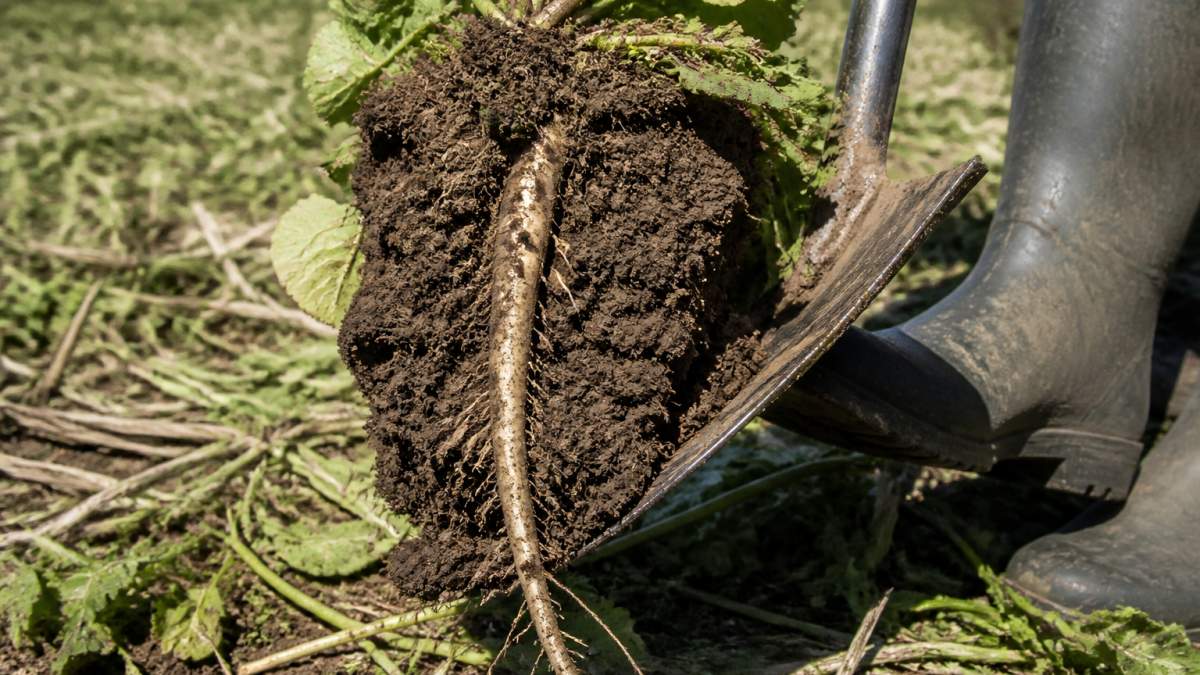
Tillage Radish and Other Brassicas
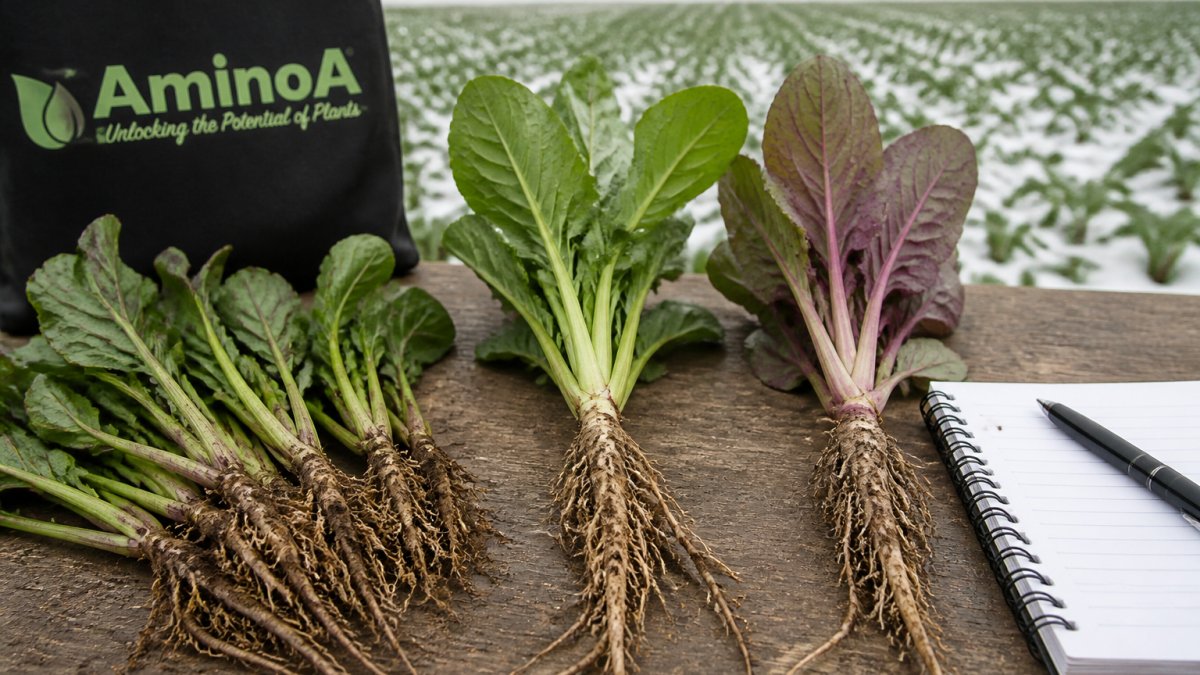
Tillage radish is the standout choice for breaking a plough pan. Its taproot can punch through compacted layers that other species avoid.
A University of Maryland study on brassica cover crops found forage radish and rape were more effective than rye at easing compaction effects on plant growth under no-till. Air permeability was higher in the radish and rape plots.
- Tillage radish: strongest taproot, winter-kills in most seasons
- Rape: similar rooting habit, more winter-hardy
- Rye: fibrous roots, better for surface structure than deep layers
Deep-Rooting Legumes and Grasses
Legumes fix nitrogen while they root. Grasses build surface structure and organic matter.
- Clovers: taproots plus nitrogen fixation
- Vetch: vigorous rooting, good in mixtures
- Ryegrass: dense fibrous roots for topsoil
- Phacelia: fast establishment, good weed suppression
If nitrogen fixation matters to your rotation, our article on using cover crops to fix nitrogen in farming covers which species deliver most.
Here is how the main cover crop options compare for tackling compacted layers.
| Crop | Root type | Best for |
|---|---|---|
| Tillage radish | Strong taproot | Breaking a plough pan |
| Rape | Taproot, similar to radish | More winter-hardy option |
| Rye | Fibrous roots | Surface structure, not deep layers |
| Clovers | Taproots | Nitrogen fixation |
| Vetch | Vigorous rooting | Good in mixtures |
| Ryegrass | Dense fibrous roots | Topsoil structure |
| Phacelia | Fast establishment | Weed suppression |
Cover Crop Sowing Time: Getting the Window Right
Cover crop sowing time depends on species and your rotation. Most growers sow within days of harvest, while soil is warm and moisture is available.
Late sowing means less root growth before winter. That reduces the compaction benefit.
- Brassicas: sow by late summer for maximum taproot growth
- Legumes: sow while soil is still warm enough for germination
- Grasses: flexible window, but earlier is better
- Mixtures: sow at the rate of the fastest-establishing species
Watch out: sowing into dry, cloddy seedbeds after a late harvest often produces patchy stands that do little for compaction.
Cover Crop Mixtures for Soil Health
Cover crop mixtures for soil health combine species with different rooting depths and habits. One species rarely fixes everything.
A brassica plus a legume plus a grass covers three layers at once. The radish breaks the pan, the legume feeds nitrogen and the grass builds surface tilth.
Keep mixtures simple. Two or three species are easier to manage than five. Check seed rates carefully so the aggressive species do not crowd out the rest.
Common Mistakes That Undo the Work
The biggest mistake is treating cover crops as a single-season fix. Compaction took years to build and takes time to undo.
Other common errors:
- Sowing too late for roots to develop
- Choosing one species for every field regardless of the problem layer
- Grazing too hard and re-compacting the soil
- Terminating before roots have done their work
- Ignoring drainage, which keeps soil wet and prone to compaction
Fix the drainage first. Cover crops cannot outwork standing water.
Supporting Roots With Amino Acid Biostimulants
Compacted soil makes root recovery slow. Amino acid biostimulants may support root growth while cover crops do the structural work.
At AminoA, we manufacture L-α amino acid biostimulants through enzymatic hydrolysis. Our products are high in nitrogen, potassium, iron and magnesium. Every essential amino acid is present in the L form.
The aim is simple: support root, leaf and bud development and help plants cope with stress. That includes cold, heat, drought and agrochemical phytotoxicity.
If you are weighing up options, our guide on choosing the right biostimulant for soil health sets out what to compare.
Planning Your First Cover Crop Season With AminoA
Start with measurement. Identify the compacted layer, pick species to match it, and sow on time.
Then support the crop. A biostimulant programme alongside cover crops gives roots the best chance to recover.
For a deeper look at fixing compaction beyond cover crops alone, read our guide on improving root growth in compacted soils. When you are ready to build a full programme, our grower's guide to integrating amino acid biostimulants covers the practical steps.
Frequently Asked Questions
Can cover crops reduce soil compaction on their own?
They can ease it, but they are not a complete fix. Pair cover crops with traffic management and avoid working wet ground, or the compaction returns each season.
Which cover crops are best for compacted soil?
Forage radish and rape are the strongest choices where a hard layer sits below the topsoil, because their taproots push through it and leave channels as they decay. On heavy land, a brassica-led mix sown early gives the best start. Test with a penetrometer first so you know which layer you are targeting.
How long does it take for cover crops to improve compacted soil?
Expect partial improvement in the first season and measurable change over two to three years. Brassica taproots can open up a compacted layer within one growing cycle, but the structure only holds if you repeat the treatment and keep traffic off wet soil. Judge progress on penetration resistance and rooting depth as well as yield.
How do I know whether soil compaction is improving?
Measure before you sow and again after the cover crop is incorporated. Push a penetrometer into moist soil at several points across the field and record the depth where resistance spikes. Dig a spade pit and look for roots turning sideways or flattening at a set depth. Fewer sideways roots, deeper penetration and better water infiltration after rain all point to progress. Keep the same measurement points each year so the comparison is fair.
Compaction rarely fixes itself, and one season of cover crops will not undo years of pressure. AminoA supplies 100% L-α amino acid biostimulants, produced through enzymatic hydrolysis, with every essential amino acid in the L form to support root development and stress resistance. Get started with AminoA and give your cover crops the root support they need.