 how-to
Managing Phosphorus Deficiency in Cold-Stressed Plants
Last Updated: 29 October 2026
Quick Summary
Phosphorus deficiency in cold-stressed plants usually means cold, wet soil is blocking root uptake rather than a genuine soil shortfall. Check root-zone temperature at 10cm first: below 8°C, uptake is heavily limited and soil-applied phosphate responds slowly. Confirm with a soil test before deciding between foliar support and soil-applied phosphate.
- Take root-zone readings at 10cm at the same time each morning for a week, not a single spot reading.
- Below 8°C root zone, uptake is heavily limited and soil-applied phosphate is often slow to respond.
- Dig up plants and inspect roots for compaction or waterlogging before spending on fertiliser.
- Work to the product label rate for foliar phosphorus and never exceed it to avoid leaf scorch.
- Re-check crops in 10-14 days for fresh white roots and new leaves without purple margins.
Table of Contents
- Why Cold Roots Stall Phosphorus Uptake Before Soil Runs Short
- Phosphorus Deficiency Symptoms in Plants and How Cold Stress Mimics Them
- Cold Soil and Phosphorus Uptake: Root-Zone Temperature Thresholds That Matter
- Soil Testing for Phosphorus Before You Spend on Fertiliser
- A Cold-Stress Diagnosis and Recovery Sequence for Stressed Crops
- Foliar Phosphorus Fertiliser for Crops: Dosing Safely and Avoiding Overapplication
- Preventing Phosphorus Deficiency Through Cold Spells and Into Flowering
- Planning Your Cold-Weather Nutrition Programme with AminoA
- Frequently Asked Questions
Why Cold Roots Stall Phosphorus Uptake Before Soil Runs Short
Phosphorus deficiency in cold-stressed plants rarely means the soil is empty. It usually means the roots cannot reach what is already there. Cold, wet soil slows root growth, and a slow root system cannot intercept enough phosphate to keep the crop growing.
That distinction matters because it changes the fix. If phosphorus is genuinely low, you feed the soil. If uptake is blocked by cold, you support the root and the plant's stress response instead of pouring on more fertiliser.
Below, we walk through how to tell the two apart, when to test, and how to correct a real shortfall without overapplying.
Phosphorus Deficiency Symptoms in Plants and How Cold Stress Mimics Them
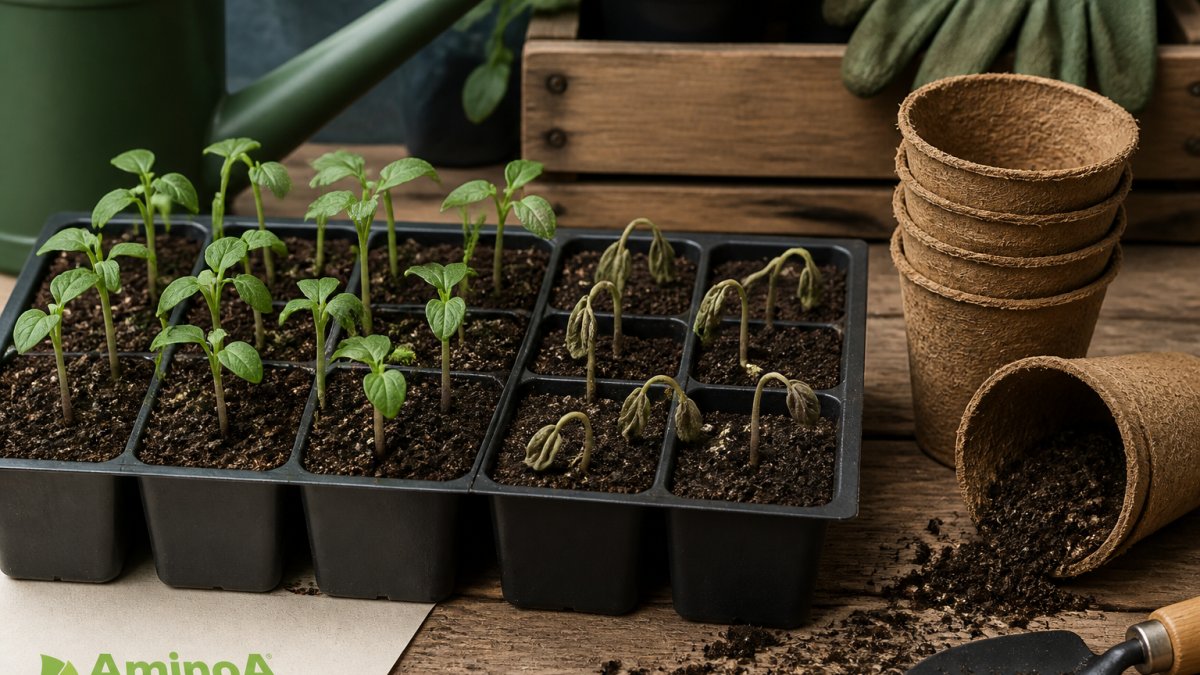
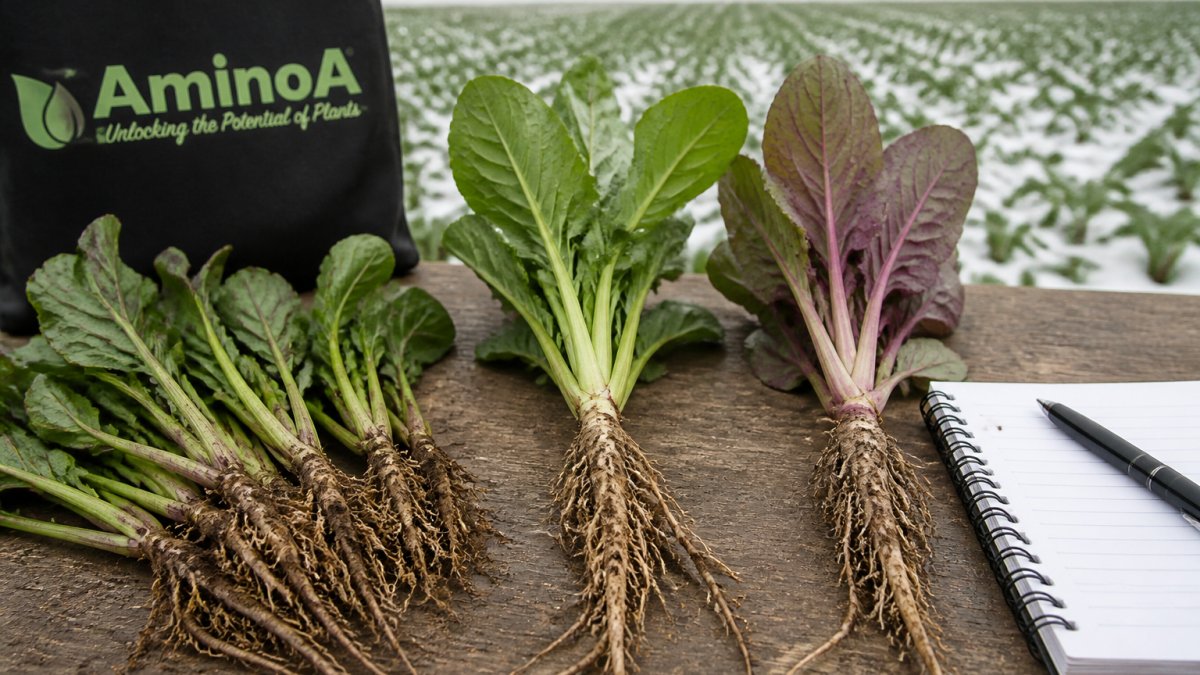
Phosphorus deficiency symptoms in plants typically show as stunted growth, dark green or purple-tinged older leaves, and poor tillering. The trouble is that cold stress produces almost the same picture, so visual symptoms alone prove very little.
A review in Frontiers in Plant Science on phosphate-dependent growth regulation describes how phosphorus stress reshapes plant metabolism, which is why the visible signs overlap with general cold damage.
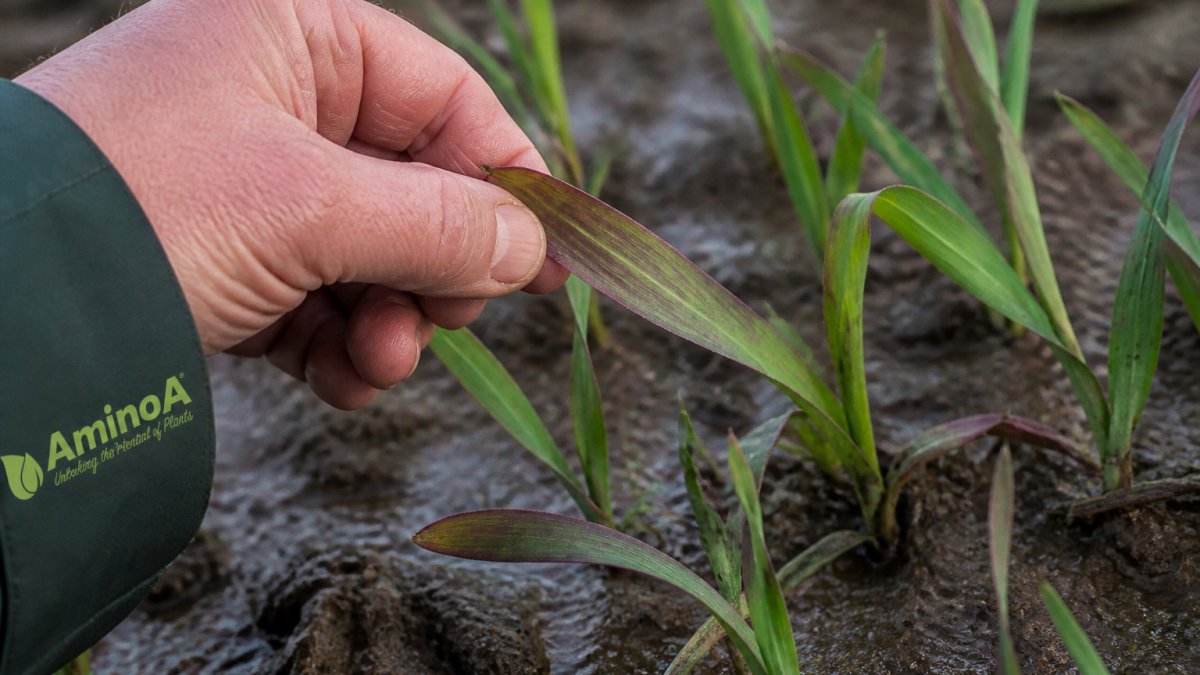
Purple Leaves, Dark Green Leaves and Older-Leaf Patterns
Purple colouring is the symptom everyone watches for. It is also the one most often misread.
- Older leaves first: true deficiency hits older leaves before young growth, because phosphorus moves within the plant.
- Dark green, not yellow: affected leaves often stay dark green and take on purple or red tones.
- Stunted, thin stems: plants tiller poorly and look set back.
If your symptoms are on young growth instead, look elsewhere. That pattern points to a different problem.
Where Cold Damage and True Deficiency Diverge
Cold damage and true deficiency diverge on timing and pattern. Cold-induced purpling tends to appear after a cold snap, affects exposed or waterlogged patches first, and eases as soils warm. A genuine shortfall persists across the field and worsens as the season runs.
If you want to confirm whether what you are seeing is true deficiency or general stress, our guide to signs of nutrient deficiency in stressed plants breaks down the visual clues.
Cold Soil and Phosphorus Uptake: Root-Zone Temperature Thresholds That Matter
Cold soil and phosphorus uptake are tightly linked, and the mechanism explains why the fix is rarely just more phosphate. Phosphate moves through soil water almost entirely by diffusion, not by mass flow.
Temperature also changes the plant side of the equation. Membrane fluidity falls, transporter activity slows, and the metabolic cost of maintaining root growth rises. A cold root is not simply a slow root; it is a less efficient one.
Commonly cited root-zone temperature bands for phosphorus uptake include the following:
- Below 8°C root zone: uptake is heavily limited, and soil-applied phosphate is often slow to produce a response.
- 8-12°C: roots grow slowly and diffusion is still restricted.
- Above 12°C: uptake recovers and soil-applied phosphorus becomes more effective.
These bands are guidance, not absolutes. Species differ: brassicas and many cereals tolerate cooler root zones better than maize, potatoes or field beans, and seedlings are more sensitive than established plants because their root systems are smaller and less able to compensate.
Measure at root depth, not at the surface. A soil thermometer pushed to 10cm tells you far more than the air temperature on the forecast, and it is worth taking readings at several points across the field, headlands, hollows and compacted wheelings run colder and wetter than the body of the field.
If you want to confirm whether what you are seeing is true deficiency or general stress, our guide to signs of nutrient deficiency in stressed plants breaks down the visual clues.
These root-zone temperature bands are commonly cited as guidance for phosphorus uptake.
| Root-zone temperature | Effect on phosphorus uptake |
|---|---|
| Below 8°C | Uptake heavily limited; soil-applied phosphate often slow to respond |
| 8-12°C | Roots grow slowly and diffusion is still restricted |
| Above 12°C | Uptake recovers and soil-applied phosphorus becomes more effective |
Soil Testing for Phosphorus Before You Spend on Fertiliser
Soil testing for phosphorus should come before any corrective application. A test tells you the available phosphorus level, the pH, and whether drainage or compaction is limiting the roots.
The UK agricultural soil testing guidance from AHDB sets out how to sample representatively, which matters more than the lab you choose.
Reading Soil pH, Drainage and Growing-Medium Results
pH controls how much of the phosphorus in your soil is actually available. In alkaline soils, phosphate locks up with calcium. In acid soils, it binds with iron and aluminium. Either way, the phosphorus is present but unavailable.
Drainage and compaction matter just as much. Waterlogged or compacted soils have poor root growth, so the plant cannot reach the phosphate even when indices look adequate.
For a fuller explanation of what a test can and cannot tell you, read does soil testing show crop nutrient deficiencies.
A Cold-Stress Diagnosis and Recovery Sequence for Stressed Crops
Diagnosis should follow a fixed order so you do not spend money on the wrong fix. Here is the sequence we recommend:
- Check root-zone temperature at 10cm. Below 8°C, assume uptake is limited.
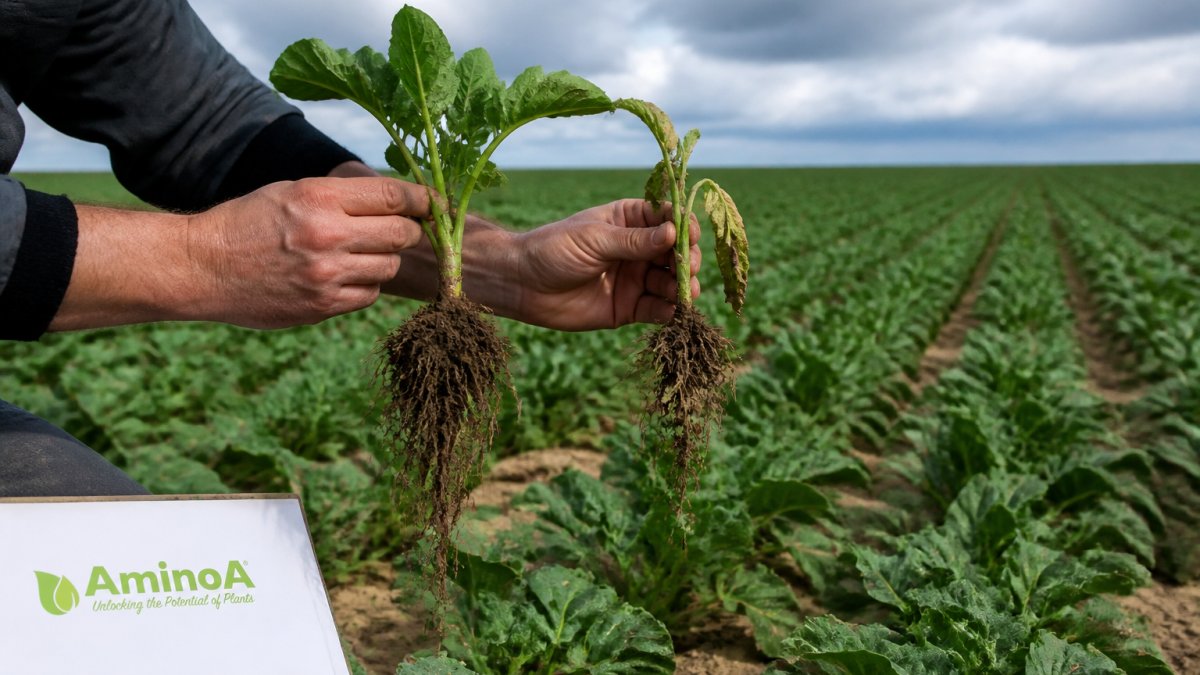
- Dig up plants and inspect roots. Look for compaction, waterlogging, or restricted rooting.
- Take a soil test for available phosphorus, pH, and organic matter.
- Compare field pattern. Cold patches ease with warmth; true deficiency does not.
- Decide the route. Cold-limited uptake calls for foliar support and root-zone management. A genuine shortfall calls for soil-applied phosphate.
- Re-check in 10-14 days. Look for new root growth and colour recovery in new leaves.
Recovery indicators are simple: fresh white roots, resumed tillering, and new leaves emerging without purple margins. Judge new growth, never old leaves. Old leaves will not change colour back.
Foliar Phosphorus Fertiliser for Crops: Dosing Safely and Avoiding Overapplication
Foliar phosphorus fertiliser for crops is the fastest route when roots are cold and soil phosphate is unavailable. It bypasses the root entirely and delivers phosphate straight to the leaf, which is why it is the practical bridge while root-zone temperatures recover.
Work to the product label rate and never exceed it. The label rate already reflects the maximum safe concentration for the crop and growth stage; exceeding it does not deliver more phosphorus to the plant, it delivers more salt to the leaf.
A few practical points growers should consider:
- Concentration, not just rate. A high water volume with the correct rate per hectare is safer than a low volume with the same rate, because it reduces the salt concentration at the leaf surface. Check the label for the recommended water volume and do not cut it to save passes.
- Growth stage. Young, soft leaves are more susceptible to scorch than hardened, waxy leaves. Seedlings and newly emerged crops need the lower end of the label range, if foliar phosphate is used at all.
- Timing. Apply in cooler parts of the day and avoid applying immediately before or during strong sunlight, which increases the risk of scorch. Avoid application if rain is forecast within the label's rainfast window.
- Compatibility. Tank-mixing foliar phosphorus with the wrong partner can cause precipitation, blocked filters and scorch. Check compatibility before you fill the sprayer, and jar-test any unfamiliar mix rather than discovering the problem in the field.
Overapplication also carries an environmental dimension. Phosphorus is the nutrient most associated with freshwater eutrophication, and runoff from over-treated or poorly timed applications is a real risk, particularly on sloping or compacted ground.
Finally, foliar phosphate is generally a support measure rather than a substitute for correcting a genuine soil shortfall.
For a comparison of routes, see foliar feeding vs soil application. If you want the spray to actually land and absorb, our guide to foliar application techniques for better absorption covers nozzle choice, water volume, and timing.
Preventing Phosphorus Deficiency Through Cold Spells and Into Flowering
Prevention starts before the cold arrives. Build root health in autumn so the crop enters winter with a root system that can cope. Avoid compaction, keep drainage working, and place phosphate where roots will grow.
As the season moves into flowering, phosphorus demand rises. A crop that struggled through cold soils often carries that setback into flowering, which shows up as poor fruit set.
AminoA L-α amino acid biostimulants support root development and stress resistance, which helps crops cope with cold spells and the recovery period after them. Every essential amino acid is supplied in the L form, produced through enzymatic hydrolysis. For root health and stress tolerance specifically, read how root health impacts crop stress tolerance.
Planning Your Cold-Weather Nutrition Programme with AminoA
A cold-weather nutrition programme should combine three things: diagnosis before spending, root-zone management, and support for the plant's own stress response. Get the order right and you avoid wasting money on phosphate the crop cannot reach.
AminoA supplies natural L-α amino acid biostimulants. Our products carry a high content of nitrogen, potassium, iron, and magnesium, and we have ten years of experience in the UK market.
Velcourt trials found that adding AminoA FLO to reduced fungicide rates maintained yields and improved green leaf area in winter wheat.
Frequently Asked Questions
How does cold soil affect phosphorus uptake in plants?
Cold, wet soil restricts root growth and slows the plant's ability to reach and absorb phosphate, so uptake falls even when soil reserves look adequate. Shallow roots, waterlogged pores and slower diffusion all compound the effect, which is why early-drilled or overwintered crops often show symptoms first. Confirm with soil testing before assuming the soil itself is short.
How can you tell phosphorus deficiency from cold stress?
Cold stress and phosphorus deficiency produce overlapping leaf symptoms, so colour alone is unreliable. Purple or dark green older leaves with stunted growth can indicate either. Separate them by checking root-zone temperature, drainage and compaction, then back it up with soil testing for phosphorus and, where useful, plant tissue analysis. If roots are restricted by cold, compacted or waterlogged soil, correcting the environment often resolves the symptom without extra phosphate.
Can foliar phosphorus fertiliser help plants recover from cold stress?
A foliar phosphorus fertiliser for crops can support recovery when root uptake is temporarily limited, because it bypasses the cold root zone. Use a modest, well-timed application and follow the label rate, since overapplication risks leaf scorch and wasted input. Pair it with environmental fixes such as improved drainage and warmer seedbeds.
When should you retest soil after correcting phosphorus deficiency?
Retest after the soil has warmed and the crop has had time to respond, typically once active growth resumes rather than immediately after application. Use the interval to check root-zone temperature, drainage and pH, since phosphorus fixation and waterlogging both reduce availability. Record what you applied and where, then compare the new result against the original to see whether the issue was supply or uptake. Repeat tissue analysis if symptoms persist.
Cold soils will keep testing your phosphorus strategy every year. The growers who handle it best test first, support the root, and treat foliar phosphate as a targeted tool rather than a reflex. If you want to plan that programme properly, subscribe to our newsletter for seasonal guidance and trial updates from the AminoA team.