 blog
Foliar Feeding vs Soil Application: Nutrient Uptake Explained
Table of Contents
- How Foliar Feeding and Soil Application Differ in Nutrient Delivery
- Understanding Foliar Nutrient Uptake in Plants
- Soil Application: How Roots Absorb Nutrients
- Best Time to Apply Foliar Fertiliser for Maximum Effectiveness
- Which Nutrients Can Be Applied as a Foliar Spray
- Foliar Fertiliser Application Rate and Spray Coverage
- When to Choose Foliar Feeding Over Soil Application
- Frequently Asked Questions
Last Updated: 16 October 2026
How Foliar Feeding and Soil Application Differ in Nutrient Delivery
Foliar feeding vs soil application represents two fundamentally different pathways for delivering nutrients to plants, each with distinct advantages depending on crop type, timing, and nutrient needs. At AminoA, we've worked with growers across the UK for over a decade, and the choice often determines whether nutrients reach plants efficiently or get locked in the soil.
The core difference is simple: soil application delivers nutrients through the root system, while foliar feeding applies nutrients directly to leaves. Soil nutrients must dissolve, travel through the soil matrix, and be absorbed by root hairs, a process taking days or weeks and depending on soil moisture, pH, and microbial activity. Foliar nutrients bypass these barriers, entering through the leaf cuticle and reaching plant cells within hours.
This distinction matters most against the clock. Cold stress, drought, or mid-season deficiency are situations where waiting for soil nutrients isn't an option; foliar feeding delivers an immediate response. Conversely, for long-term soil fertility and sustained root development, soil application remains the foundation of any serious nutrition programme.
Understanding Foliar Nutrient Uptake in Plants
Foliar nutrient uptake in plants differs fundamentally from root absorption. Sprayed nutrients don't simply sit on the surface; they penetrate the leaf cuticle, the waxy layer covering the upper and lower epidermis. Penetration happens gradually, with maximum uptake typically 4-8 hours after application.
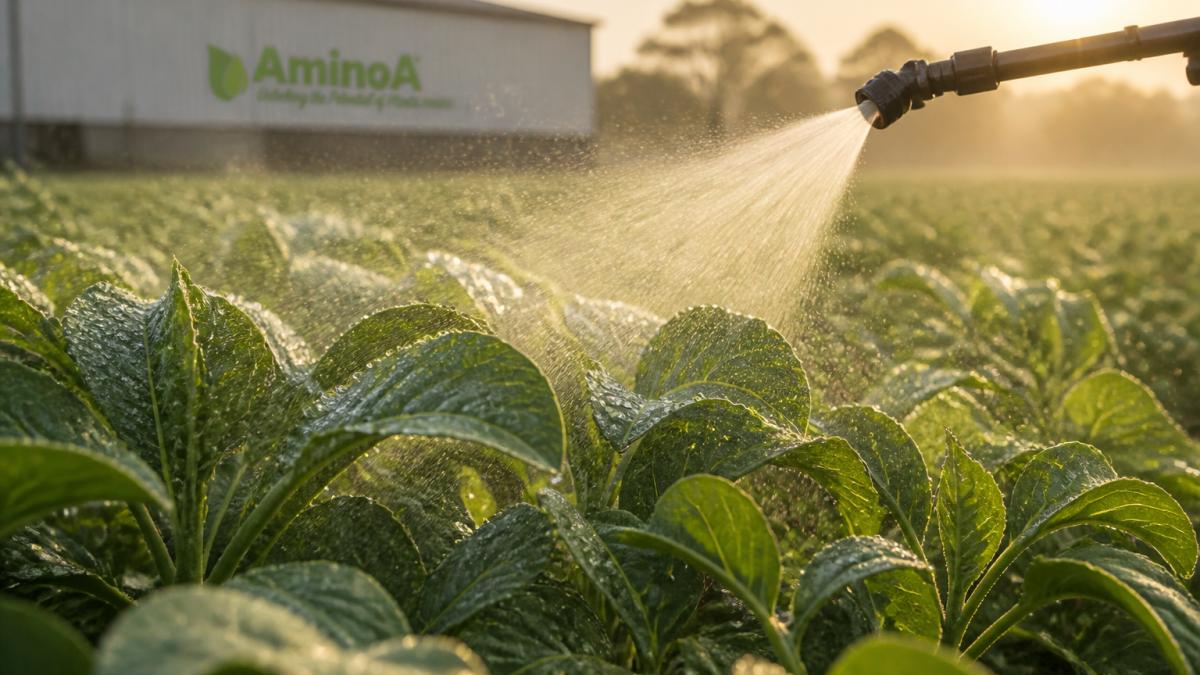
Stomata, the tiny pores regulating gas exchange, play a secondary role. Whilst stomatal penetration can occur, most foliar nutrients enter through the cuticle itself, particularly when formulated with surfactants or wetting agents that reduce surface tension. Timing matters: stomata are most open in early morning and late evening, ideal spray windows.
Once nutrients cross the cuticle, they move into mesophyll cells and distribute through the vascular system. Amino acids are rapidly absorbed because they're already in a form plants recognise and transport directly. Unlike inorganic salts, which must be converted before use, amino acids skip this metabolic step, a significant advantage when plants are stressed or in critical growth phases.
Foliar uptake efficiency depends on leaf surface area, spray coverage, droplet size, humidity, temperature, and the nutrient applied. Smaller droplets give better coverage and faster penetration; higher humidity slows evaporation, extending absorption. 15-25°C is optimal; above 30°C, uptake slows as the cuticle becomes less permeable.
Soil Application: How Roots Absorb Nutrients
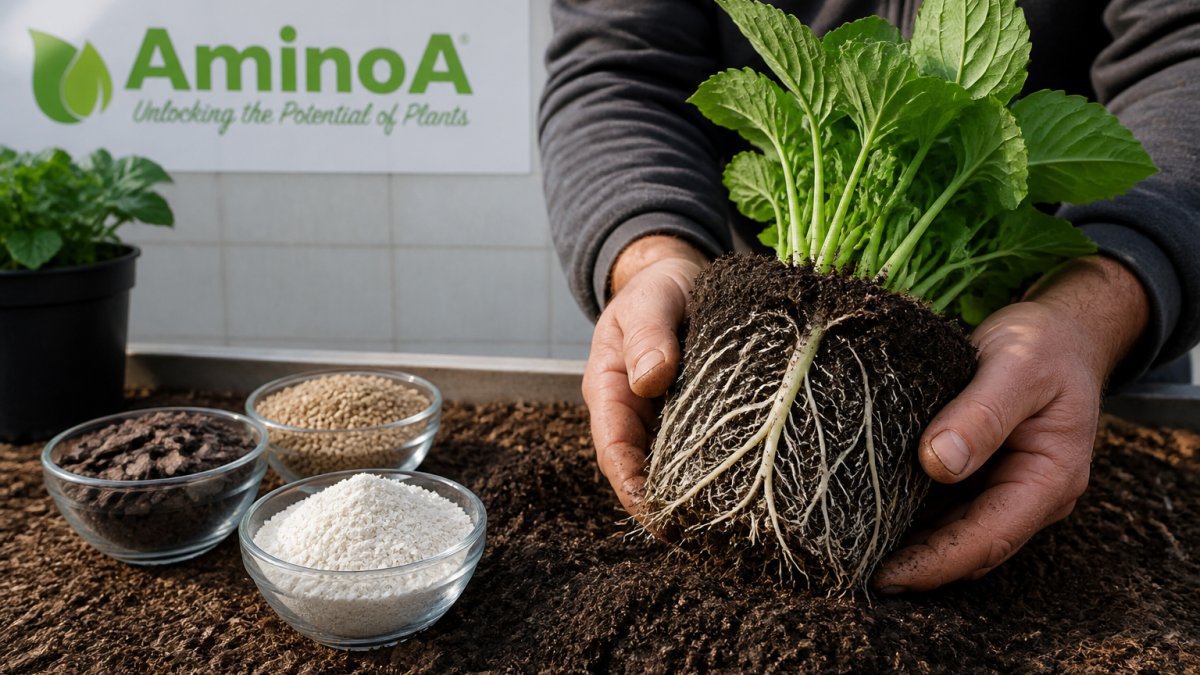
Soil application delivers nutrients to the root zone, where they become available for uptake. Unlike foliar feeding, soil nutrients must first dissolve in soil water to form ions or molecules roots can absorb, depending on soil pH, organic matter, microbial activity, and moisture.
Roots absorb nutrients through passive transport, where nutrients move with water into root cells, and active transport, where plants expend energy to pull nutrients against a concentration gradient. Most macronutrients, nitrogen, phosphorus, potassium, rely heavily on active transport, so root respiration and energy availability directly affect uptake efficiency.
The soil microbial community amplifies nutrient availability. Bacteria and fungi break down organic matter, releasing absorbable nutrients, and mycorrhizal fungi extend the root's effective reach. This is why soil-applied nutrients often show their strongest effects over weeks and months rather than days.
Soil application is slower but longer-lasting. Once in the soil, nutrients remain available for weeks or months, providing sustained nutrition through growth cycles. Applied as compost or biological amendments, it also builds soil structure and organic matter, creating a foundation for long-term fertility.
However, soil application has real constraints. Waterlogged soils reduce root respiration and uptake; compacted soils restrict root growth; extreme pH locks nutrients in unavailable forms, iron in alkaline soils for example; cold temperatures slow microbial activity and root uptake. These constraints make soil application ineffective during environmental stress, precisely when plants often need support most.
Best Time to Apply Foliar Fertiliser for Maximum Effectiveness
Best time to apply foliar fertiliser depends on matching three conditions: leaf temperature, humidity, and plant growth stage. The window is narrower than many growers realise, so precision directly impacts return on investment.
Early morning, 6-9 a.m., is optimal for most crops: stomata are fully open, humidity is highest, and leaf temperature is cool. Droplets remain long enough for complete penetration without evaporating too quickly, and overnight dew aids absorption.
Late evening, from 5 p.m., is second-best: stomata reopen as temperature drops and humidity rises. Avoid midday spraying entirely; high temperature and low humidity cause rapid evaporation, cutting nutrient contact time to 1-2 hours, often insufficient for full absorption.
Growth stage matters equally. Apply during active growth, leaf expansion, flowering, or fruit development, when plants demand nutrients most. Applying to dormant plants wastes material; they won't uptake efficiently. For winter cereals, apply in spring when growth resumes; for horticultural crops, target the 4-6 weeks before harvest to boost fruit quality and shelf life. Strategic timing remains the cornerstone of successful crop management, ensuring that spring fertilizer application aligns perfectly with the physiological requirements of the emerging canopy.
Weather conditions are non-negotiable. Never spray if rain is forecast within 6 hours; water washes nutrients off or dilutes them below effective concentration. Avoid frost; absorption slows dramatically below 5°C. Wind above 15 km/h causes drift and uneven coverage, so choose calm conditions.
Which Nutrients Can Be Applied as a Foliar Spray
Not all nutrients suit foliar application. Molecular weight, solubility, and how quickly plants metabolise a nutrient determine whether a foliar approach makes sense.
Micronutrients, iron, manganese, zinc, boron, copper, molybdenum, are ideal for foliar application. Needed in tiny quantities, they avoid soil fixation entirely. A single foliar application can correct a micronutrient deficiency in 7-10 days, whereas soil application might take weeks or fail if soil pH is unfavourable.
Nitrogen is highly effective as a foliar spray, particularly when plants need a rapid boost during critical growth stages. Urea, amino acids, and nitrate forms all penetrate leaves efficiently. Foliar nitrogen is especially valuable for correcting mid-season deficiencies or supporting stressed plants.
Potassium and phosphorus can be applied foliarly, though less efficiently than soil application for long-term reserves. Foliar potassium aids stress resilience, drought, cold, or disease pressure, as it's rapidly transported where needed.
Amino acids, like those in AminoA products, are among the most effective foliar nutrients because plant metabolism immediately recognises them.
Calcium and magnesium can be applied foliarly, though they move slowly within the plant once absorbed. Calcium is especially useful for preventing disorders like blossom-end rot in tomatoes or bitter pit in apples, conditions where rapid, localised calcium supply prevents damage.
Avoid applying heavy metals or poorly soluble nutrients foliarly; they won't penetrate efficiently and may damage leaf tissue if concentrations are too high.
Foliar Fertiliser Application Rate and Spray Coverage
Foliar fertiliser application rate and spray coverage are equally critical. Too little nutrient and you won't see a response; too much risks leaf burn or waste.
Standard rates for most foliar nutrients range from 2-5 litres per hectare of mixed spray solution, depending on crop and concentration. Dilute solutions may need up to 8-10 litres per hectare; concentrated solutions, 2-3 litres. Follow product guidance, but the principle is: wet all leaf surfaces without runoff.
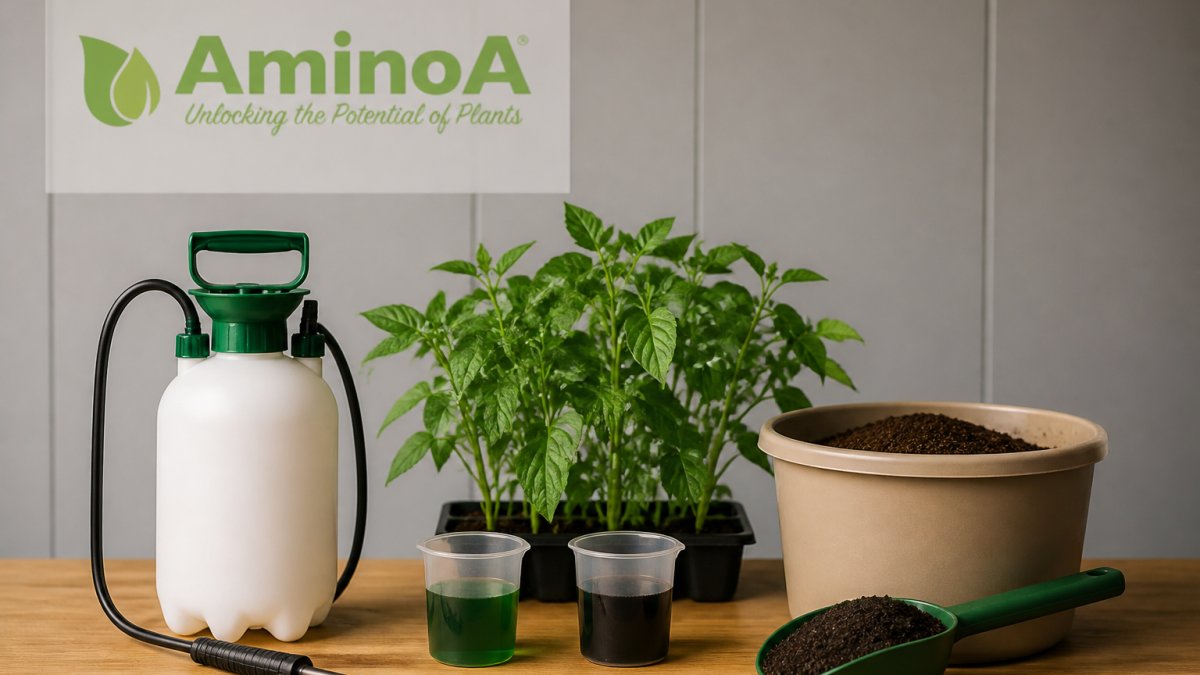
Spray coverage is where most growers lose efficiency. Visible coverage should coat both upper and lower leaf surfaces; the lower surface is often more permeable and frequently missed. Flat-fan nozzles at 50 cm height provide good coverage for most field crops; air-assisted sprayers improve penetration into dense canopies.
Droplet size matters more than application volume. Fine mist (50-100 microns) penetrates canopies better and covers more leaf area per litre but drifts easily. Medium droplets (100-150 microns) balance coverage with minimal drift. Coarse droplets (>200 microns) cover less area and evaporate slowly, reducing absorption efficiency.
Water quality affects uptake significantly. Hard water (high calcium and magnesium) can interfere with absorption. Acidifying spray water to pH 5.5-6.5 improves penetration; avoid alkaline water, which reduces cuticle permeability and nutrient availability.
| Application Factor | Optimal Range | Impact on Uptake |
|---|---|---|
| Spray volume | 2-5 L/ha | Insufficient volume = missed coverage; excess = runoff waste |
| Droplet size | 100-150 microns | Smaller = better canopy penetration; larger = slower evaporation |
| Water pH | 5.5-6.5 | Acidic water improves cuticle penetration |
| Leaf wetness duration | 4-8 hours | Minimum time needed for nutrient absorption |
| Temperature | 15-25°C | Optimal cuticle permeability; above 30°C, uptake slows |
When to Choose Foliar Feeding Over Soil Application
Foliar feeding vs soil application decisions should be based on your specific situation, not habit. Here's where foliar feeding delivers measurable advantage.
During environmental stress. When soil is waterlogged, frozen, or severely compacted, root uptake slows or stops. Foliar feeding bypasses these barriers.
Mid-season nutrient demand spikes. Flowering, fruit set, and grain fill are periods of intense demand.
Correcting micronutrient deficiencies rapidly. If you spot iron chlorosis, manganese deficiency, or zinc deficiency mid-season, waiting for soil correction is unacceptable.
Reducing reliance on agrochemical inputs. Amino acid biostimulants like AminoA products enhance stress resistance and nutrient efficiency when applied foliarly, allowing growers to reduce fungicide and insecticide rates whilst maintaining yields, a critical advantage for organic operations or those lowering chemical input costs without sacrificing protection.
Phytotoxicity risk from soil applications. If recent agrochemical applications have damaged roots or soil microbial communities, foliar feeding avoids further stress. Damaged roots cannot absorb nutrients efficiently; foliage can.
Precision application to specific growth stages. Foliar feeding targets nutrients exactly when plants need them most, booting for cereals, flowering for horticultural crops.
Soil application remains the foundation. Use foliar feeding as a tactical tool for specific situations, not as a replacement for sound soil nutrition.
Choosing between foliar feeding and soil application isn't either-or; it's about matching the right tool to your situation.
AminoA's amino acid biostimulants work through both pathways.
For growers managing 200+ hectares or specialising in high-value crops, understanding these nutrient delivery mechanisms is essential.
If uncertain, trial it. Start with foliar application during one critical growth window, flowering or grain fill, and measure the response against your baseline soil application alone.
For current pricing, application guidance, and product selection tailored to your specific crops, visit AminoA or contact our team directly.
Frequently Asked Questions
Is foliar feeding more effective than soil application for nutrient uptake?
Neither method is universally superior, effectiveness depends on the crop, nutrient type, and growing conditions. Foliar feeding delivers nutrients directly to leaves for rapid uptake, making it ideal for correcting acute deficiencies or supporting stress recovery. Soil application builds long-term nutrient availability through the root system and suits routine fertilisation. Many growers use both: soil application as the foundation and foliar feeding to address immediate crop needs or boost performance during critical growth stages.
How quickly do plants absorb nutrients from foliar sprays compared to soil fertiliser?
Foliar nutrient uptake occurs within hours to days, depending on leaf wetness, temperature, and nutrient type. Soil-applied nutrients take longer, typically several days to weeks, because roots must absorb them from the soil solution. This speed advantage makes foliar feeding valuable when crops face acute stress or nutrient deficiency symptoms. However, soil application sustains nutrient availability over longer periods, making it essential for baseline crop nutrition.
Can foliar feeding completely replace soil fertilisation?
No. Foliar feeding cannot supply the volume of nutrients crops require for full growth and development. Leaves have limited surface area and absorption capacity compared to the root system's ability to extract nutrients from soil reserves. Foliar feeding works best as a complement to soil application, addressing specific deficiencies, enhancing stress resilience, or supporting crops during high-demand growth phases. A complete nutrition strategy relies on both methods working together.
What factors affect how well plants absorb nutrients from foliar sprays?
Key factors include leaf surface conditions (waxy coatings reduce uptake), spray timing (early morning or evening when stomata are open), temperature (15-25°C is optimal), humidity (high humidity prolongs leaf wetness), and nutrient formulation (smaller molecules penetrate leaf tissue more readily). Wind, rain immediately after application, and plant stress also influence absorption. Amino acid biostimulants like those produced through enzymatic hydrolysis enhance uptake by improving leaf permeability and supporting metabolic pathways for nutrient assimilation.