 blog
Best Soil Amendments for Root Development
Table of Contents
- Why Soil Amendments Matter for Root Development
- Best Soil Amendments for Compacted Soil
- Soil Preparation for Root Crops: Foundation Strategies
- Compost for Root Development: Application and Benefits
- Amino Acid Biostimulants for Root Growth
- Comparing Amendment Options: What Works Best
- Getting Maximum ROI from Soil Amendments
- Frequently Asked Questions
Last Updated: October 17, 2026
Why Soil Amendments Matter for Root Development
Strong root systems determine crop success. Plants with deeper, more extensive roots access water and nutrients more reliably, resist drought stress, and establish themselves faster after transplanting. The foundation for this root development lies entirely in soil structure and composition.
Soil amendments improve the physical and chemical properties that roots need to thrive. They increase water retention in sandy soils, improve drainage in clay-heavy soils, and add essential nutrients that support root cell development. Without the right amendments, even well-fertilised crops struggle to establish strong root networks.
This is where understanding your specific soil condition becomes critical. Compacted soil, poor organic matter content, and nutrient imbalances are the three most common barriers to root development. Each requires a different amendment strategy. The good news is that targeted soil amendments deliver measurable results within a single growing season.
AminoA has 10 years of experience in the UK market. The best soil amendments for root development combine organic matter, targeted nutrients, and biostimulants that activate root growth at the cellular level.
Best Soil Amendments for Compacted Soil
Compacted soil is the enemy of root expansion. When soil particles are pressed tightly together, roots cannot penetrate, water drains poorly, and air pockets disappear. Roots grow sideways rather than down, creating shallow, weak systems vulnerable to drought and wind.
Breaking compaction requires amendments that both physically open the soil and biologically improve its structure. Coarse organic matter like aged compost or well-rotted manure creates air channels as it decomposes. Gypsum (calcium sulphate) can help aggregate soil particles, improving structure without raising pH. For immediate relief, consider deep cultivation combined with organic amendment incorporation.
The most effective approach layers amendments: first, mechanically break compaction through cultivation or subsoiling. Then incorporate 5-10 centimetres of high-quality compost or composted bark. Follow this with a biostimulant that encourages root penetration and microbial activity in the newly opened soil.
Many growers overlook the importance of soil biology in breaking compaction. Beneficial microorganisms produce compounds that stabilise soil structure. Without active microbial populations, even well-amended soil can recompact within months. This is where amino acid biostimulants prove valuable, they feed soil microbes, accelerating their colonisation of amended soil and maintaining structure long-term.
Soil Preparation for Root Crops: Foundation Strategies
Root crops demand loose, stone-free soil with excellent drainage and consistent moisture. Carrots, parsnips, beetroot, and potatoes all perform poorly in compacted or waterlogged conditions. Proper soil preparation before planting determines both yield and quality.
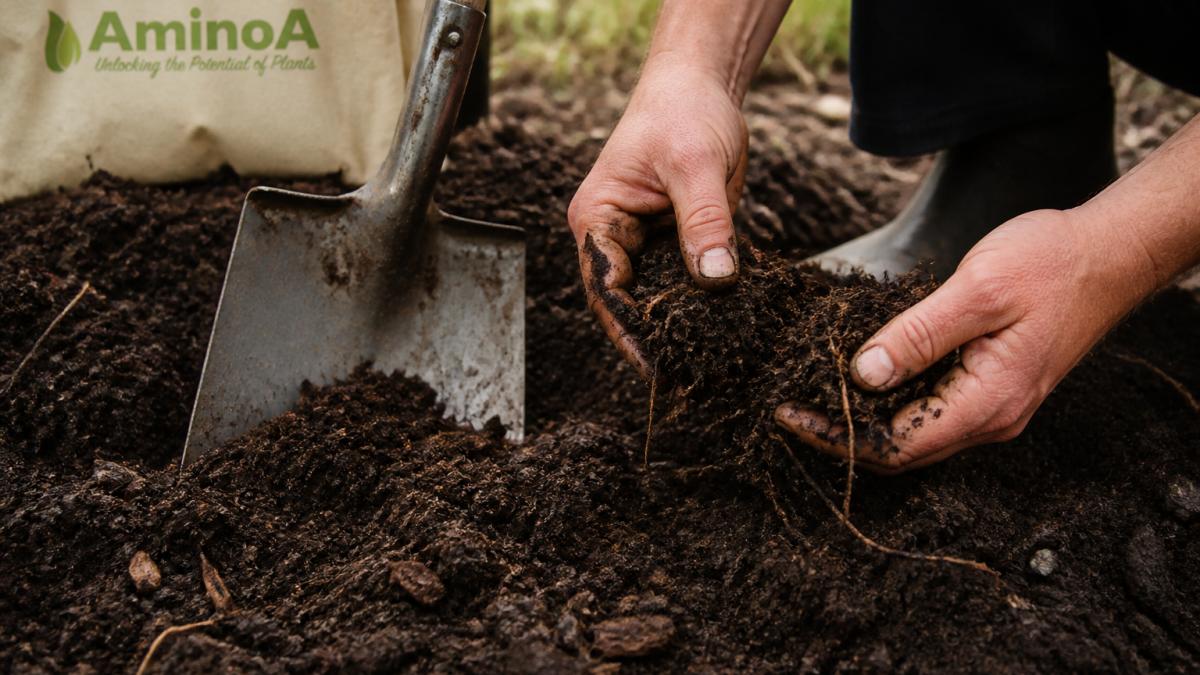
Begin preparation 4-6 weeks before planting. Remove stones and debris down to at least 30 centimetres, root crops hit stones and fork, reducing marketable yield. Incorporate 3-5 centimetres of well-rotted compost or aged manure to improve organic matter content. This addition improves water retention in sandy soils and drainage in clay soils simultaneously.
Test your soil pH and nutrient levels if possible. Root crops prefer slightly acidic to neutral soil (pH 6.0-7.0). Phosphorus and potassium support root development more than nitrogen does, excess nitrogen encourages leaf growth at the expense of roots. Adjust nutrient ratios based on soil test results rather than applying a standard NPK fertiliser.
For heavy clay soils, add coarse sand or grit alongside organic matter to improve drainage. For sandy soils, increase organic matter to boost water and nutrient retention. The goal is a crumbly, well-structured soil that roots can penetrate easily whilst retaining adequate moisture.
Compost for Root Development: Application and Benefits
Compost is the foundation amendment for nearly every soil type. It improves structure, increases water retention, feeds soil microbes, and adds slow-release nutrients. For root development specifically, compost creates the loose, friable conditions roots need to expand.
Quality matters enormously. Well-made compost is dark, crumbly, and smells earthy. Poor-quality compost contains large woody particles, weed seeds, and unfinished material that can harm crops. Source compost from reputable suppliers or make your own from garden waste, grass clippings, and kitchen scraps, avoid diseased plant material and perennial weed roots.
Apply compost at 3-5 centimetres depth and work it into the top 15-20 centimetres of soil. This depth ensures roots encounter amended soil as they expand downward. Shallower incorporation limits benefits to the surface layer only. For established plantings, apply compost as a 2-3 centimetre mulch around plants, keeping it 5-10 centimetres away from stems to prevent rot.
Compost breaks down slowly, releasing nutrients over months. This steady nutrient supply supports root development without the flush of growth that mineral fertilisers cause. Compost also increases soil's water-holding capacity, critical during dry spells when roots need consistent moisture to function. Incorporating this organic matter into the deeper layers is a fundamental step when preparing soil for sod to ensure that the root system establishes a firm and resilient foundation.
The microbial activity in compost is equally valuable. Beneficial bacteria and fungi colonise roots, improving their ability to uptake nutrients and resist disease. This biological benefit distinguishes compost from mineral amendments alone.
Amino Acid Biostimulants for Root Growth
Amino acids are the building blocks of proteins, and proteins drive root cell development. L-form amino acids, the naturally occurring form, are readily absorbed by roots and translocated throughout the plant. They stimulate cell division, improve nutrient uptake, and enhance stress tolerance.
Amino acid biostimulants work differently from fertilisers. They don't replace nutrients; they amplify the plant's ability to use existing nutrients and respond to stress. A plant treated with amino acids uses nitrogen, phosphorus, and potassium more efficiently. This means better root development on the same nutrient input, or equivalent development with less fertiliser.
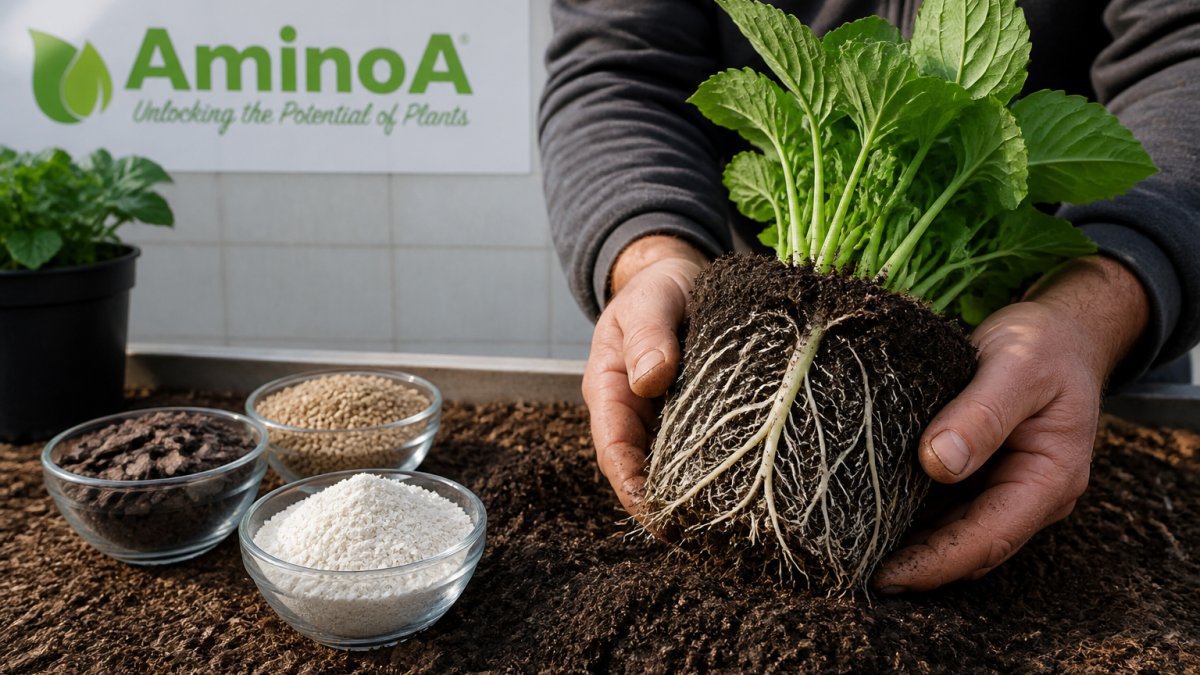
Research and field experience show that amino acids boost root initiation and lateral root development. New roots emerge faster, and root hair density increases. This expanded root surface area improves water and nutrient uptake, supporting overall plant vigour.
The best soil amendments for root development often combine organic matter with amino acid biostimulants. Compost provides the biological ecosystem and slow-release nutrients. Amino acids activate root growth within that ecosystem. Together, they create conditions for strong, extensive root systems.
Application timing matters. Apply amino acid biostimulants at key growth stages: at transplanting, during early vegetative growth, and again during flowering or fruiting. Foliar application (spraying on leaves) and soil application both work; soil application at planting ensures roots access biostimulants as they establish.
Comparing Amendment Options: What Works Best
| Amendment Type | Best For | Application Rate | Key Benefit |
|---|---|---|---|
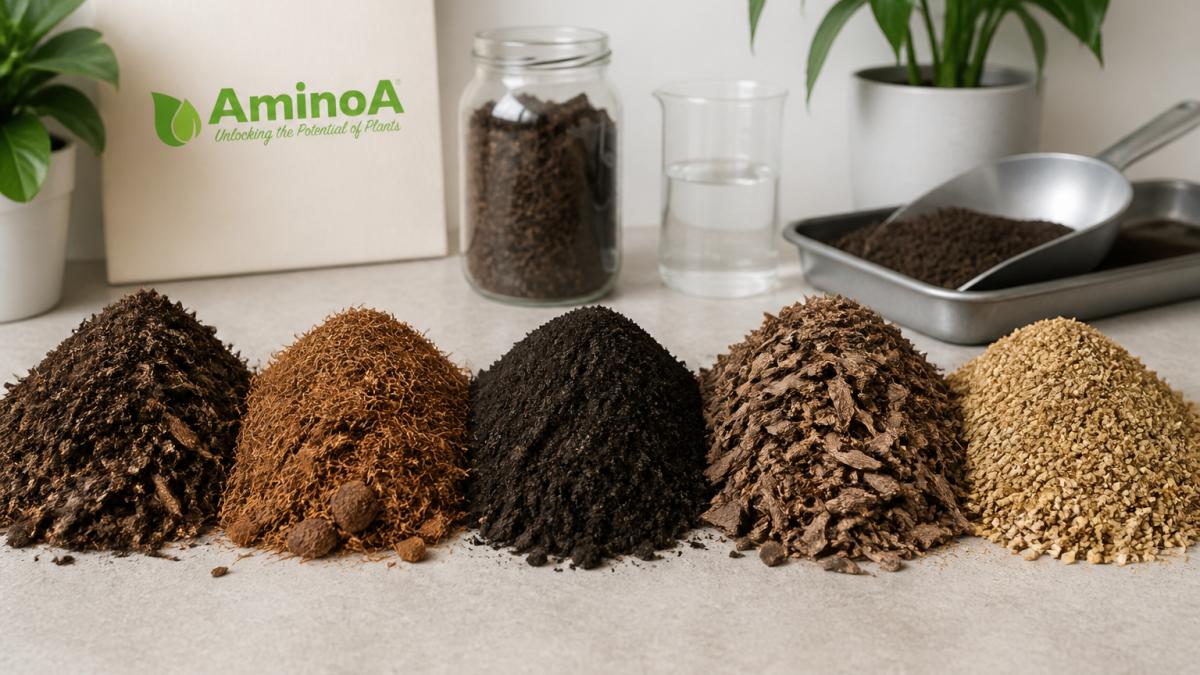
| Aged Compost | All soil types | 3-5 cm worked in | Improves structure, adds biology |
| Well-Rotted Manure | Nutrient-poor soils | 2-3 cm worked in | Nitrogen, organic matter, warmth |
| Gypsum | Clay soils | 1-2 tonnes per hectare | Improves drainage without raising pH |
| Coarse Sand | Clay soils | 5-10 cm worked in | Improves aeration and drainage |
| Peat Alternatives | All soils | 2-3 cm worked in | Water retention, sustainability |
| Amino Acid Biostimulants | All soil types | Per product guidance | Activates root growth, stress resistance |
Each amendment addresses specific soil challenges. Compacted clay soils benefit from gypsum plus compost. Sandy soils need compost plus water-retention amendments. Nutrient-poor soils respond to well-rotted manure or compost. The best soil amendments for root development combine two or three of these approaches tailored to your specific soil condition.
Don't rely on a single amendment. Soil is complex, and root development depends on multiple factors working together. A soil test reveals your specific limiting factors, use those results to prioritise amendments.
Getting Maximum ROI from Soil Amendments
Soil amendments represent an investment. Compost, manure, and biostimulants cost money and labour to apply. The return comes through improved crop establishment, higher yields, better quality, and reduced disease pressure. Calculating ROI helps justify the investment and guides amendment selection.
Start by quantifying your baseline. What is your current yield per hectare? What percentage of plants establish successfully? What is your current disease or stress damage level? These numbers become your comparison point.
Apply amendments strategically to a trial section, perhaps 10-20% of your area, and measure results over a full season. Compare yield, crop quality, and plant health to your untreated control area. Most growers see yield improvement in the first year, with additional gains in subsequent years as soil biology strengthens.
Factor in reduced input costs. Improved root development means more efficient nutrient uptake, so you may reduce fertiliser rates slightly without yield loss. Better stress tolerance reduces crop loss during dry spells or pest pressure. These secondary benefits add to your ROI calculation.
Long-term thinking amplifies ROI. Soil biology improves year on year. Organic matter builds gradually. By year three, your amended soil requires fewer inputs to maintain productivity. The upfront investment creates compounding returns.
Soil amendments are not optional extras, they're fundamental to sustainable, profitable crop production. The best soil amendments for root development work by improving soil structure, feeding beneficial microbes, and activating root growth at the cellular level. Compost builds the biological foundation. Gypsum or sand addresses physical compaction. Amino acid biostimulants like those from AminoA accelerate root initiation and enhance stress resistance, ensuring your investment in soil improvement translates directly to stronger plants and better harvests.
Subscribe to our newsletter to receive practical guidance on soil management, crop nutrition, and biostimulant application strategies tailored to your farm's specific needs. Get started with AminoA biostimulants and unlock the full potential of your improved soil.
Frequently Asked Questions
What is the best soil amendment for root development?
The most effective soil amendments combine organic matter with targeted nutrients. Compost improves soil structure and water retention, whilst amino acid biostimulants directly stimulate root initiation and growth. For compacted soils, organic matter and mycorrhizal fungi are particularly valuable. The best choice depends on your current soil condition, crop type, and whether you're managing organic or conventional systems. Combining multiple amendments often produces better results than relying on a single product.
Can amino acid biostimulants support root development?
Yes. Amino acid biostimulants like those from AminoA contain all essential amino acids in their L-form, which directly support root cell development and nutrient uptake. They stimulate root elongation and lateral root formation, improve stress resistance during establishment, and enhance the plant's ability to access nutrients already present in the soil. Velcourt trials found that adding AminoA FLO to reduced fungicide rates maintained yields and improved green leaf area in winter wheat, indicating improved plant vigour and resilience.
How can I improve compacted soil for better root growth?
Compacted soil restricts root penetration and reduces water infiltration. Break compaction through mechanical aeration or deep cultivation, then add organic matter, compost, well-rotted manure, or other fibrous amendments, to rebuild soil structure. Incorporate mycorrhizal fungi and biochar to improve pore space and water-holding capacity. Amino acid biostimulants help roots push through remaining resistance by strengthening cell walls and improving nutrient mobilisation. Avoid trafficking compacted areas during wet conditions to prevent re-compaction.
How often should soil amendments be added?
Compost and organic matter are typically incorporated annually or every 2-3 years depending on soil organic matter levels and crop rotation. Biostimulants like amino acids are applied during the growing season, usually at key growth stages (emergence, early tillering, pre-flowering), rather than as one-off soil additions. Frequency depends on your soil baseline, crop demand, and response. Regular soil testing helps determine whether amendments are building nutrient levels or whether reapplication is needed to maintain benefits.