 how-to
How to Choose the Right Biostimulant for Soil Health
Table of Contents
- Understanding What Biostimulants Do for Soil Health
- Types of Amino Acid Biostimulants for Plants
- Key Factors to Consider When Choosing a Biostimulant
- Biostimulants for Root Development: Why It Matters
- Biostimulant Application Timing for Maximum Effect
- How to Assess Biostimulant Efficacy on Your Farm
- Common Mistakes to Avoid When Selecting a Biostimulant
- Frequently Asked Questions
Last Updated: 19 October 2026
Understanding What Biostimulants Do for Soil Health
A biostimulant is a substance that enhances plant growth and stress resistance by stimulating natural biological processes in the soil and plant tissues. Unlike traditional fertilisers that supply nutrients directly, biostimulants work by activating the plant's own defence and growth mechanisms.
Soil health depends on complex interactions between microorganisms, organic matter, and nutrient availability. When soil becomes depleted or stressed, plants struggle to access what they need. Biostimulants bridge that gap. They help plants absorb nutrients more efficiently, develop stronger root systems, and tolerate environmental stress, whether that's drought, cold, or heat.
At AminoA, we've spent a decade working with arable farmers and horticultural growers. What we've learned is that the right biostimulant makes a measurable difference. Velcourt trials showed that adding AminoA FLO to reduced fungicide rates maintained yields and improved green leaf area in winter wheat. That's not just incremental improvement, that's maintaining performance while cutting input costs.
The key insight most growers miss: biostimulants aren't a replacement for good soil management. They're a multiplier. They make your existing practices more effective. That's why choosing the right one for your specific situation matters so much.
Types of Amino Acid Biostimulants for Plants
Amino acid biostimulants for plants come in several forms, each suited to different crop types and application methods. Understanding the distinction helps you select what actually works for your farm.
L-α amino acids are the building blocks your plants need. These are the form plants can use directly. Not all amino acids are created equal, the L-form is the active, bioavailable version. Products made through enzymatic hydrolysis preserve this L-form, which means your plants get maximum benefit.
Each type has a role. Your choice depends on your crop, your soil, and when you need the effect. That's where the decision framework comes in.
Key Factors to Consider When Choosing a Biostimulant
Selecting the right biostimulant requires matching several variables to your specific situation. Generic recommendations fail because farms aren't generic.
Crop type and growth stage
Different crops have different amino acid needs at different times. Cereals like wheat and barley respond well to amino acid support during stem extension and grain fill. Horticultural crops, strawberries, tomatoes, olives, benefit most during flowering and fruit development.
Growth stage matters enormously. Early-season root development requires different amino acid profiles than late-season stress tolerance. A biostimulant that's perfect for spring establishment may not be your best choice for drought mitigation in July.
Consider what your crop actually does during each phase. When does it need energy most? When is it most vulnerable? That timing dictates which biostimulant works best.
Soil condition and nutrient status
Soil pH, organic matter content, and existing nutrient levels all shape which biostimulant will deliver results. Acidic soils with low organic matter need different support than neutral soils rich in humus.
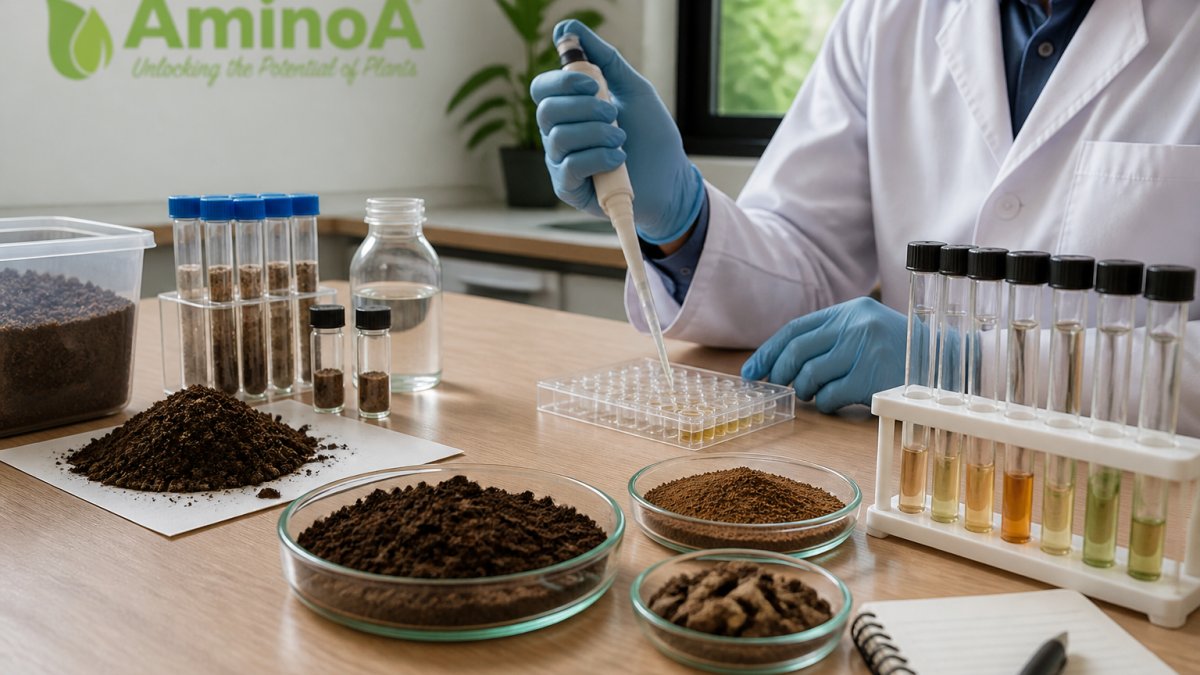
A soil test tells you what you're working with. If your phosphorus is locked up due to high pH, a plain amino acid biostimulant won't unlock it. You'd benefit from a chelated form instead. If your organic matter is low, you need amino acids that feed soil biology, peptide-bonded forms work better here.
Nutrient status also matters. If your potassium is critically low, an amino acid biostimulant alone won't fix it. You'll still need targeted nutrition. But if your nutrients are present but poorly available, amino acids become your multiplier.
Stress tolerance requirements
Different biostimulants excel at different stress responses. Some enhance cold tolerance. Others build drought resistance. A few support recovery from agrochemical phytotoxicity.
Your location and weather patterns determine which stress matters most. East Anglian farms often face drought stress. Western regions deal with waterlogging and cold. Your biostimulant choice should address your actual risk profile, not a generic one.
If you've had phytotoxicity damage from tank mixes, you need a biostimulant proven to reduce that risk. If frost is your enemy, select for cold-tolerance benefits. Match the product to your real problem.
Certification and compliance
For organic farms, certification status is non-negotiable. Your biostimulant must be approved by the relevant organic certification body. Using an unapproved product, even if it's natural, risks your certification.
Check the product label and certification documentation. Ensure it's listed on the approved inputs register for your certification scheme. Don't assume. Verify.
Conventional farms should still check compliance. Some biostimulants interact poorly with certain fungicides or insecticides. That phytotoxicity risk we mentioned earlier? It often comes from tank-mix incompatibility. Know what you're adding to your spray tank before you add it.
Biostimulants for Root Development: Why It Matters
Strong root systems are the foundation of everything that happens above ground. A plant with poor root development will underperform no matter how much you feed it.
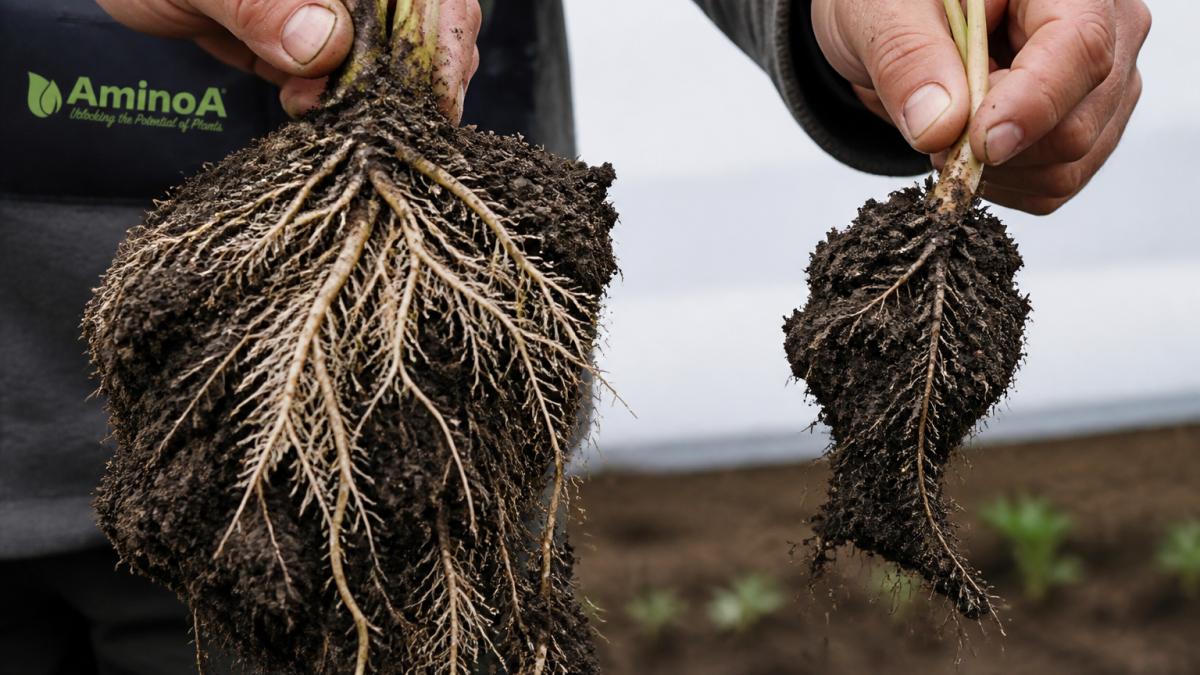
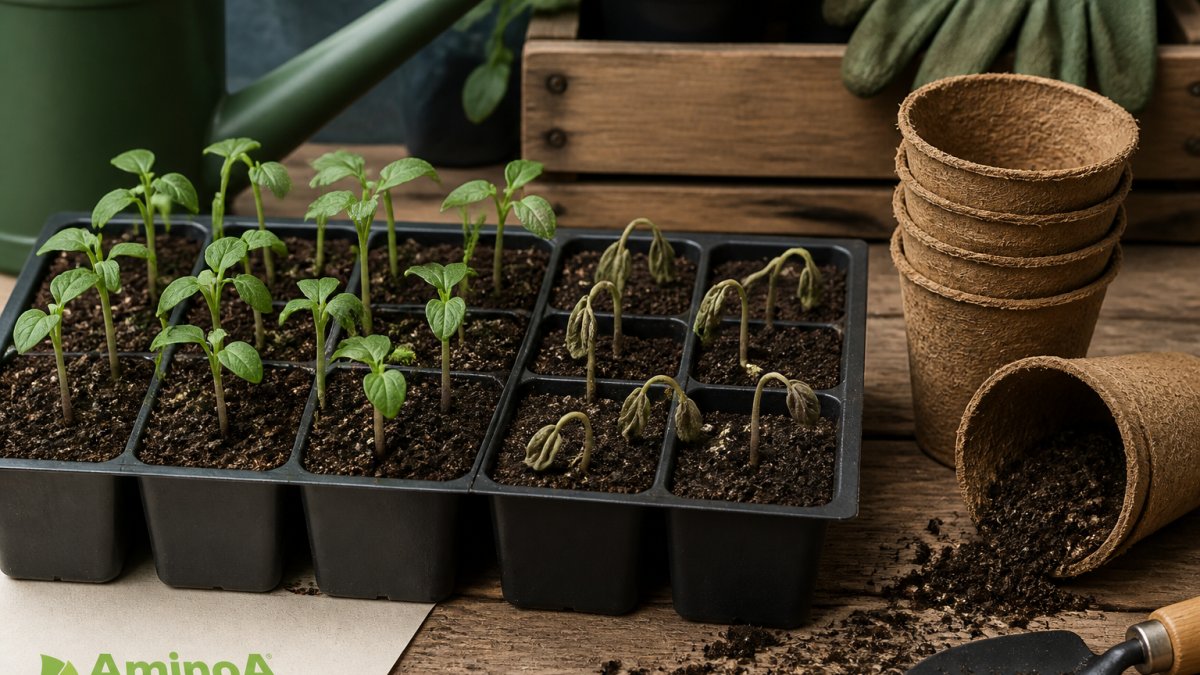
Biostimulants for root development work by stimulating root cell division and elongation. They trigger the plant to invest energy in root architecture during establishment. A well-developed root system means better nutrient uptake, improved water access, and greater resilience to stress.
This matters most during early growth. If your seedlings or transplants establish weak roots, you're fighting uphill all season. A targeted amino acid biostimulant at emergence or transplanting pays dividends for months.
The effect compounds. Better roots mean better nutrient availability. Better nutrient availability means stronger shoots, more flowers, better fruit set. It's not magic, it's biology working as it should.
Biostimulant Application Timing for Maximum Effect
When you apply your biostimulant matters as much as which one you choose. Poor timing wastes money and delivers poor results.
Spring emergence is your first critical window. Amino acids applied at sowing or transplanting accelerate root establishment. This is when investment yields the biggest return.
Growth stage transitions are your second window. When your crop shifts from vegetative growth to reproductive phase, stem extension to flowering, for example, amino acids support that transition. They reduce stress from the energy shift and improve success rates.
Stress events create your third window. If drought threatens, frost looms, or you've just applied a strong fungicide, an amino acid biostimulant applied within 48 hours helps your crop recover and maintain productivity.
Foliar applications work fastest during active growth. Apply in early morning or late evening when stomata are open and temperatures are mild. Avoid heat stress periods, your plants won't absorb effectively when they're already stressed by temperature.
Soil applications take longer to show effect but provide sustained support. Apply these 7-10 days before you expect peak demand. They need time to work through soil biology and become plant-available.
The timing pattern is clear: early season, at transitions, and during stress. Miss these windows and you're applying biostimulant when your crop doesn't need it.
How to Assess Biostimulant Efficacy on Your Farm
You need proof that your biostimulant actually works. Generic claims aren't enough. Real results come from your own observation.
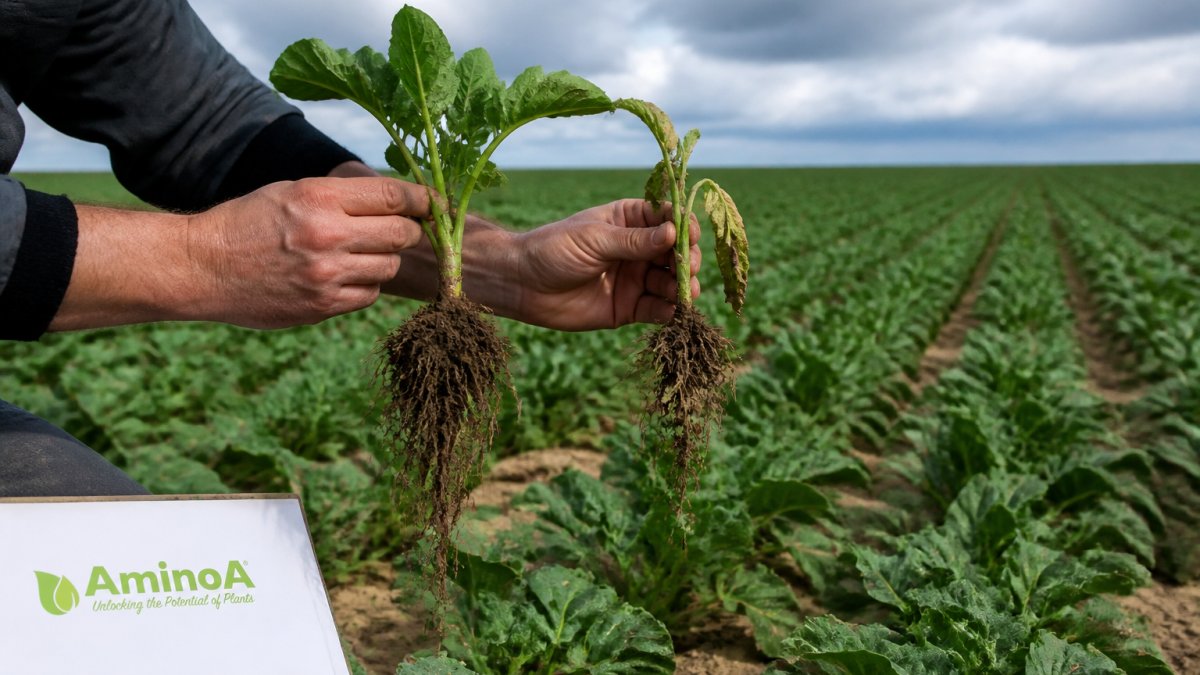
Visual markers are your first assessment tool. Look for root development first. Dig up a plant 4-6 weeks after application. Count root branches. Compare to an untreated plant from the same field. More roots, finer branching, and white root tips indicate success.
Above ground, watch for leaf colour and vigour. Treated plants should show deeper green, fuller leaf expansion, and earlier flowering. These are visible signs that your biostimulant is working.
Yield data is your ultimate proof. Track yields from treated and untreated areas if possible. Even small test plots give you real numbers. Velcourt's trial work showed maintained yields with reduced fungicide rates, that's the kind of measurable outcome that justifies continued use.
Stress response reveals true efficacy. If you face drought or frost, do treated plants recover faster? Do they maintain productivity better? That's when biostimulants prove their value.
Keep records. Note application dates, rates, crop stage, and weather. When you harvest, compare results. Over time, you'll know exactly what works for your farm.
Common Mistakes to Avoid When Selecting a Biostimulant
Most growers make similar mistakes when choosing biostimulants. Knowing these pitfalls saves money and delivers better results.
Mistake 1: Treating all biostimulants as interchangeable. They're not. A product optimised for drought tolerance won't help with cold stress. A foliar spray designed for rapid uptake won't provide sustained soil support. Match the product to your actual need.
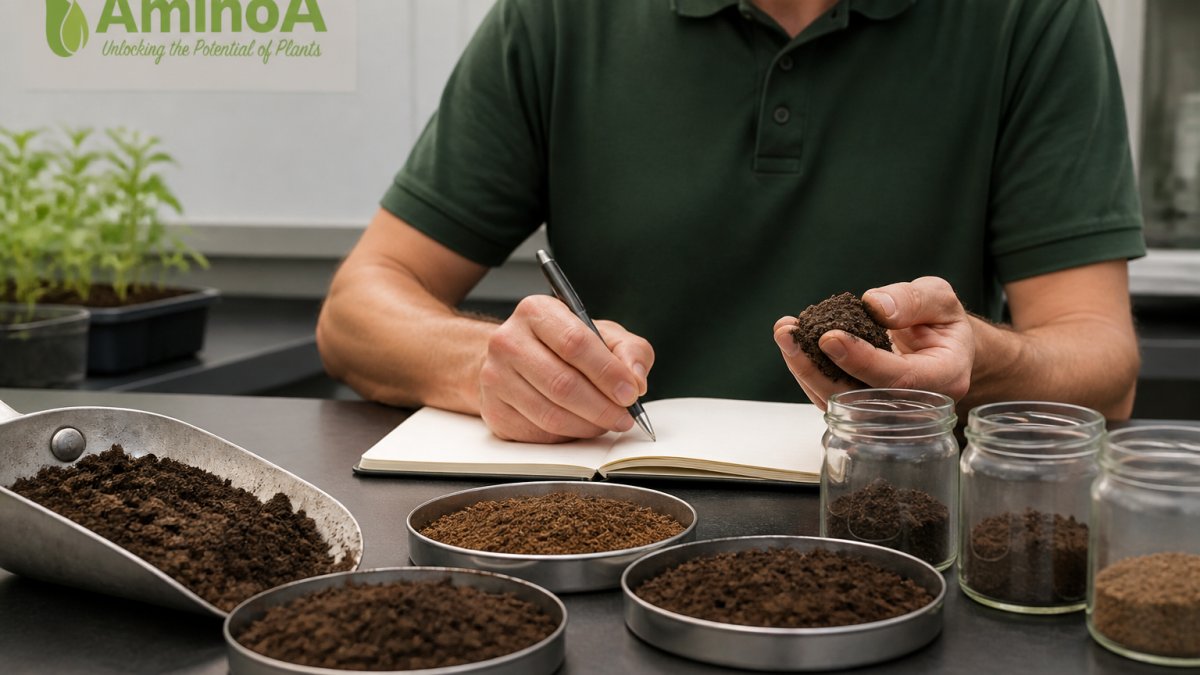
Mistake 2: Ignoring soil condition. You can't apply the same biostimulant to chalk soils and clay soils and expect identical results. Soil pH, organic matter, and existing nutrients change what works. Get a soil test. Use it to guide your choice.
Mistake 3: Applying at the wrong time. Too early and your crop doesn't need it yet. Too late and you've missed the critical window. Early season, at growth transitions, and during stress, that's when biostimulants deliver. Apply randomly and you're wasting money.
Mistake 4: Skipping the compatibility check. Tank-mixing a biostimulant with the wrong fungicide or insecticide can trigger phytotoxicity. Always check compatibility before mixing. If you're unsure, ask the product supplier. Don't guess.
Mistake 5: Expecting biostimulants to fix poor fundamentals. A biostimulant can't overcome compacted soil, severe nutrient deficiency, or disease pressure. It enhances what's working, not what's broken. Fix the basics first.
Mistake 6: Choosing based on price alone. Cheaper isn't better if it doesn't work. Choose based on efficacy for your specific crop and situation. The right product at a fair price beats a bargain that doesn't deliver.
Understanding how to choose the right biostimulant for soil health comes down to matching your specific situation to the right product. Your crop type, soil condition, stress profile, and application timing all shape the decision. Start with a soil test. Identify your biggest challenge, whether that's root development, stress tolerance, or nutrient availability. Then select a biostimulant proven to address that specific need.
At AminoA, we work with growers to match the right amino acid biostimulant to their farm's unique requirements. Our 10 years of experience means we understand the regional challenges you face.
For guidance on selecting the right biostimulant for your specific crops and soil conditions, consult the UK's official guidance on sustainable crop production or reach out to your agronomist. If you're exploring amino acid biostimulants, we're here to help. Subscribe to our newsletter for practical guidance on crop nutrition and soil health.
Frequently Asked Questions
What is the difference between a biostimulant and a fertiliser?
Fertilisers supply nutrients (nitrogen, phosphorus, potassium) that plants need for growth. Biostimulants, including amino acid biostimulants for plants, work differently: they enhance the plant's ability to absorb and use existing nutrients, improve root development, and strengthen stress tolerance. Many growers use both together, the biostimulant makes the fertiliser work more efficiently and helps crops handle environmental stress without increasing chemical inputs.
How do I assess biostimulant efficacy on my farm?
Track measurable indicators: compare green leaf area, root vigour, and yield between treated and untreated plots. Record application dates, weather conditions, and crop stage. Monitor stress response during dry or cold periods. Document harvest data, grain yield, fruit quality, or biomass. Keep notes on any changes to spray schedules or agrochemical use. Running a small trial area first lets you evaluate results before committing to larger acreage, reducing financial risk if conditions are poor.
When is the best time to apply a biostimulant?
Biostimulant application timing depends on your crop and goals. Early applications during root establishment (seedling to tillering for cereals) build a stronger root system. Mid-season applications support stress resilience during critical growth phases. Late applications can enhance fruit or grain fill and quality. Avoid applying during extreme heat or cold. Consult your product guidance and consider your local weather patterns; most growers see best results with multiple applications timed to key growth stages rather than a single spray.
Are amino acid biostimulants certified for organic farming?
Many amino acid biostimulants are approved for organic production, but certification depends on the specific product and how it was manufactured. AminoA products, made through enzymatic hydrolysis of natural materials, are approved for organic production. Always verify the product's certification status with the certifying body (such as the Soil Association or ECOCERT) before purchase. Suppliers should provide documentation of approval. Using a non-certified product can jeopardise your organic status, so confirm compliance before application.