 how-to
7 Steps to Prevent Rhizosphere Stress in Alkaline Soil
Quick Summary
Rhizosphere stress in alkaline soil occurs when the zone around plant roots becomes too high in pH for roots and their microbes to function properly. Prevention starts with soil testing, then lowering pH gradually, managing iron availability, and protecting the microbial community that keeps the rhizosphere working.
- Test soil pH and nutrients first, using a composite sample sent to an accredited lab
- Lower pH in small steps with a low-rate amendment, then retest after a season
- Watch for iron deficiency, shown as yellow young leaves between green veins
- Keep soil covered with residue or cover crops and avoid repeated deep tillage
- Trial amino acid biostimulants against an untreated check strip before committing
Table of Contents
- What Causes Rhizosphere Stress in Alkaline Soil
- Soil Testing for pH and Nutrients Before You Treat
- How to Lower Soil PH Without Overcorrecting
- Managing Iron Deficiency in Alkaline Soil
- Building Rhizosphere Microbial Communities and Soil Fertility
- Using Amino Acid Biostimulants to Support Roots Under Stress
- Booking an AminoA Trial on Your Own Crops
- Frequently Asked Questions
What Causes Rhizosphere Stress in Alkaline Soil
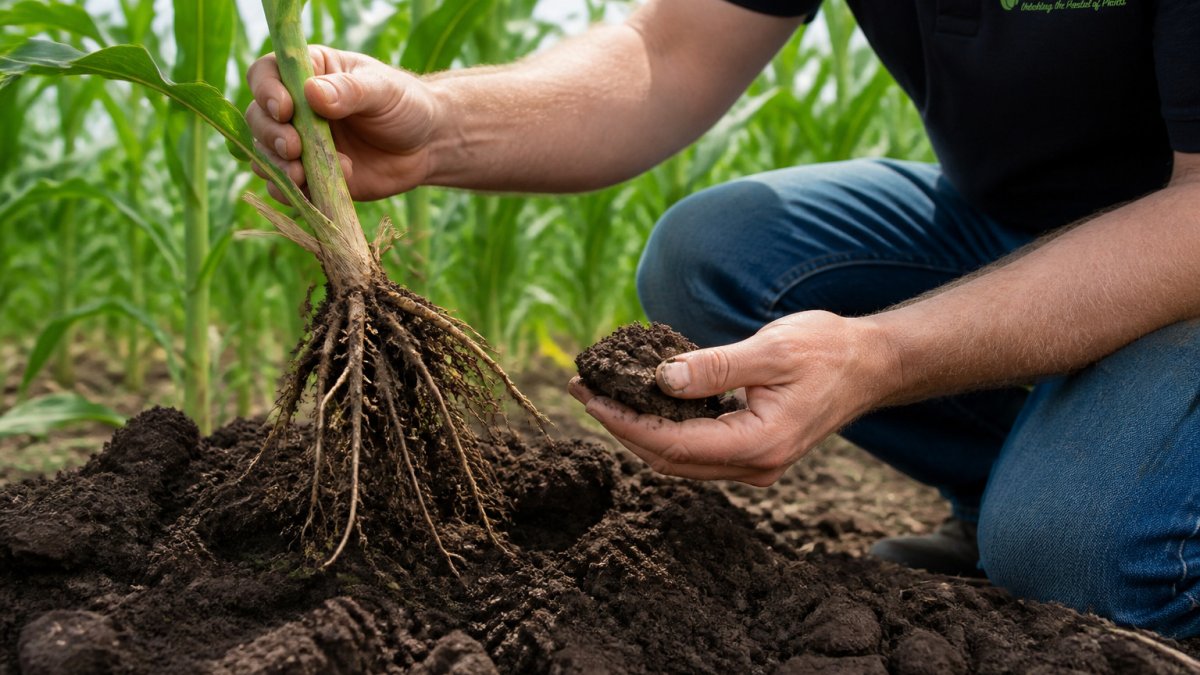
Rhizosphere stress in alkaline soil happens when the thin zone of soil around plant roots becomes too high in pH for roots and their microbes to work properly. The rhizosphere is where roots release sugars, acids and other compounds that feed soil life, so when pH climbs, that whole exchange starts to break down.
The effect is measurable. In a 2025 meta-analysis, the rhizosphere effect reduced soil pH by an average of 1.04% ± 0.20%, and the size of that shift depended on climate, management, crop identity and soil properties Tang et al., "Rhizosphere effect decreases soil pH in arid but not humid regions", 2025. That tells us the rhizosphere actively changes its own chemistry, and in alkaline conditions the balance can tip the wrong way.
Alkaline stress hits roots first. A 2024 review notes that plants can stabilise rhizosphere pH by secreting organic acids, which helps counter the injury that high-pH stress causes review on alkaline stress and plant growth. When a plant cannot keep up with that buffering, its roots take the damage.
The microbes suffer too. A 2021 study found that rhizosphere, root-endosphere and bulk-soil microbiomes differed across contrasting soil-pH ranges, with soil pH among the strongest influences Lopes et al., alkaline soil pH and soil microbiomes, 2021. Fewer beneficial microbes mean less nutrient cycling, which compounds the problem.
- Roots struggle to take up nutrients
- Beneficial microbes decline
- Organic acid buffering is overwhelmed
- Plants show slower growth and weaker stress tolerance
Soil Testing for pH and Nutrients Before You Treat
Test first, then treat. Guessing at soil pH and nutrient levels is the fastest way to waste money and overcorrect.
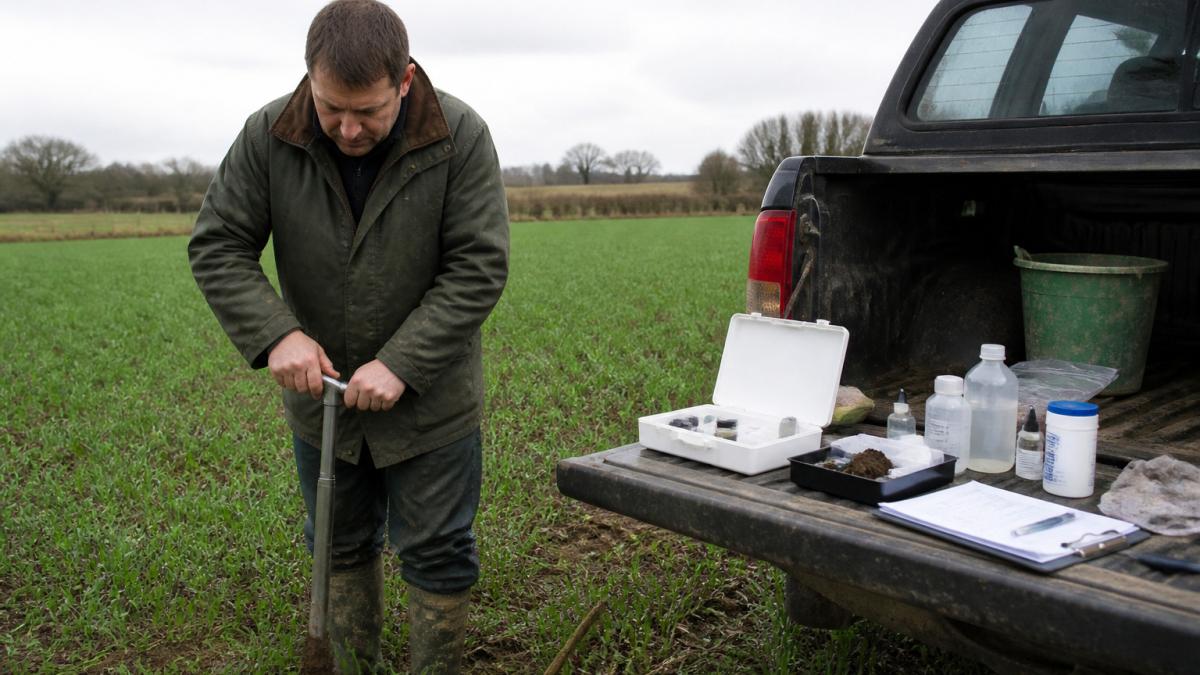
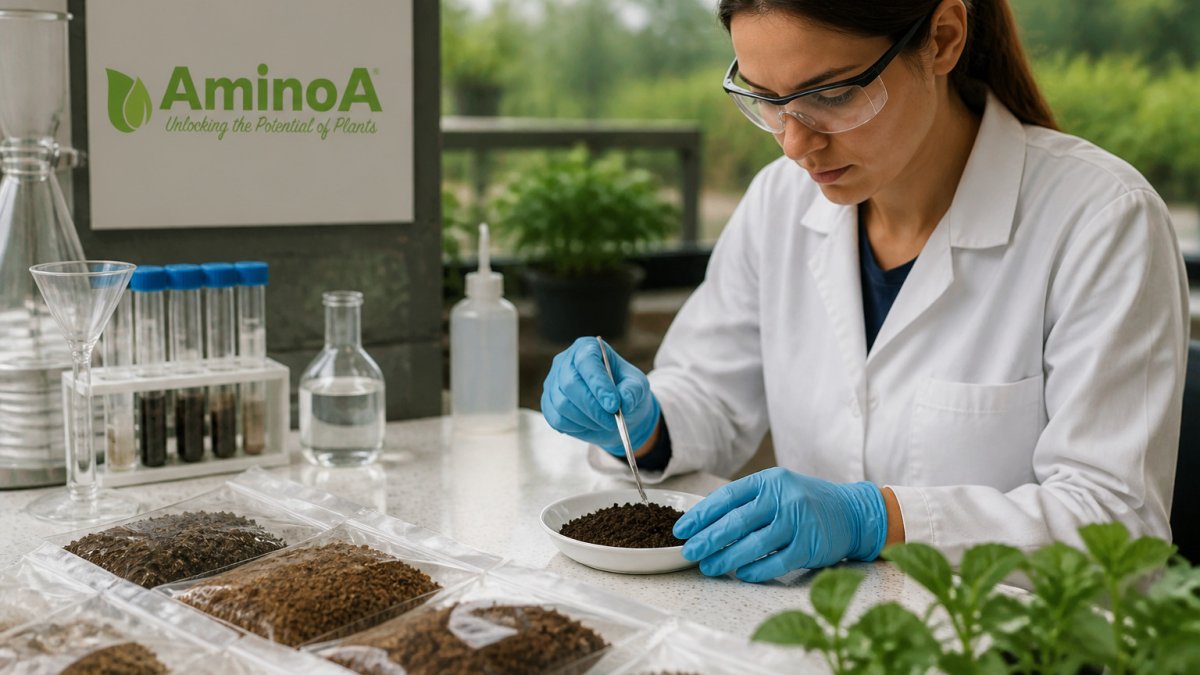
A soil test shows your actual pH, along with iron, phosphorus, potassium, magnesium and nitrogen levels. Take samples from several points across each field, mix them, and send a composite sample to an accredited lab.
Testing every two to three years on arable ground is a common approach, and more frequent testing is sensible when actively correcting pH. You can read more about what the results mean in our guide on soil pH and rhizosphere health. Many growers also ask whether testing reveals crop deficiencies, and our piece on whether soil testing shows crop nutrient deficiencies explains where the limits are.
How to Lower Soil PH Without Overcorrecting
Lowering pH is possible, but do it gently. Overapplying soil amendments can often do more harm than good, according to guidance on managing soil pH in calcareous soils managing soil pH for crop production in calcareous soils. Change the pH in small steps, then retest. Consistent monitoring remains the most reliable method for managing soil health, especially when the underlying texture requires specific adjustments to ensure nutrients remain accessible to the roots.
Work in this order:
- Confirm the target pH for your crop from your test results.
- Choose a low-rate amendment and apply according to the lab's recommendation.
- Incorporate it evenly into the root zone.
- Retest after a season before adding more.
Watch out: a sharp pH drop can cause more stress than the alkalinity it was meant to fix, so treat the change as a slow adjustment rather than a quick fix.
The steps for lowering soil pH are easier to follow at a glance:
| Step | What to do | Note |
|---|---|---|
| 1 | Confirm the target pH for your crop from test results | Based on your soil test |
| 2 | Choose a low-rate amendment and apply per lab advice | Follow the lab's recommendation |
| 3 | Incorporate evenly into the root zone | Even spread across the root zone |
| 4 | Retest after a season before adding more | Change pH in small steps |
Managing Iron Deficiency in Alkaline Soil
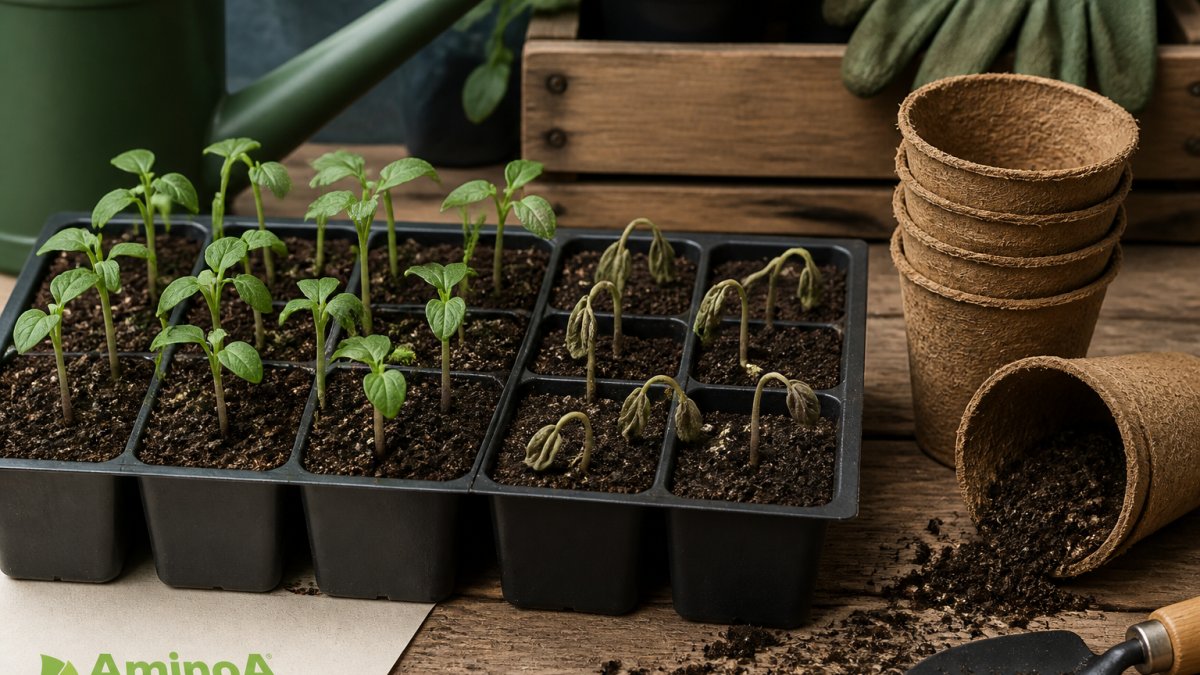
Iron deficiency is one of the most visible symptoms of alkaline stress. Iron becomes less available to roots at high pH, so young leaves turn yellow between their green veins.
Start by checking whether the problem is really iron or another nutrient issue, since leaf symptoms can look similar. Then look at the root environment rather than just spraying leaves, because root-zone conditions decide how much iron a plant can take up. Organic acids released by healthy roots help keep iron available, which is one more reason to protect the rhizosphere itself.
Building Rhizosphere Microbial Communities and Soil Fertility
Healthy microbes keep the rhizosphere working. Research on alkaline and saline-alkali soils shows that microbial communities respond to management, and that the right biological inputs can shift them in a useful direction Scientific Reports study on Bacillus megaterium and maize saline-alkaline tolerance, 2026. A 2026 study in Frontiers in Plant Science also found that cultivating Arundo donax reduced soil pH and salinity, with stronger effects over the long term Frontiers in Plant Science study on rhizosphere soil fertility, 2026.
Practical steps that support microbes:
- Keep soil covered with crop residue or cover crops
- Avoid repeated deep tillage that breaks up fungal networks
- Add organic matter steadily, not in one large dose
- Protect soil structure so roots and microbes can move through it
Our guide on mycorrhizal fungi in crop nutrition covers one of the most important groups to protect, and 5 steps to measure soil microbial activity for crop health shows how to start measuring.
Using Amino Acid Biostimulants to Support Roots Under Stress
Amino acid biostimulants can help plants cope with stress, but they work best as one part of a wider programme rather than a replacement for good soil management. Our AminoA products are 100% L-α amino acids produced through enzymatic hydrolysis, with high nitrogen, potassium, iron and magnesium content.
In trials run by Velcourt, adding AminoA FLO to reduced fungicide rates maintained yields and improved green leaf area in winter wheat.
Use biostimulants alongside your soil plan, not instead of it. If you are considering integration into your programme, our grower's guide to integrating amino acid biostimulants explains timing and tank-mix considerations.
Booking an AminoA Trial on Your Own Crops
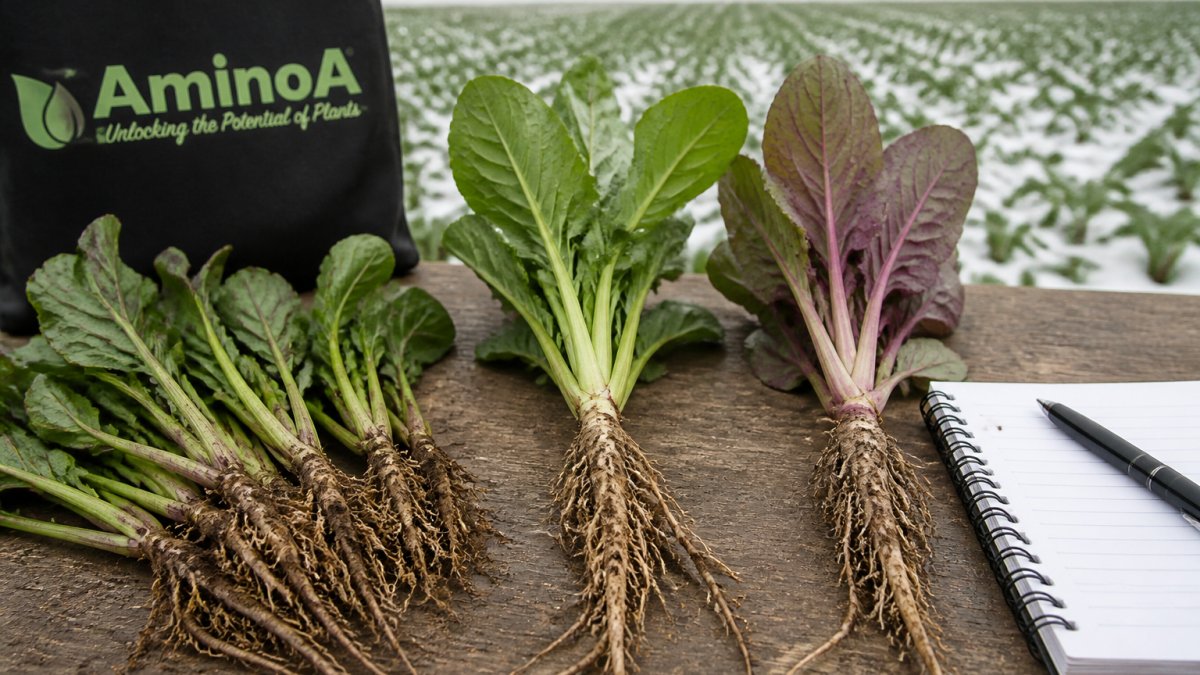
Seeing is believing, so we suggest trialling before you commit a full season. Set up a strip in one field, leave an untreated check strip beside it, and compare root development, leaf colour and yield at harvest.
Pricing depends on pack size, quantity, dates and delivery, so please check our website or request a quote for current costs. We are happy to discuss trial options and pack sizes for your specific crops. Subscribe to our newsletter to keep up with trial results and grower guidance from the AminoA team.
Frequently Asked Questions
What causes rhizosphere stress in alkaline soil?
Alkaline soil, typically above pH 7.5, reduces the availability of several nutrients, particularly iron, manganese, zinc and phosphorus, while the soil around the root changes chemically and biologically. Alkaline conditions change both the chemistry and the microbial life of the root zone. Roots under this combined chemical and microbial pressure take up nutrients less efficiently, which shows up as stunted growth and pale leaves.
Which nutrients are commonly less available in alkaline soil?
Iron is the nutrient most often affected, because it becomes largely insoluble at high pH and plants show interveinal chlorosis as a result. Manganese, zinc, boron and phosphorus also become less available as pH rises. Potassium and magnesium are usually less affected, but they can still be limited where calcium carbonate dominates the soil. A soil test for pH and extractable nutrients is the only reliable way to confirm which deficiencies are present before you apply corrective products.
How can amino acid biostimulants support crops under alkaline stress?
Amino acid biostimulants are applied to support root and leaf development and to help plants tolerate stress such as cold, heat, drought and agrochemical phytotoxicity. AminoA products contain 100% L-alpha amino acids produced through enzymatic hydrolysis, with nitrogen, potassium, iron and magnesium content. Velcourt trials found that adding AminoA FLO to reduced fungicide rates in winter wheat maintained yields and improved green leaf area. Biostimulants support crop resilience but do not correct the underlying soil pH, so they work best alongside a soil testing programme. Pricing depends on quantity, dates and delivery, so please contact AminoA for a current quote.