 Comparison
Are Foliar Fertilisers the Answer to Nutrient Deficiencies?
Last Updated: 11 November 2026
Quick Summary
Foliar fertilisers are liquid nutrients sprayed onto leaves, where they enter the plant faster than through the roots. They work best as a targeted top-up for confirmed micronutrient gaps, while soil nutrition covers the base requirement.
- Leaves absorb dissolved nutrients within hours, useful when a crop shows a visible shortfall.
- Confirm the deficiency first, using symptom position, a soil test and a leaf tissue test.
- Interveinal yellowing on young leaves often points to iron, which foliar sprays can correct quickly.
- Spray in cooler parts of the day when leaves are actively growing, avoiding the hottest hours.
- Foliar feeding cannot supply the bulk of a crop's nitrogen, phosphate or potash needs.
Table of Contents
- What Foliar Feeding Does and Where It Fits in a Nutrient Programme
- Diagnosing Nutrient Deficiencies Before You Spray
- Foliar Fertiliser for Iron Deficiency: Options and Limits
- Chelated Micronutrients for Foliar Application: Why Form Matters
- Foliar Fertiliser Application Timing and Frequency
- Foliar Feeding Benefits and Limitations, Including Cost and Safety
- Choosing a Foliar Programme for Your Crops and Soil Conditions
- Frequently Asked Questions
What Foliar Feeding Does and Where It Fits in a Nutrient Programme
Foliar fertilisers are liquid nutrients sprayed onto leaves, where they can enter the plant through the leaf surface rather than the roots. For growers, the question is less whether foliar feeding works and more where it fits. Used well, it supplements a soil programme. Used as a replacement for one, it usually disappoints. This guide sets out where foliar fertilisers earn their place and where they do not.
Foliar application is designed for speed. To see how this compares with soil uptake in more detail, read how foliar feeding and soil application compare on nutrient uptake. A leaf can absorb a dissolved nutrient within hours, which makes it useful when a crop shows a visible shortfall and the soil cannot correct it quickly. Soil-applied nutrients have to dissolve, move through the root zone and be taken up, a slower route that can be blocked by high soil pH or waterlogging.
The limits are just as important. Leaves take up only small amounts at a time, so foliar feeding cannot replace the bulk of a crop's nitrogen, phosphate or potash needs. A useful rule is to treat foliar products as a top-up for specific gaps, with soil nutrition covering the base requirement.
Diagnosing Nutrient Deficiencies Before You Spray
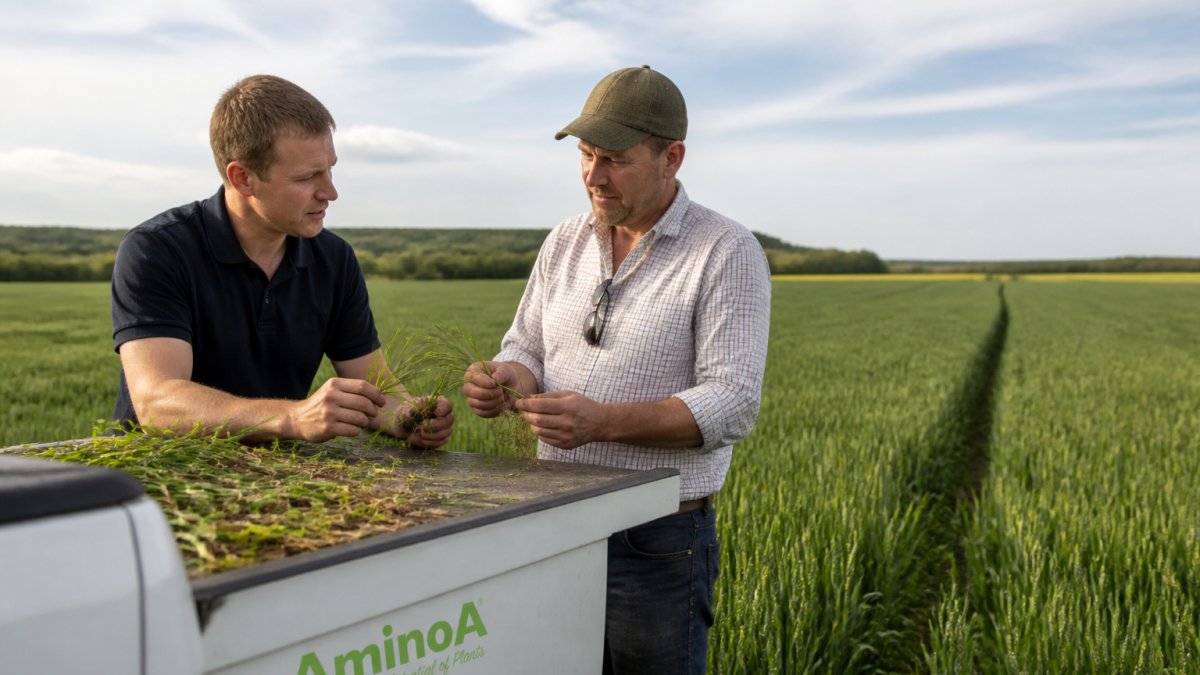
Spraying without a diagnosis is the most common way growers waste money on foliar products. Most deficiency symptoms can be sorted by two questions: which leaves are affected, and whether the pattern is uniform or patchy across the crop. Work through the field systematically, walking a zigzag route and checking at least ten plants per zone, rather than judging from the headland alone.

The position of the symptom on the plant is the first clue. Chlorosis on older leaves usually points to a mobile nutrient such as nitrogen, magnesium, potassium or phosphorus, because the plant relocates these to new growth when supply runs short. To learn how to recognise these patterns in stressed plants, see signs of nutrient deficiency in stressed plants. Symptoms on young leaves or growing points usually point to a less mobile nutrient, such as iron, zinc, manganese, copper, calcium or boron, which the plant cannot easily move once it is in place.
The table below gives a practical symptom-to-nutrient reference for the deficiencies most often treated with foliar products. It is a starting point for diagnosis, not a substitute for a soil or tissue test.
| Visible symptom | Where it appears | Most likely nutrient | Notes |
|---|---|---|---|
| Uniform pale green to yellow leaves | Older leaves first | Nitrogen | Often worse after heavy rain, which leaches nitrate |
| Purplish tint on leaves or stems | Older leaves | Phosphorus | Cold soils reduce uptake even when phosphorus is present |
| Scorched or brown leaf margins | Older leaves | Potassium | Check for drought stress before attributing it to potassium |
| Interveinal yellowing, veins stay green | Young leaves | Iron | Common on high-pH and waterlogged soils |
| Interveinal yellowing with small, mottled leaves | Young to mid leaves | Manganese or zinc | Distinguish by checking the leaf and soil pH together |
| Dead or distorted growing tips | New growth | Calcium or boron | Often linked to irregular watering rather than soil shortage alone |
| Yellowing with dark, bronzed or necrotic spots | Older leaves | Magnesium or copper | Magnesium is more often interveinal; copper spotting is less common |
| Stunted, bushy growth with thick, dark leaves | Whole plant | Sulphur or phosphorus | Sulphur deficiency can resemble nitrogen shortage; test before correcting |
Watch out: the same visible symptom can have several causes. Yellowing from waterlogging, root damage, compaction or pest feeding looks much like a nutrient shortage, and a foliar spray will not correct any of them. Check drainage, root health and pest pressure before buying product.
Once the symptom has been matched to a likely nutrient, confirm it. A soil test shows nutrient reserves and pH, which controls how available iron, manganese and zinc are. A leaf tissue test shows what the plant is actually taking up, and it is the more reliable guide when the symptom and the soil results disagree. Keep a dated record of symptoms, photographs and test results, so you can compare the crop before and after any treatment.
Foliar Fertiliser for Iron Deficiency: Options and Limits
Iron deficiency shows up as interveinal chlorosis on young leaves, and it is one of the most common reasons growers reach for a foliar product. Iron is poorly mobile in the plant, so a spray applied to the affected leaves gives a faster visible response than soil iron, which is often locked up at high pH.
The limit is that foliar iron corrects the symptom on the leaves you spray. It does not fix the underlying soil condition, so the problem can return in the next crop. Iron sprays can also scorch leaves at high concentrations, so follow label rates closely.
Chelated Micronutrients for Foliar Application: Why Form Matters
The form of a micronutrient often matters more than the total amount applied. Chelated micronutrients are bound to an organic molecule that keeps the metal soluble and available to the leaf, even when the spray solution is not perfectly balanced. Unchelated salts can precipitate in the tank or on the leaf surface and become unavailable.
When comparing products, check the chelating agent and the nutrient content on the label rather than the headline percentage alone. Chelated forms usually cost more per kilogram, but a lower rate of a more available form can deliver a better result per hectare.
Foliar Fertiliser Application Timing and Frequency
Timing decides whether a foliar application works. Spray when leaves are actively growing and the stomata are open, which is usually in the cooler part of the day with adequate leaf moisture. For practical spraying methods that improve absorption, see foliar application techniques for better absorption. Avoid the hottest hours, when rapid drying can cause leaf burn and reduce uptake.
Frequency depends on the crop stage and the nutrient. Growers often apply a series of lighter sprays during periods of high demand, such as flowering and fruit set, rather than one heavy application. Our guide to foliar feeding timing and when to spray for best results covers the timing windows in more detail. Product labels set the maximum number of applications per season, and those limits are the ones to follow.
Foliar Feeding Benefits and Limitations, Including Cost and Safety
The main benefit of foliar feeding is responsiveness. Nutrients reach the plant within hours, and a spray can target a specific shortfall without changing the soil programme. For a crop already showing a visible deficiency, that speed can matter more than the total amount of nutrient applied.
The limitations are just as real. Leaves take up only small quantities at a time, so foliar feeding cannot supply the bulk of a crop's nitrogen, phosphate or potash. It also works within a narrow window of weather and leaf condition, and it adds a spray pass with its own equipment, fuel and labour costs.
When foliar feeding is worth the money. For most growers, a foliar product earns its cost in three situations: a confirmed micronutrient deficiency that the soil cannot correct quickly, a crop at a high-demand stage such as flowering or fruit set, and a short-term emergency such as a visible shortfall late in the season. In most other cases, improving the soil with organic matter, a balanced base fertiliser or a correction of pH will give better value over several seasons. A simple test is to ask whether the problem will recur next year. If it will, fix the soil first and use a foliar spray only as a bridge.
Pricing depends on product, pack size, quantity and delivery, so compare cost per litre of ready-to-spray solution rather than the headline pack price, and check the label rate for your area. For current prices or a quote, contact AminoA directly.
Safety and the environment. Concentrates should be handled with gloves, eye protection and, for some products, a mask, and the label's re-entry interval should be respected before anyone returns to the sprayed area. Keep spray drift away from ponds, streams, drains and neighbouring plots, and do not spray before heavy rain, when runoff is most likely to carry product away from the target crop.
Watch out: high concentrations of iron, zinc and manganese can scorch leaves, particularly in hot weather or on soft, young growth. Test a small number of plants first and wait a few days before treating the whole bed.
Compatibility matters as well. Do not assume a foliar fertiliser can be mixed with a fungicide or insecticide. Some combinations cause precipitation in the tank, reduce efficacy or increase leaf damage. Check the product labels for tank-mix guidance, add products in the correct order, and run a jar test with a small volume before mixing a full tank. Organic growers should confirm that any product is approved under their certification scheme before use.
Choosing a Foliar Programme for Your Crops and Soil Conditions
A good foliar programme starts with the diagnosis, not the product list. Match the product to the deficiency you have confirmed, the crop stage and your soil conditions. Our guide to choosing the right foliar fertiliser walks through the selection criteria step by step. A grower on high-pH chalk soil with confirmed iron deficiency has different needs from a grower on acidic sandy soil with a potassium shortfall.
Ask suppliers for trial data on crops similar to yours, and ask about smaller pack sizes or trial options so you can test on a small area before committing to a full programme. Pricing depends on quantity, delivery and the product range, so request a current quote from AminoA. Start with a clear problem, a small trial and a written record of results, and you will know quickly whether foliar feeding is worth continuing.
Frequently Asked Questions
Which foliar fertiliser is best for a nutrient deficiency?
No single product suits every deficiency. The best choice depends on which nutrient is short, the crop, and growth stage. Confirm the deficiency first through tissue testing or visual diagnosis, then choose a product formulated for that nutrient. Chelated micronutrient formulations are commonly used for correcting micronutrient shortages because the chelate helps keep the element soluble and available to the leaf. Check label rates and compatibility before tank mixing, and where possible follow a trial strip to see the response on your own crop.
Can foliar feeding correct nutrient deficiencies in crops?
Foliar feeding can correct some deficiencies quickly, particularly for micronutrients such as iron, zinc, manganese and boron, because leaves absorb them directly. It cannot fully replace soil-applied macronutrients like nitrogen, phosphorus and potassium on most field crops, since the quantities a leaf can take up are limited. Foliar application is most justified where a deficiency has been identified.
When is the best time to apply foliar fertiliser?
Apply foliar fertiliser when the leaves are actively growing and the stomata are open, usually in cool, calm, humid conditions in the early morning or late afternoon. Avoid spraying in strong sun or high temperatures, as evaporation can concentrate the solution and scorch leaves. Timing around key growth stages, such as early tillering or pre-flowering, often gives the most useful response. Check the forecast for rain within the period the product needs to dry on the leaf.
How often should foliar fertiliser be applied?
Frequency depends on the product, the crop and the severity of the deficiency. Many programmes apply two to three passes across a season at key growth stages rather than repeated weekly sprays. Overapplication raises the risk of leaf burn and wastes product, so follow label rates and re-diagnose before repeating a treatment. Record each application and its visible response to refine the programme for the next season.