 comparison
Seaweed Extract for Root Development: Worth It?
Table of Contents
- Seaweed Extract vs Amino Acid Biostimulants: A Direct Comparison
- How Seaweed Extract Works on Root Systems
- Liquid Biostimulants vs Granular Fertilisers: Application and Efficiency
- Benefits of L-α Amino Acid Biostimulants for Root Architecture
- How to Improve Crop Root Architecture: Practical Methods
- Cost-Effectiveness and Return on Investment
- Is Seaweed Extract Worth It? The Verdict
- Frequently Asked Questions
Last Updated: September 23, 2026
Seaweed Extract vs Amino Acid Biostimulants: A Direct Comparison
Is seaweed extract root development worth pursuing? The answer depends on what you're trying to achieve and how you measure success. Both seaweed-based products and L-α amino acid biostimulants stimulate root growth, but they work through different mechanisms and deliver different results at different price points.
Seaweed extract has been used in horticulture for decades. It contains natural plant growth regulators and trace elements that encourage root establishment. These products are reliable, well-established, and affordable for many growers.
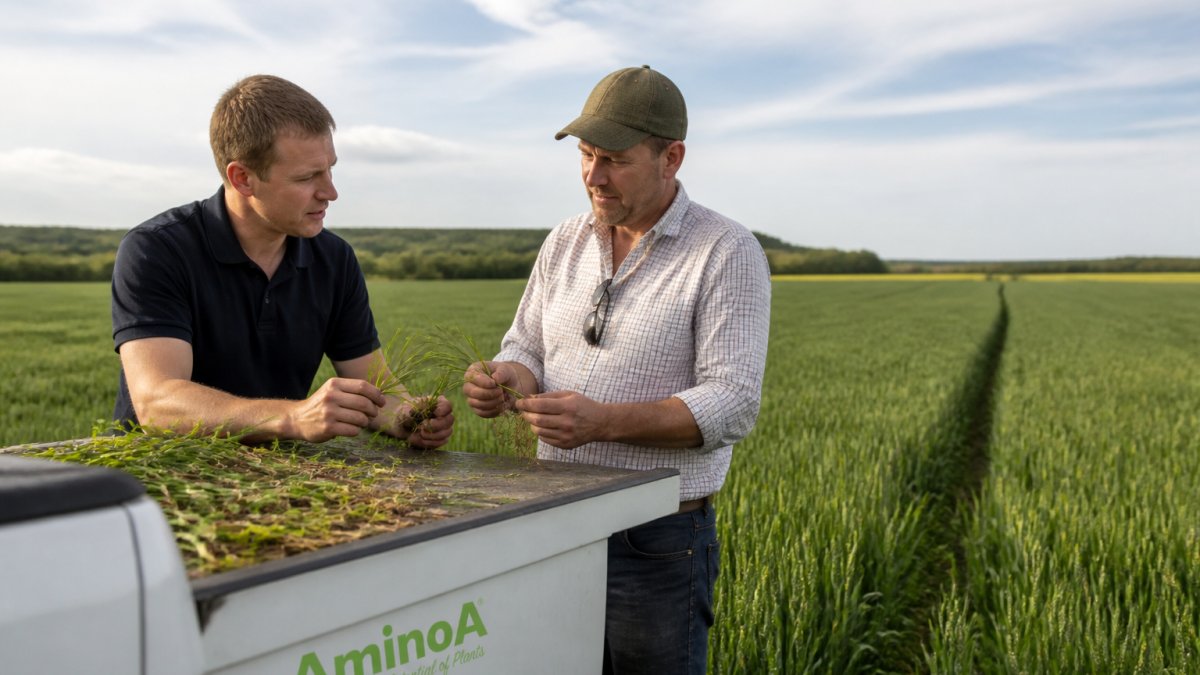
However, L-α amino acid biostimulants like those from AminoA represent a different approach. Rather than relying on seaweed's naturally occurring compounds, amino acid products deliver all essential amino acids in their active L form, combined with high concentrations of nitrogen, potassium, iron, and magnesium. This precision matters. A Velcourt trial demonstrated that adding AminoA FLO to reduced fungicide rates maintained yields and improved green leaf area in winter wheat, showing that amino acids can work alongside existing agrochemical programmes rather than replacing them.
The real question isn't whether seaweed extract works. It does. The question is whether it delivers the specific benefits you need, at a cost that justifies the application.
How Seaweed Extract Works on Root Systems
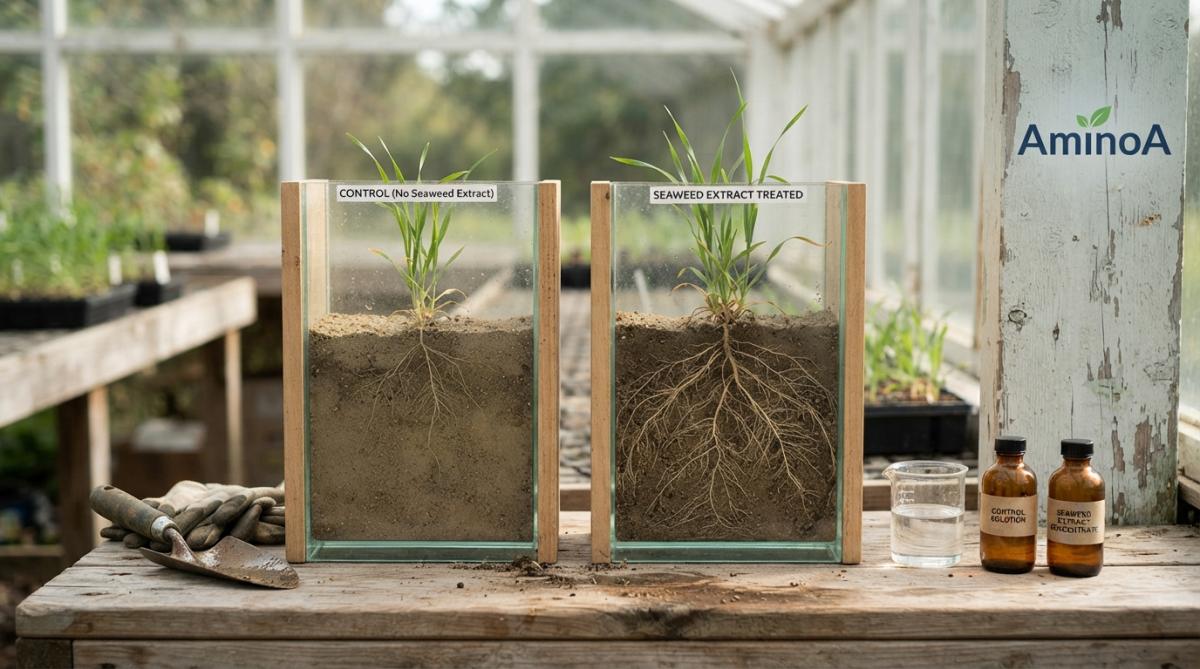
Seaweed extract root development occurs through natural plant growth regulators, primarily cytokinins and auxins, combined with trace minerals that activate enzymatic pathways in the plant. When applied to soil or foliage, these compounds signal the plant to invest energy in root expansion and branching.
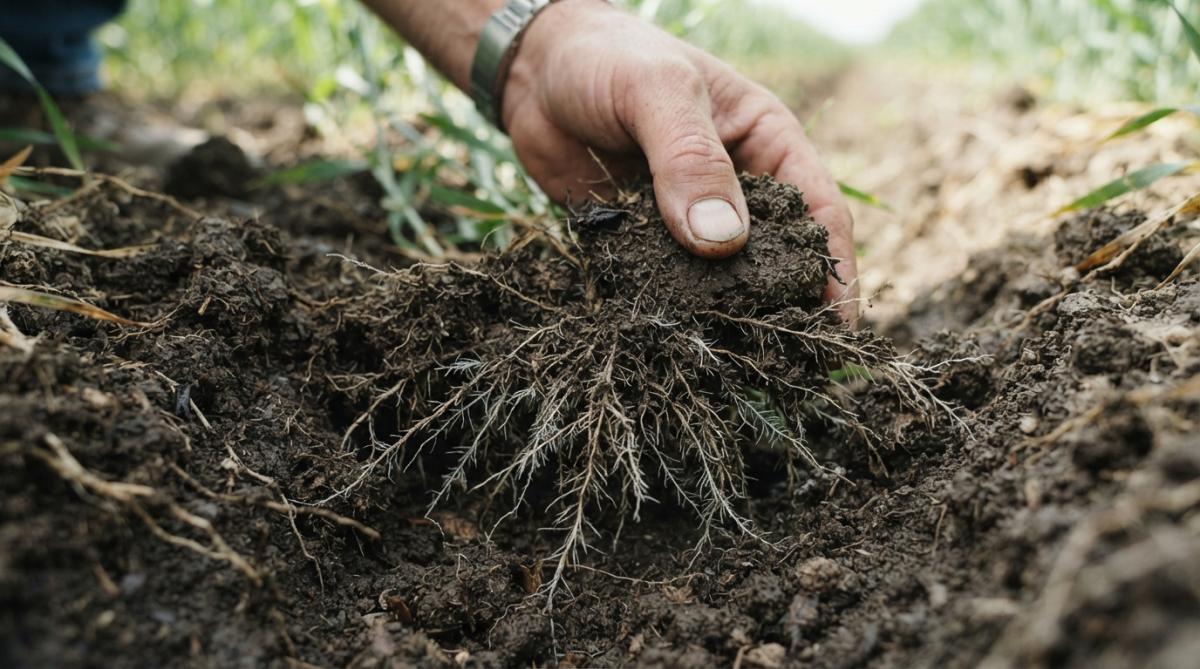
The mechanism is gentle and indirect. Seaweed doesn't force growth; it encourages the plant's own developmental processes. This makes it particularly useful for transplants recovering from shock or plants stressed by poor soil conditions.
However, this indirect approach has a trade-off: results depend on plant vigour, soil health, and environmental conditions. A plant already struggling won't respond as strongly as one that's reasonably healthy. Seaweed works best as a supplement to solid agronomic practice, not a substitute for it.
Application frequency matters too. Most seaweed products require regular applications to maintain consistent benefits. A single application delivers a temporary boost; sustained improvement requires repeated doses across the growing season.
Liquid Biostimulants vs Granular Fertilisers: Application and Efficiency
This is where the distinction between liquid biostimulants and granular fertilisers becomes practical. Seaweed extracts are typically liquid concentrates that require dilution and repeated application.
Granular fertilisers, traditional NPK products, are applied once or twice per season and remain in the soil. They're straightforward but inflexible. You apply a fixed nutrient load regardless of plant demand or soil conditions.
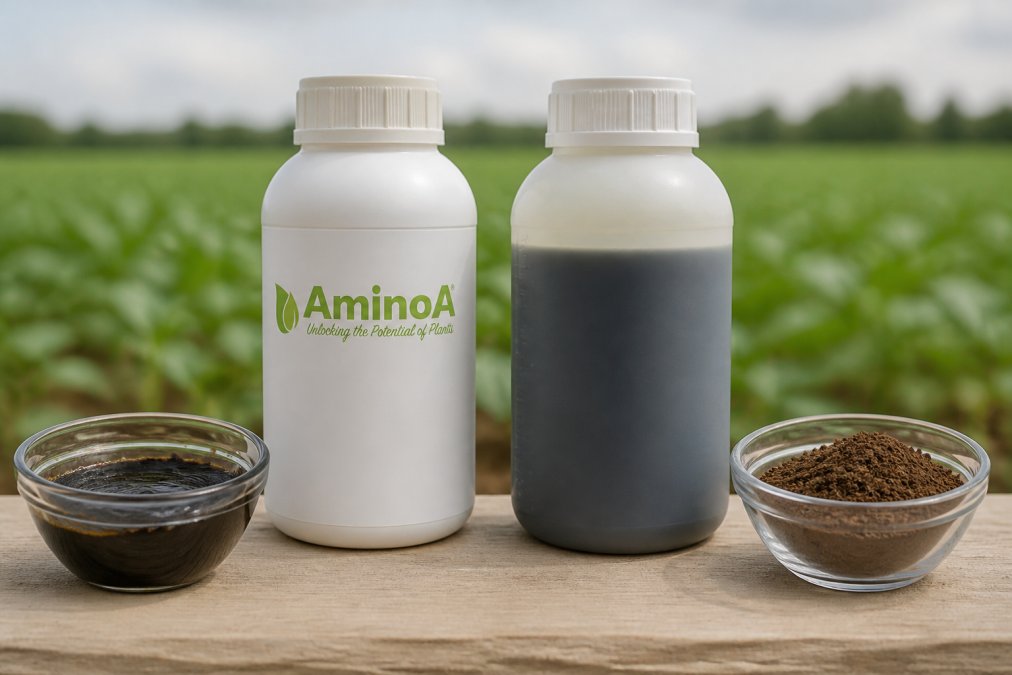
L-α amino acid biostimulants occupy a middle ground. AminoA FLO, designed for professional agricultural use, is applied as a liquid but works at lower application frequencies than seaweed because the amino acids are immediately bioavailable. The plant doesn't need to process them; it absorbs them directly. This means faster uptake, more predictable results, and fewer applications needed across the season.
For large-scale operations, this efficiency translates to labour savings and reduced application costs. For smaller growers, the flexibility of liquid application is valuable, you can target specific growth stages or respond to stress events.
Benefits of L-α Amino Acid Biostimulants for Root Architecture
L-α amino acids are the building blocks plants use to construct new tissue. When you supply them directly, you're providing the exact inputs the plant needs for root expansion, leaf development, and bud formation. This is fundamentally different from seaweed, which triggers the plant's own processes indirectly.
The benefits reported by users include improved root biomass, enhanced stress resistance to drought and temperature fluctuations, and increased resistance to agrochemical phytotoxicity. The last point matters: amino acids appear to buffer plants against damage from fungicides and insecticides, which is why the Velcourt trial showed maintained yields even with reduced fungicide rates.
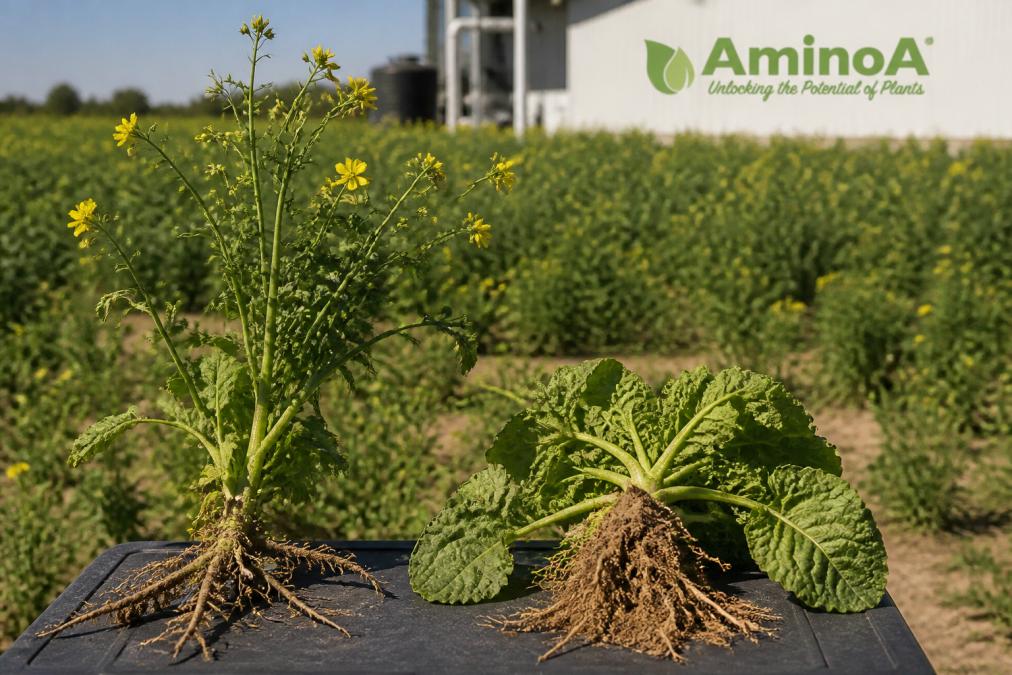
Root architecture, the actual structure and distribution of the root system, improves measurably. Amino acids encourage deeper penetration and denser branching, which translates to better water and nutrient uptake across the growing season. This is particularly valuable in drier seasons or on marginal soils where root depth determines yield.
Stress resistance is another area where amino acids show consistent benefits. Plants treated with L-α amino acids tend to recover faster from transplant shock, temperature stress, and water stress. This makes them valuable for high-value crops where establishment is critical, strawberries, tomatoes, and olives all benefit from improved stress resilience.
The catch is consistency. Amino acid products must be produced to strict standards to deliver the promised L-form amino acids. Not all products are equal. AminoA's products are produced through enzymatic hydrolysis and contain every essential amino acid in the L form, which ensures bioavailability and consistent results across applications.
How to Improve Crop Root Architecture: Practical Methods
Improving root architecture requires a layered approach. No single product, seaweed or amino acid, solves the problem alone. Here's what actually works:
Start with soil health. Compacted, depleted, or poorly structured soil limits root development regardless of what biostimulant you use. Address drainage, organic matter, and soil biology first. This is the foundation.
Apply biostimulants at critical growth stages. For seaweed, this means early growth and transplant establishment. For amino acids, applications at emergence, tillering, and early flowering deliver better results than random timing. Match the application to the plant's developmental needs.
Combine biostimulants with balanced nutrition. Amino acids and seaweed work alongside, not instead of, proper NPK nutrition. Nitrogen, potassium, and phosphorus remain essential. Biostimulants amplify what good nutrition provides.
Monitor and adjust. Soil conditions, weather, and crop variety all affect how plants respond to biostimulants. What works on one field may need adjustment on another. Growers who track leaf colour, root samples, and yield by field learn quickly what delivers ROI on their specific operation.
Consider crop type. High-value crops like strawberries and tomatoes justify more intensive biostimulant use because the margin per hectare is higher. Commodity crops like wheat and barley need a tighter cost calculation.
| Method | Best For | Application Frequency | Key Benefit |
|---|---|---|---|
| Seaweed extract | Transplants, stress recovery | Every 2-3 weeks | Low cost, gentle, well-proven |
| L-α amino acids | Root architecture, yield | Every 3-4 weeks | Faster uptake, measurable results |
| Granular fertiliser | Base nutrition | Once or twice per season | Simple, cost-effective |
| Combination approach | Optimised results | Staggered timing | Addresses multiple growth stages |
Cost-Effectiveness and Return on Investment
This is where the decision gets real. Seaweed extract is cheaper per application. For a grower managing a few hectares, the upfront cost feels manageable.
However, cost per application isn't the same as cost per result. If seaweed requires more frequent applications and delivers slower, less measurable results, the true cost per unit of root development or yield increase is higher. You're paying less per bottle but more per outcome.
L-α amino acid products require contact for pricing, which reflects their position as professional-grade agricultural inputs. The cost per hectare depends on application rate, field size, and crop type. For large-scale operations, pricing typically reflects volume discounts. For smaller growers, the per-hectare cost may be higher than seaweed.
The ROI calculation depends on three variables: the cost of the biostimulant, the yield increase it generates, and the market price of your crop. A 5% yield increase on wheat at current prices may justify the cost. A 5% yield increase on strawberries, where per-hectare value is significantly higher, almost certainly does.
Growers who've adopted amino acid biostimulants report that the improved stress resistance alone, reducing crop loss from unexpected weather or agrochemical damage, often justifies the cost in high-risk seasons. The yield increase is a bonus.
Is Seaweed Extract Worth It? The Verdict
Seaweed extract is worth it if you're managing transplants, recovering plants from stress, or working with a limited budget. It's proven, affordable, and gentle. For gardeners and small-scale growers, Maxicrop products deliver reliable results at a reasonable cost.
For commercial arable farming, particularly where yield and stress resistance directly affect profit, the calculation shifts. Seaweed extract works, but amino acid biostimulants like AminoA FLO deliver more measurable, consistent results because they provide standardised, bioavailable inputs that the plant uses immediately rather than triggering indirect processes.
The Velcourt trial result is instructive: maintained yields with reduced fungicide rates.
Frequently Asked Questions
Does seaweed extract actually stimulate root growth?
Seaweed extract contains natural plant growth regulators and trace elements that encourage root cell division and extension. The mechanism involves auxins and cytokinins, compounds that promote root elongation and branching. However, effectiveness depends on application timing, crop type, and soil conditions. Results are typically visible within 2-3 weeks of application, with improved root establishment in transplants and stress recovery in established plants.
How does seaweed extract compare to L-α amino acid biostimulants?
Seaweed extract provides broad-spectrum trace elements and growth regulators but lacks the concentrated nitrogen and protein building blocks of L-α amino acids. L-α amino acid biostimulants offer direct metabolic support for protein synthesis and enzyme activity, delivering faster uptake and more targeted root development. Seaweed extract suits general plant vigour; amino acids excel at stress recovery and yield optimisation in commercial systems.
Can seaweed extract be used alongside traditional fertilisers?
Yes, seaweed extract is compatible with most NPK fertilisers and fungicides. It acts as a growth catalyst rather than a nutrient replacement, so it complements conventional inputs. Growers often apply seaweed extract as a foliar spray or soil drench between fertiliser applications to maximise nutrient uptake and stress resilience without tank-mixing concerns.
Is seaweed extract cost-effective for large-scale crop production?
Seaweed extract offers reasonable value for smaller operations and horticultural crops. For large-scale arable farming, the cost per hectare and application frequency may not justify the yield uplift compared to optimised NPK programmes. Amino acid biostimulants, though higher in upfront cost, often deliver better ROI on field-scale crops through reduced agrochemical rates and improved stress tolerance, particularly in challenging seasons.