 comparison
Blossom Stimulation vs Root Development for Crop Stress
Table of Contents
- How Crop Stress Reshapes Growth Priorities
- Stimulated Blossom, Fruit Formation, and Growth: What It Delivers
- Increased Root, Leaf, and Bud Development: The Vegetative Foundation
- Is Foliar Feeding Worth It for Stress Resistance?
- Biostimulant Application Timing for Fruit Set
- Mitigating Heat Stress in Arable Crops
- Conclusion: Matching the Approach to the Threat
- Frequently Asked Questions
Last Updated: September 12, 2026
How Crop Stress Reshapes Growth Priorities
Crop stress is any external pressure, from heat and drought to cold snaps and spray damage, that forces a plant to divert resources away from yield. When that happens, the plant makes a choice. It can push energy into reproduction, or it can shore up its vegetative infrastructure. Understanding which response you are triggering, and when, is the difference between a crop that limps through a bad spell and one that finishes strong.
AminoA has spent a decade working with growers on exactly this problem, and the pattern is consistent: the two approaches are not competitors. They are sequential tools.
A plant under stress has a finite energy budget. Every joule sent to opening blossoms is a joule not sent to root extension. That trade-off is the whole game.
Below, we break down what each approach delivers, where it falls short, and how to sequence them so your crop survives the weather it actually gets, not the weather you hoped for.
Stimulated Blossom, Fruit Formation, and Growth: What It Delivers
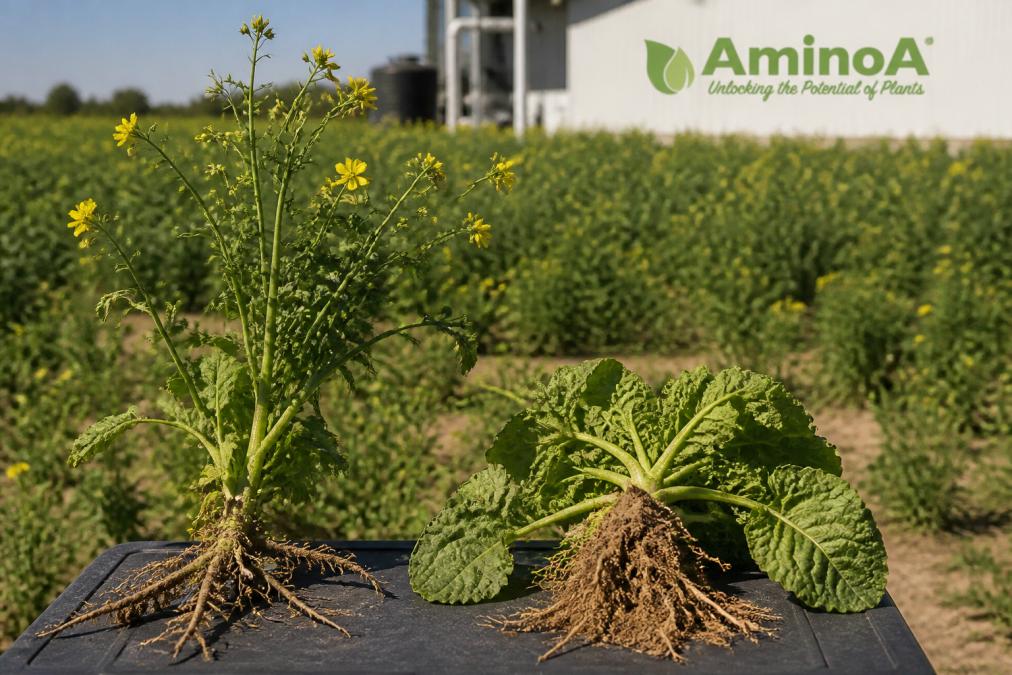
Stimulated blossom, fruit formation, and growth is the reproductive strategy: you push the plant to flower, set fruit, and fill it. The payoff is direct and visible. More viable blossoms mean more fruit set, and in high-value horticulture that translates quickly to marketable yield.
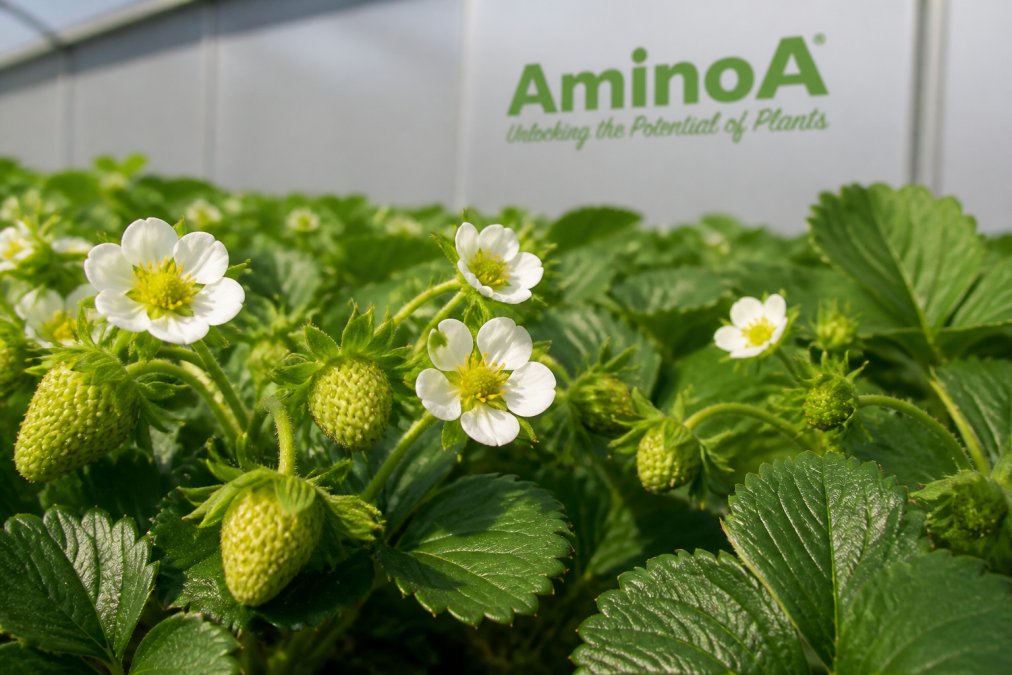
The Reproductive Payoff and Its Limits
The limit is timing and reserve. A plant with shallow roots and depleted carbohydrate stores cannot fill the fruit it sets, no matter how many blossoms you encourage. Push reproduction on a stressed plant and you get blossom drop, poor fruit sizing, or a crop that ripens unevenly.
Many growers find that reproductive stimulation works best when the plant already has a healthy vegetative base. Applied too early, or on a crop that has just taken a hit, it can accelerate exhaustion.
Increased Root, Leaf, and Bud Development: The Vegetative Foundation
Increased root, leaf, and bud development is the vegetative strategy: you build the factory before you ask it to produce. Roots explore for water and nutrients, leaves capture light, and buds hold the next cycle of growth in reserve.
This is the slower, less glamorous half of the equation. It is also the one that decides whether the plant survives a stress event at all.
Why Roots Decide Stress Survival
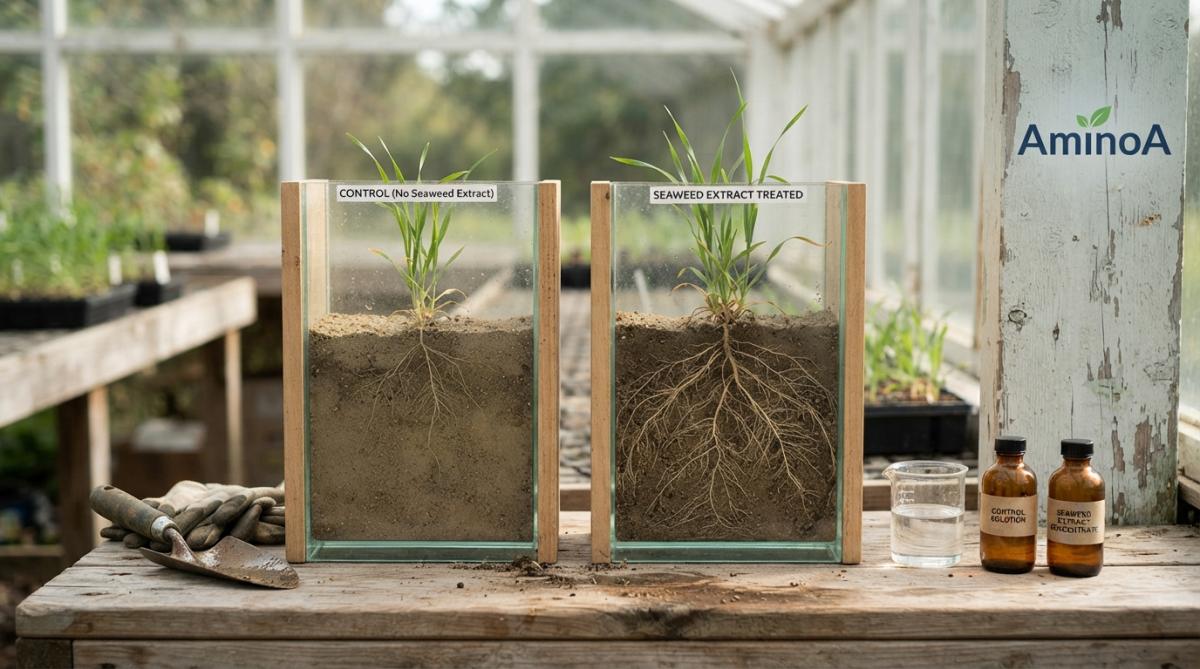
Root architecture is the single strongest predictor of how a crop handles drought and heat (PubMed). A deep, branching root system reaches moisture that a shallow one cannot, and it buffers the plant against short-term weather shocks.
Foliar and biostimulant inputs can support root development, but they cannot replace it. The practical takeaway: invest in root and leaf development before the stress window, not during it. A plant with reserves can afford to flower. A plant without them cannot.
Is Foliar Feeding Worth It for Stress Resistance?
Foliar feeding is worth it for stress resistance when the crop needs a fast, targeted input that soil applications cannot deliver in time. Uptake through the leaf is quicker than through the root, which matters when a heat event is days away rather than weeks (PubMed).
The caveat is that foliar feeding supplements a healthy plant; it does not rescue a failing one. A crop with compromised roots will not absorb enough through the leaf to compensate. Used correctly, foliar applications of amino acid biostimulants support the plant's own stress response, particularly around cold, heat, and recovery from spray damage. Building a robust foundation through efficient root zone watering remains the most reliable method to ensure that these biostimulants have a healthy system to support.
The realistic expectation is support, not immunity. Think of foliar feeding as a bridge that carries the crop through a short, sharp stress period while its root system does the long-term work.
Biostimulant Application Timing for Fruit Set
Biostimulant application timing for fruit set matters more than the product you choose. Apply too early and you stimulate vegetative growth when you wanted flowers. Apply too late and the fruit set window has closed.
The general principle is to apply ahead of the stress or the developmental stage you are targeting, giving the plant time to respond. For fruit set, that means applying in the run-up to flowering, not during it. For stress mitigation, it means applying before the forecast event, not after the damage is visible.
AminoA's L-α amino acid biostimulants are designed for this kind of pre-emptive application, supplying nitrogen, potassium, iron, and magnesium in forms the plant can use quickly. The exact rate and timing depend on crop, growth stage, and conditions, so it is worth speaking to an agronomist before committing to a programme.
Mitigating Heat Stress in Arable Crops
Mitigating heat stress in arable crops comes down to three things: keeping the plant hydrated, protecting the photosynthetic machinery, and limiting the reproductive damage that heat causes during flowering and grain fill.
Amino acid biostimulants support all three. They help maintain green leaf area under heat, which keeps photosynthesis running when it would otherwise shut down, and they support the plant's own protective responses during the flowering window (PubMed).
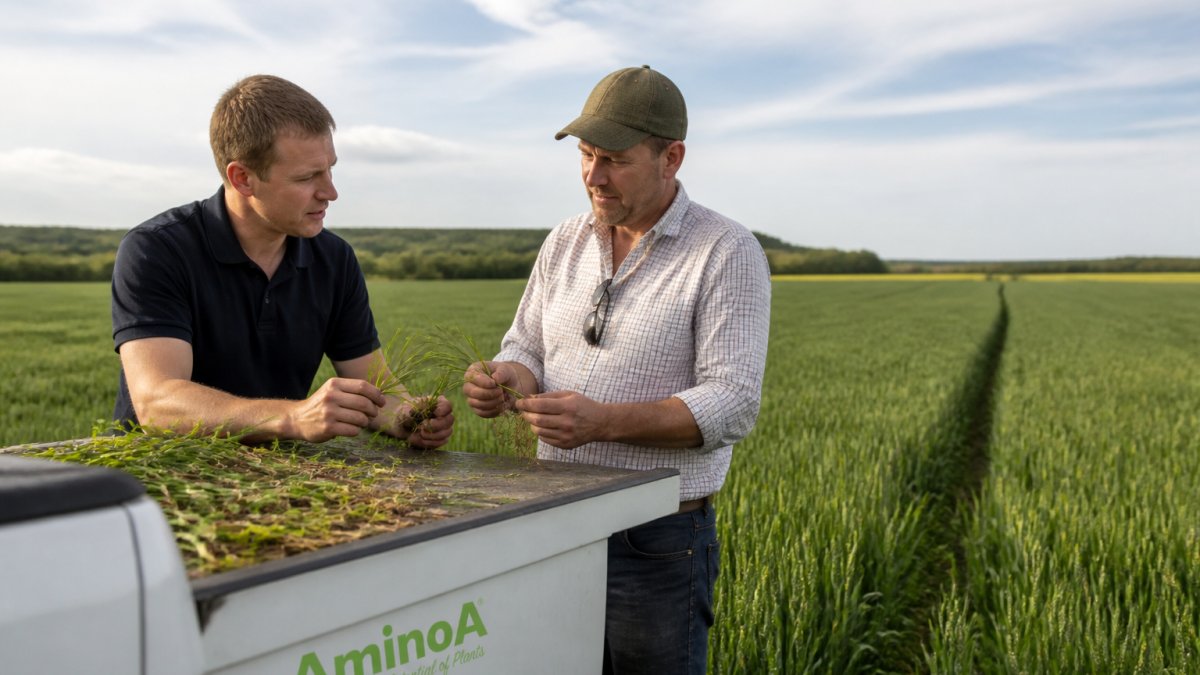
The Velcourt trials on winter wheat are the clearest example. Adding AminoA FLO to reduced fungicide rates maintained yields and improved green leaf area. That is the practical case for biostimulants in arable systems: not replacing your inputs, but making them work harder under pressure.
Conclusion: Matching the Approach to the Threat
The real question is not which approach wins. It is which threat you are facing, and when.
If you are heading into flowering with a healthy crop, reproductive stimulation is the right lever. If you are coming out of a hard winter or a dry spell, rebuild the vegetative base first. And if a heat event is on the forecast, a pre-emptive biostimulant application buys you time your roots cannot.
AminoA supplies 100% L-α amino acid biostimulants, produced through enzymatic hydrolysis, for growers who want to support both sides of this equation. Our products are built to improve root, leaf, and bud development while supporting blossom, fruit formation, and growth, so you are not forced to choose between them.
Get started with AminoA and build a crop that can take the weather it gets.
Frequently Asked Questions
How do biostimulants help crops mitigate weather-related stress?
Biostimulants work by supporting the plant's own stress responses rather than feeding it directly. Amino acid-based products supply L-α amino acids that plants use to build proteins and regulate osmotic balance, helping cells retain water during drought and recover faster after heat or cold shocks. They also support root development, which improves access to soil moisture and nutrients when conditions turn. The result is a plant better equipped to keep growing through a stress event rather than stalling.
What is the difference between vegetative and reproductive growth in crop management?
Vegetative growth builds the plant's structure: roots, leaves, stems and buds. Reproductive growth drives flowering, fruit formation and seed fill. The two compete for resources, so the balance matters. Pushing reproductive growth too early, before roots and canopy are established, leaves the plant vulnerable to weather stress because it has no reserve capacity. Supporting root, leaf and bud development first gives the plant the framework it needs to carry a good fruit set through to harvest.
Can foliar feeding improve fruit set during periods of drought?
Foliar feeding can help during drought because it delivers nutrients directly to the leaf surface, bypassing roots that may be struggling in dry soil. Amino acid biostimulants applied as a foliar spray support blossom retention and early fruit formation when the plant is under moisture stress. Timing matters: apply during the cooler part of the day and avoid spraying when the crop is already wilting. Foliar feeding is a support tool, not a replacement for adequate irrigation where that is available.
How does temperature fluctuation affect bud development and flowering?
Sudden temperature swings disrupt the hormonal signals that control bud break and flowering. A warm spell followed by a cold snap can trigger premature bud development, leaving flowers exposed to frost damage. Repeated fluctuations also drain the plant's energy reserves, reducing the number of viable buds that reach flowering. Supporting bud development with amino acid biostimulants before these swings occur helps the plant maintain a more even progression through bud break and into fruit set.