 ultimate-guide
Can organic soil treatments improve crop resilience?
Last Updated: 29 October 2026
Quick Summary
Organic soil treatments improve crop resilience by raising soil organic carbon and organic matter, which builds soil structure, water-holding capacity and deeper rooting. A 2026 PubMed-indexed study linked higher soil organic carbon to steadier yields and reduced interannual variability. Organic treatments are slow and variable, and do not override extreme drought.
- A 2024 review by Y. Li et al. reported an 80% yield boost when organic amendments were combined with nitrogen fertilisers.
- Amino acid biostimulants supply ready-formed L-α amino acids the plant can use directly during stress.
- Nitrate accumulation in the top metre fell by an average of 81% under zero nitrogen treatment.
- Soil organic carbon did not improve crop yields in cases of extreme drought, per Colorado State University work.
- Benchmark soil organic matter across blocks and record yield variability rather than just yield.
Table of Contents
- What Crop Resilience Actually Means in the Field
- How Organic Soil Treatments Build Resilience
- The Benefits of Amino Acid Biostimulants for Crops
- An Organic Soil Conditioners Review for Commercial Farms
- How to Increase Crop Drought Tolerance Naturally
- Where Organic Treatments Fall Short
- Building a Resilience Plan for Your Farm
- Frequently Asked Questions
What Crop Resilience Actually Means in the Field
Crop resilience is the ability of a crop to maintain yield and quality when heat, drought, waterlogging or pest pressure disrupts the growing season. It is not the same as maximum yield in a good year. Resilience shows up in the bad year, when a field holds its performance while the neighbouring block collapses. Building this inherent stability into the soil structure often requires a fundamental shift in management practices, such as those detailed in the principles of regenerative potato growing.
That distinction matters more than most growers realise. A 2026 study indexed by PubMed found that higher soil organic carbon was consistently associated with higher crop yields and reduced interannual variability, meaning the yield held steadier from season to season. Here at AminoA, we see the same pattern in the field: resilience is a soil property built over years, not a rescue measure applied in a crisis.
Below, we break down what actually builds it, what the evidence supports, and where organic treatments stop delivering.
How Organic Soil Treatments Build Resilience
Organic soil treatments build resilience by feeding the soil biology that governs structure, water-holding capacity and nutrient release. Compost, manure, cover crop residues and humic products all raise organic matter, and organic matter is what gives soil its crumb structure and its ability to hold water through a dry spell.
A 2025 review in Science of the Total Environment describes organic matter management as a cornerstone of sustainable agriculture, linking it to improved soil structure, fertility and microbial conditions.

Organic matter and soil structure
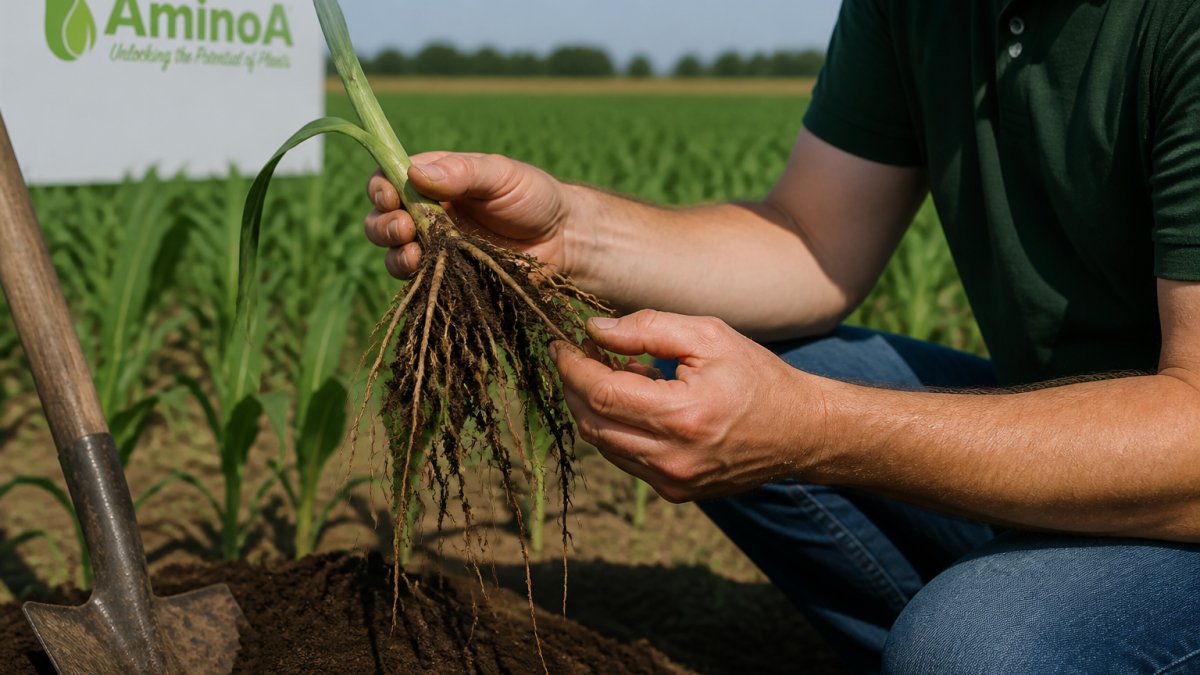
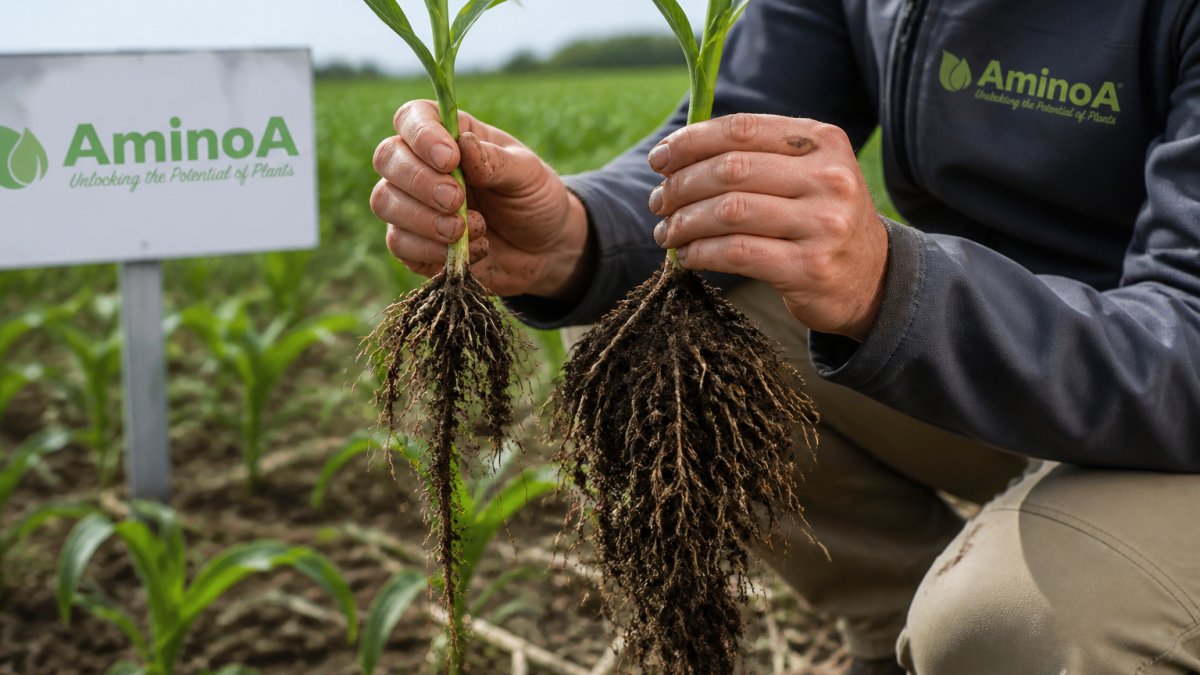
Structure is the mechanism. Well-aggregated soil has pore space that holds plant-available water and lets roots push deeper. Deeper roots reach moisture that shallow roots cannot, which is why structural improvements show up as drought tolerance first and yield second. To understand the mechanism, see how root health impacts crop stress tolerance. It is also why the effect compounds: each season of organic input builds on the last.
The yield evidence, and its limits
The headline figures are real but narrower than they look. A 2024 review by Y. Li et al. reported an 80% yield boost when organic amendments were combined with nitrogen fertilisers, against 54% from organic amendments alone. The same review does not state the comparison baseline or study conditions, so treat those numbers as directional rather than as a yield forecast for your farm.
The Benefits of Amino Acid Biostimulants for Crops
Amino acid biostimulants support crops under stress by supplying ready-formed L-α amino acids that plants can use directly, rather than spending energy synthesising them. That matters during cold snaps, heat events and herbicide stress, when the plant's own metabolism is compromised.
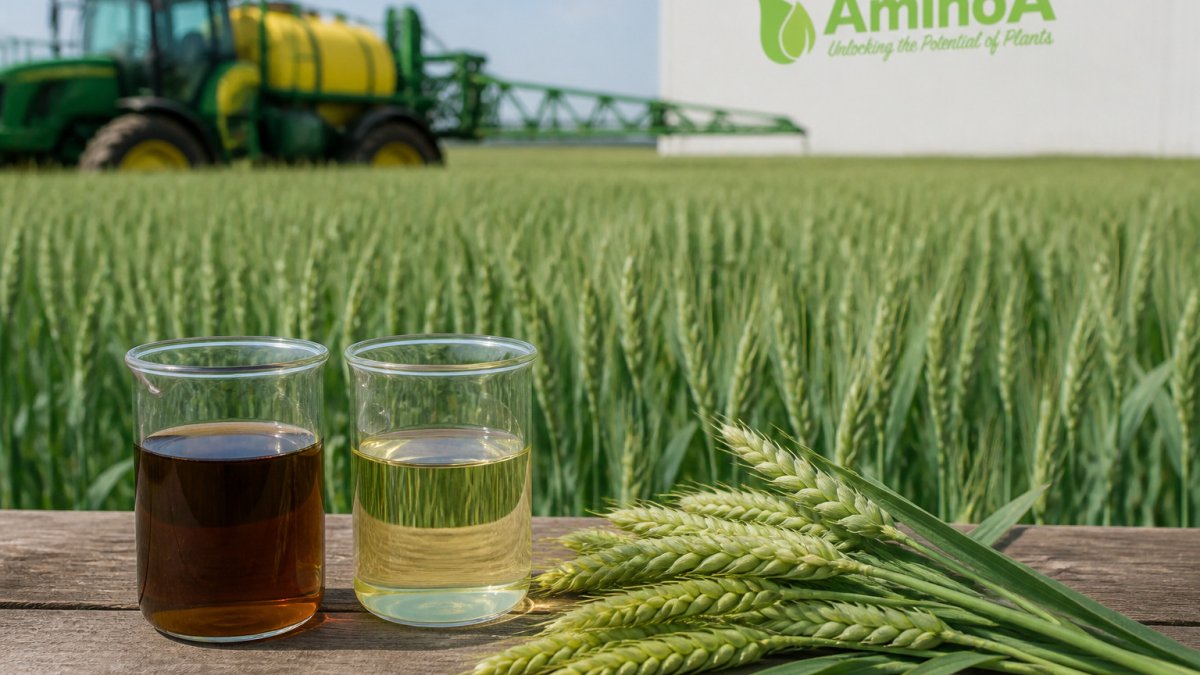
AminoA manufactures 100% L-α amino acid biostimulants through enzymatic hydrolysis, with a high content of nitrogen, potassium, iron and magnesium and every essential amino acid in the L form. The benefits these biostimulants are designed to support include increased root, leaf and bud development, stimulated blossom and fruit formation, and greater resistance to cold, heat, drought and agrochemical phytotoxicity. Read more on the benefits of amino acid biostimulants for crop yield.
An Organic Soil Conditioners Review for Commercial Farms
Choosing a soil conditioner for a commercial operation comes down to four questions: what the product actually contains, how it is applied, what it costs per hectare across the rotation, and whether it fits your certification. For a detailed comparison of products, see our organic soil conditioners review for commercial farms. Humic and fulvic products, composted manures, seaweed extracts and amino acid formulations all sit in this category, and they are not interchangeable.
| Product type | Primary action | Application | Watch point |
|---|---|---|---|
| Composted manure | Bulk organic matter, slow nutrient release | Spread and incorporate | Nitrate accumulation risk |
| Humic and fulvic acids | Structure, nutrient chelation | Soil or foliar | Variable source quality |
| Seaweed extracts | Biostimulant, rooting signals | Foliar or soil | Consistency between batches |
| Amino acid biostimulants | Direct nitrogen supply, stress support | Foliar, tank-mix | Compatibility testing needed |
On nitrate, the evidence is worth knowing. AGU Journals reported that nitrate accumulation in the top metre of soil fell by an average of 81% under zero nitrogen treatment and rose by 136% under manure treatment. Manure is not a free lunch.
How to Increase Crop Drought Tolerance Naturally
Drought tolerance improves through three levers applied together: soil water-holding capacity, root depth, and the plant's own stress response. No single input delivers all three, which is why single-product promises disappoint.
- Raise organic matter with compost, residues or cover crops, applied consistently rather than in one large dose.
- Protect structure by avoiding cultivation when soil is wet and by keeping living roots in the ground over winter.
- Support the plant directly with amino acid biostimulants timed ahead of forecast stress, not after damage appears.
- Test compatibility before tank-mixing with fungicides or insecticides, and apply to a small strip first.
Watch out: applying a new tank mix across a whole block without a strip trial is how phytotoxicity incidents happen, and the cost lands in the same season.
Where Organic Treatments Fall Short
Organic treatments fail in three predictable ways. They are slow, so growers expecting a first-season fix are disappointed. They are variable, because source material quality differs between batches. And they do not override extreme weather.
The drought caveat is the important one. Research reported by EurekAlert on Colorado State University work found that soil organic carbon did not improve crop yields in cases of extreme drought. Building soil carbon is still worth doing, but it is insurance against normal variability, not a guarantee against a catastrophic season.
Cost is the other honest constraint. Per-hectare spend on organic inputs is often higher than pushing more conventional fertiliser, and the return arrives over a rotation rather than a single harvest. Our cost benefit analysis of organic soil amendments sets out the figures.
Building a Resilience Plan for Your Farm
Resilience planning works best as a three-season programme rather than an annual purchase decision. Start by benchmarking soil organic matter across your blocks so you know which fields carry the most risk. Then commit to a consistent organic input on the weakest blocks, pair it with a biostimulant programme timed to stress windows, and record yield variability rather than just yield. For practical strategies, see sustainable soil management for large farms.
A 2025 meta-analysis cited in Nature reported that shallow non-inversion tillage in organic farming maintains crop yields while increasing soil carbon stocks, which is a useful structural lever alongside inputs.
Building resilience across a rotation takes consistent inputs and honest measurement, not a single product applied once. AminoA supplies 100% L-α amino acid biostimulants produced through enzymatic hydrolysis, formulated to support root and bud development and to help crops through cold, heat and drought stress. If you want to see how that fits your system, subscribe to our newsletter for trial updates and programme guidance. Visit the AminoA website for current pricing or a quote, and build a resilience programme you can measure season by season.
Frequently Asked Questions
How do organic soil treatments improve crop resilience to drought?
They work mainly through soil structure and water holding. Organic matter binds soil particles into aggregates, which improves infiltration and keeps more plant-available water in the rooting zone. A 2025 review in Science of the Total Environment links organic matter management to better soil structure, fertility and microbial conditions. Be realistic about the limits: a 2026 study associated higher soil organic carbon with reduced interannual yield variability, but the same research found the benefit did not hold in extreme drought. Organic treatments raise the floor in normal and moderately dry seasons rather than drought-proofing the farm.
What are the benefits of amino acid biostimulants for crops under stress?
L-α amino acids are the building blocks plants use directly for protein synthesis, so a foliar or soil application gives the crop ready-made nitrogen without the energy cost of reducing nitrate. In practice growers use them to support root and leaf development, flowering and fruit set, and to help plants through cold, heat and drought stress. Velcourt trials found adding AminoA FLO to reduced fungicide rates maintained yields and improved green leaf area in winter wheat.
Can organic soil conditioners replace synthetic fertilisers?
Not entirely, and claims that they can should be treated with caution. A 2024 review reported an 80% yield increase where organic amendments were combined with nitrogen fertiliser, against 54% with organic amendments alone, which points to combination rather than substitution. The same research notes that nitrate accumulation in the top metre of soil rose by 136% under manure treatment, so organic inputs carry their own nutrient management risk. Most commercial farms get the best result using organic conditioners and biostimulants to support a balanced mineral programme, not to replace it.
How do I know an amino acid product is suitable for an organic system?
Ask for the certification paperwork before you buy, not after. Check that the product is approved for use by your organic certifier, that the amino acids are in the L form, and that the manufacturing process is stated clearly, since enzymatic hydrolysis produces a different profile from chemical hydrolysis. AminoA's products are 100% L-α amino acids produced through enzymatic hydrolysis, and the company has supplied the agricultural market for 10 years. Confirm the specific approval for your certification body in writing, and check current pricing or a quote directly with AminoA.