 how-to
Biostimulants and Cereal Crop Nitrogen Uptake: A 2026 Guide
Table of Contents
- How Biostimulants Enhance Nitrogen Uptake in Cereals
- Biostimulants and Nitrogen Use Efficiency: The Mechanism
- Biostimulants in Wheat: Practical Application and Results
- Nitrogen Fertiliser Rates for Cereals: Optimising with Biostimulants
- Measuring Nitrogen Use Efficiency in Crops: Key Indicators
- Common Questions About Biostimulants and Nitrogen Uptake
- Making the Transition: Practical Steps for Your Farm
- Frequently Asked Questions
Last Updated: October 15, 2026
How Biostimulants Enhance Nitrogen Uptake in Cereals
Biostimulants are natural substances that enhance nitrogen uptake, improving the ability of plants to absorb and utilise nitrogen from the soil. When applied to cereal crops, they work by stimulating root development and improving nutrient transport mechanisms within the plant. This means your wheat, barley, or oats can extract more usable nitrogen from existing fertiliser applications, without requiring additional nitrogen inputs.
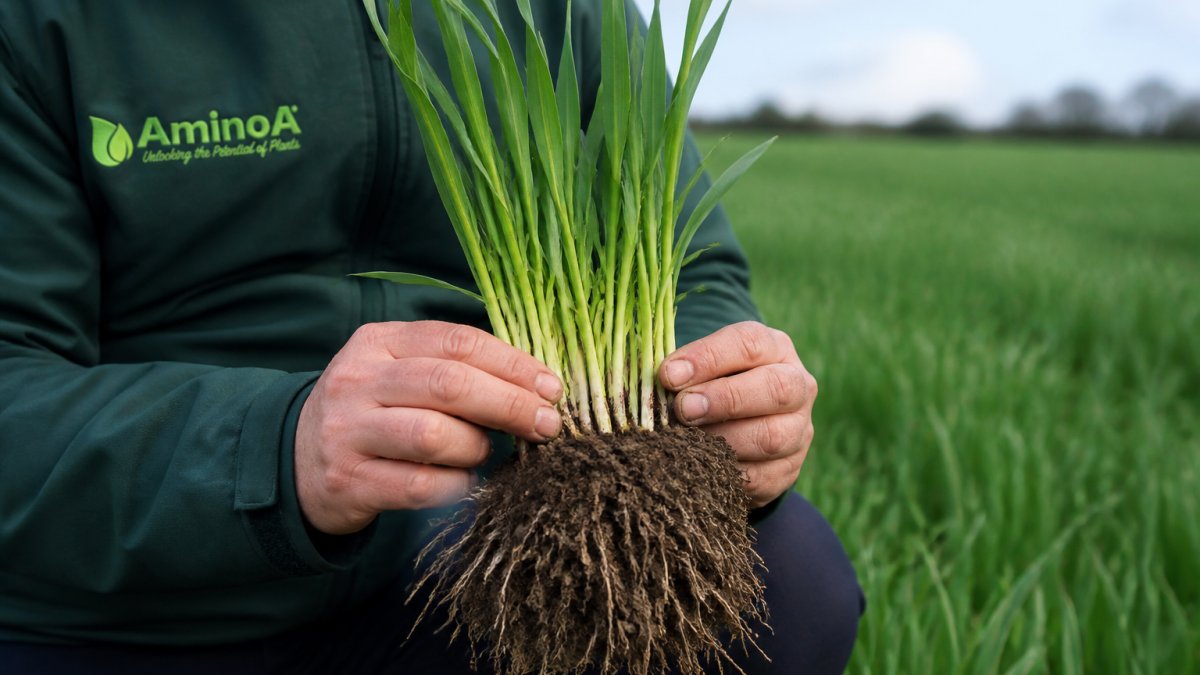
The mechanism is straightforward. Biostimulants containing L-α amino acids activate the plant's metabolic pathways. This activation triggers stronger root systems, which expand the plant's capacity to access nitrogen in the soil profile. A more extensive root network reaches deeper into the soil and explores a larger volume, capturing nitrogen that might otherwise remain unavailable to the crop.
Cereal growers often apply standard nitrogen rates without optimising how efficiently their crops actually use that nitrogen. This is where the impact of biostimulants on cereal crop nitrogen uptake becomes commercially significant. You're not necessarily adding more fertiliser, you're making the fertiliser you already apply work harder.
The practical benefit is clear: better nitrogen use efficiency means stronger crop establishment, improved leaf development, and ultimately higher yields. Cereals treated with amino acid biostimulants show visibly greener foliage and stronger tillering in the early growth stages.
Biostimulants and Nitrogen Use Efficiency: The Mechanism
Nitrogen use efficiency refers to how much grain or biomass a crop produces for each unit of nitrogen applied. When biostimulants enhance nitrogen uptake, they directly improve this ratio.
Here's how it works in practice:
- Root expansion: Amino acids in biostimulant products stimulate lateral root development and root hair proliferation. More root surface area means greater contact with soil nitrogen.
- Nutrient transport: L-α amino acids act as signalling molecules. They upregulate the plant's nitrogen transporters, the cellular proteins that pull nitrate and ammonium ions into root cells.
- Metabolic activation: Amino acids serve as precursors for proteins and enzymes involved in nitrogen assimilation. This reduces the energy cost of converting inorganic nitrogen into organic compounds.
- Stress resilience: Biostimulants improve the plant's ability to maintain nitrogen uptake under environmental stress. Cold springs, drought, or waterlogging all reduce nitrogen availability, biostimulants help cereals cope.
The result is measurable. Crops receiving biostimulant applications can show higher nitrogen concentrations in leaf tissue than untreated controls, even at identical nitrogen fertiliser rates. This translates to more vigorous growth and better grain fill.
According to agronomic practice, biostimulants work best when applied at growth stages where nitrogen demand is rising, typically from the three-leaf stage through to stem elongation. Early application allows the plant to build a stronger root system before peak nitrogen uptake begins.
Biostimulants in Wheat: Practical Application and Results
Wheat is responsive to amino acid biostimulants, particularly in conventional production systems where farmers are managing nitrogen carefully to balance yield and protein content.
Application timing for wheat:
- First application: Two-leaf to three-leaf stage. This is when the plant's nitrogen demand begins accelerating and root development is still plastic, responsive to biostimulant signals.
- Second application (optional): Tillering to early stem elongation. This catches the critical period when the plant is determining final tiller number and spikelet count.
- Spray volume: Use 10-15 litres per hectare in sufficient water to ensure even coverage.
Real-world results from Velcourt trials showed that winter wheat treated with AminoA FLO maintained grain yields even when fungicide rates were reduced, and improved green leaf area throughout the season.
The practical advantage here is that stronger, more efficient nitrogen uptake allows wheat to tolerate slightly lower input regimes without yield penalty. This matters for farms managing input costs or working toward reduced-chemical systems.
Barley and oats respond similarly, though timing may shift slightly based on variety and sowing date. Spring cereals, in particular, benefit from early biostimulant application because their growing season is compressed, every day of improved nitrogen availability counts.
Nitrogen Fertiliser Rates for Cereals: Optimising with Biostimulants
Many growers apply fixed nitrogen rates based on historical practice or soil testing alone. But nitrogen fertiliser rates for cereals should account for how efficiently the crop will use that nitrogen.
When biostimulants improve nitrogen use efficiency, you have three strategic options:
Option 1: Maintain rates, increase yield Apply the same nitrogen fertiliser quantity but expect higher grain yield and protein content. The crop extracts more value from each kilogramme of applied nitrogen.
Option 2: Reduce rates, maintain yield Lower nitrogen fertiliser by 10-15% while maintaining target yields. Biostimulants compensate for the reduced input by improving uptake efficiency.
Option 3: Reduce rates, improve margins Cut nitrogen fertiliser modestly (5-10%) and accept a small yield reduction, but save significantly on input costs. For many farms, the cost saving outweighs the modest yield trade-off.
The choice depends on your market (milling wheat commands premiums for protein; feed wheat prioritises volume) and your input cost structure.
| Strategy | Nitrogen Rate Change | Typical Yield Impact | Best For |
|---|---|---|---|
| Enhanced uptake only | No change | +3-8% | Premium market crops |
| Modest reduction | -5-10% | Neutral to -2% | Cost-conscious farms |
| Significant reduction | -10-15% | -3-5% | Low-input systems |
Start conservatively. If you've never used biostimulants before, apply them at full nitrogen rates for one season. Monitor leaf colour, tissue samples, and final yield. Once you see how your specific soil and variety responds, you can adjust rates confidently in subsequent years.
Measuring Nitrogen Use Efficiency in Crops: Key Indicators
Tracking nitrogen use efficiency in crops through biostimulant nitrogen uptake requires looking beyond final yield. Several indicators tell you whether your biostimulant application is actually improving nitrogen uptake.
Visual indicators (in-season):
- Leaf colour: Darker green foliage indicates higher nitrogen concentration. Compare treated and untreated areas side by side.
- Tillering: Biostimulant-treated wheat typically shows more tillers per plant and faster tiller emergence.
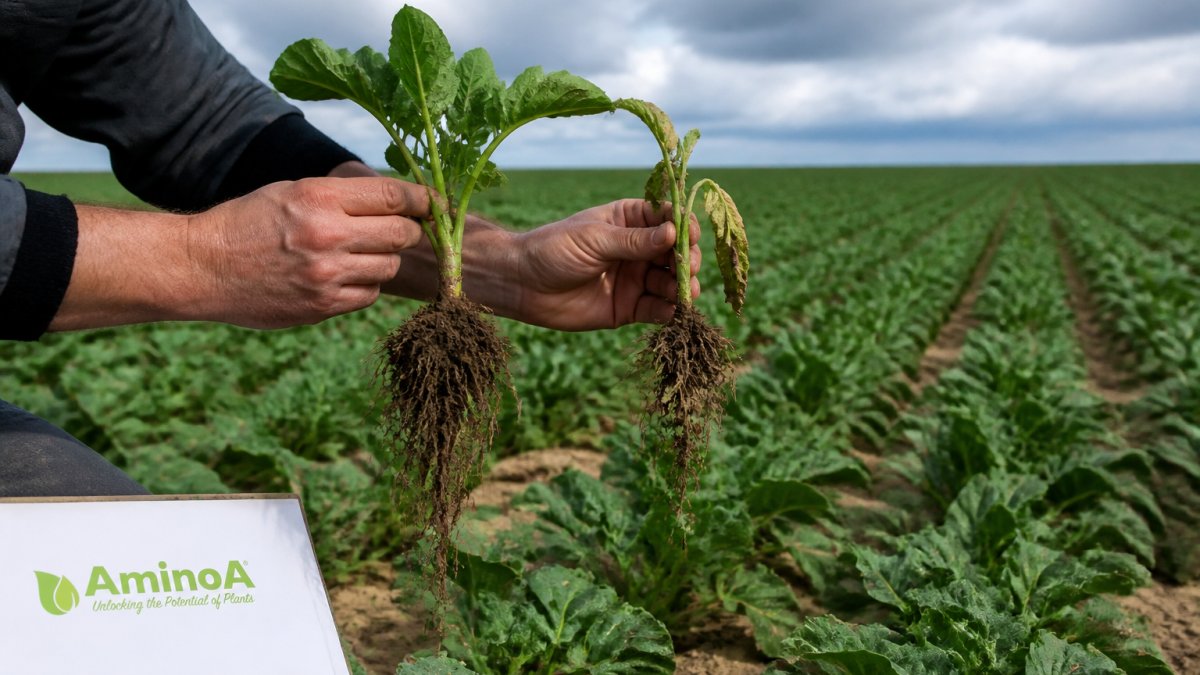
- Root vigour: Dig soil samples in early growth stages. Treated plots show more extensive root networks and whiter, fresher-looking roots.
Tissue sampling:
Take plant tissue samples at growth stages GS30 (stem elongation) and GS45 (booting). Measure nitrogen concentration in the dry matter. Crops receiving biostimulants typically show 2-3% higher nitrogen content in leaf tissue at these stages.
Grain analysis:
Measure grain protein content and yield. Divide total protein content by total nitrogen applied (fertiliser + biostimulant nitrogen contribution) to calculate protein recovery efficiency.
Soil nitrogen:
Test soil mineral nitrogen in autumn after harvest. Biostimulant-treated crops that efficiently use nitrogen typically leave less residual nitrate in the soil, a sign that nitrogen uptake was more complete.
A practical approach: establish a small untreated control area (even just 0.5 hectares) on each field. Measure the same indicators on both treated and untreated plots. This gives you direct, farm-specific evidence of biostimulant impact.
Common Questions About Biostimulants and Nitrogen Uptake
Will biostimulants work in poor soils with low organic matter?
Biostimulants work best when there is nitrogen available in the soil to uptake. If your soil is genuinely nitrogen-depleted, biostimulants improve efficiency but cannot create nitrogen from nothing. Start with a soil test. If mineral nitrogen is very low, apply biostimulants alongside adequate fertiliser. Once soil biology and organic matter improve, biostimulants deliver increasingly impressive returns.
Can I mix biostimulants with fungicides or insecticides?
Amino acid biostimulants are compatible with most fungicides and insecticides. However, always check product labels and conduct a small test mix before committing to a full-field application. Some tank mixes can reduce efficacy of either the biostimulant or the active ingredient. AminoA products are designed for compatibility with standard agrochemical programmes, but it's your responsibility to verify on your specific products.
How quickly will I see results?
Root development improvements begin within 7-10 days of application. Visible leaf colour improvements typically appear within 2-3 weeks. Yield and protein impacts are only measurable at harvest. Don't expect overnight transformation, biostimulants work by optimising the plant's own physiology, not by forcing growth.
Are biostimulants suitable for organic systems?
Many amino acid biostimulants, including AminoA products, are approved for organic certification. Check the product label and your certifier's approved input list. Biostimulants are particularly valuable in organic systems because they improve nutrient availability without synthetic fertilisers.
What's the cost-benefit calculation?
This depends entirely on your input costs, yield premiums, and local conditions. Calculate the specific number for your farm based on your fertiliser costs and grain prices.
Making the Transition: Practical Steps for Your Farm
Adopting biostimulants doesn't require overhauling your entire system. Here's how to integrate them methodically.
Step 1: Establish your baseline Record current nitrogen rates, yields, and protein content for at least one season. This is your control. You'll measure future improvements against this baseline.
Step 2: Start small Apply biostimulants to 10-20% of your cereal area in year one. Choose fields with consistent soil type and management. This limits financial risk while you learn how your crops respond.
Step 3: Time applications correctly Apply biostimulants at growth stages when nitrogen demand is rising, typically three-leaf to early stem elongation for winter cereals. Follow product label guidance and local agronomic recommendations.
Step 4: Monitor and document Take tissue samples, observe leaf colour, and record any visible differences between treated and untreated areas. Keep detailed notes on weather, soil conditions, and any other variables that might influence results.
Step 5: Measure outcomes At harvest, weigh yields from treated and untreated plots separately. Test grain protein content. Calculate the cost-benefit: did the yield or quality improvement justify the biostimulant cost?
Step 6: Scale up gradually If results are positive, expand to 50% of your cereal area in year two, then full adoption by year three. This gradual approach lets you refine timing and rates based on farm-specific experience.
Many growers find that biostimulant use can allow them to reduce nitrogen fertiliser rates whilst maintaining yields. This improves both profitability and environmental footprint. Others prioritise yield and protein content, applying biostimulants alongside full nitrogen programmes to capture maximum productivity.
The key is matching biostimulant use to your farm's specific goals, whether that's cost reduction, yield optimisation, or working toward lower-chemical systems.
Improving nitrogen use efficiency in cereals is a practical, measurable goal. Biostimulants containing L-α amino acids enhance the plant's capacity to absorb and utilise soil nitrogen, reducing reliance on ever-higher fertiliser rates. AminoA's amino acid biostimulants are designed specifically to support this process, helping cereal growers optimise yields whilst managing input costs. Start with a small trial area, measure results carefully, and scale up based on your farm's response. The data will guide your next steps. For specific product guidance and trial support tailored to your crops and soil, contact AminoA directly to discuss how biostimulants can work within your nitrogen management strategy.
Frequently Asked Questions
How do biostimulants affect nitrogen uptake in cereal crops?
Biostimulants enhance nitrogen uptake by stimulating root development and improving soil microbial activity. L-α amino acids strengthen the crop's ability to absorb available nitrogen from the soil, whilst also promoting nutrient translocation throughout the plant. This means cereals can utilise nitrogen more efficiently, even when soil nitrogen availability is moderate. The result is better nitrogen assimilation with less waste, leading to improved green leaf area and grain fill.
Can biostimulants allow farmers to reduce nitrogen fertiliser rates for cereals?
Yes, biostimulants can support modest reductions in nitrogen fertiliser rates by improving how efficiently crops use existing soil nitrogen. Field trials have shown that adding amino acid biostimulants to reduced fungicide rates maintained yields whilst improving green leaf area in winter wheat. However, reduction should be gradual and monitored closely. Your baseline nitrogen requirement depends on soil type, previous cropping, and yield target. Consult with an agronomist to determine safe adjustment margins for your specific situation.
What is nitrogen use efficiency, and why does it matter for cereal growers?
Nitrogen use efficiency (NUE) measures how effectively a crop converts applied nitrogen into grain or biomass. It's expressed as grain yield divided by total nitrogen available (soil plus applied). Higher NUE means lower input costs and reduced environmental impact. Biostimulants can improve NUE by reducing losses to leaching and gaseous emissions, and by improving root access to available nitrogen. Better NUE directly improves profitability and sustainability.
When is the best time to apply biostimulants to cereal crops?
Apply biostimulants early in the crop cycle, ideally at tillering or early stem extension, when root development is active and the crop is establishing its nutrient uptake capacity. Early application allows the biostimulant to support root architecture and microbial colonisation, maximising nitrogen availability during the critical growth phases. A second application at flag leaf emergence can reinforce stress tolerance and support grain fill. Timing depends on your specific product and local conditions; follow the manufacturer's guidance for optimal results.