 How-to
Sustainable Erosion Control: Methods That Protect Your Soil
Last Updated: 23 November 2026
Quick Summary
The most sustainable erosion control keeps the soil covered and disturbed as little as possible. Living cover crops, crop residues and reduced tillage shield the surface from rain and wind, slow runoff and help water soak in. No single method does everything, so combine them to suit your soil type, slope and rotation.
- Keep ground covered with cover crops, perennial vegetation or mulch
- Move to reduced or no-till systems to limit soil disturbance
- Build soil organic matter so the soil holds together and absorbs water
- Aim for at least 30% ground cover, rising to 70% or more in wet months
- Break long slopes with buffers, grass waterways or hedgerows
Table of Contents
- What Are the Most Sustainable Ways to Prevent Soil Erosion?
- Why Soil Erosion Is Outpacing Natural Recovery
- Cover Crops for Erosion Control and Year-Round Ground Cover
- No-Till Farming and Soil Erosion: Reducing Disturbance
- Erosion Control on Sloping Fields: Matching Methods to Slope and Soil
- Managing Agricultural Runoff and Protecting Watercourses
- Measuring Effectiveness, Costs and Trade-Offs in Your Erosion Plan
- Building Your Erosion Control Plan Next Season
- Frequently Asked Questions
The most sustainable erosion prevention methods combine living ground cover, reduced soil disturbance and sensible management of runoff. Soil erosion removes the topsoil that holds nutrients, water and organic matter, so protecting it is a production issue as much as an environmental one.
Soil erosion is the loss of topsoil by water, wind or tillage, and it is happening faster than the land can rebuild it. The Food and Agriculture Organisation reports that soil erosion is outpacing natural recovery, and it points to reduced tillage, cover crops, crop diversification and agroforestry as the main responses (FAO Status of the World's Soil Resources 2026).
What Are the Most Sustainable Ways to Prevent Soil Erosion?
The most sustainable approach keeps the soil covered and disturbed as little as possible. Living cover, crop residues and reduced tillage all shield the surface from rain and wind. Together they slow runoff and let water soak in.
The core methods are:
- Keep the ground covered with cover crops, perennial vegetation or mulch
- Reduce soil disturbance by moving to reduced or no-till systems
- Build soil organic matter so the soil holds together and absorbs more water
No single method does everything. Pick the combination that fits your soil type, slope and rotation.
Why Soil Erosion Is Outpacing Natural Recovery
Erosion is a natural process. The problem is the rate. Our guide to best soil health practices for sustainable farming gives an overview of the practices that address this underlying degradation.
That slide matters for growers. Once topsoil is gone, the remaining ground holds less water and supports fewer roots, so yields fall and erosion becomes harder to reverse. Readers who want to rebuild that structure can learn how to optimise soil health for stronger roots that hold the soil in place.
Cover Crops for Erosion Control and Year-Round Ground Cover
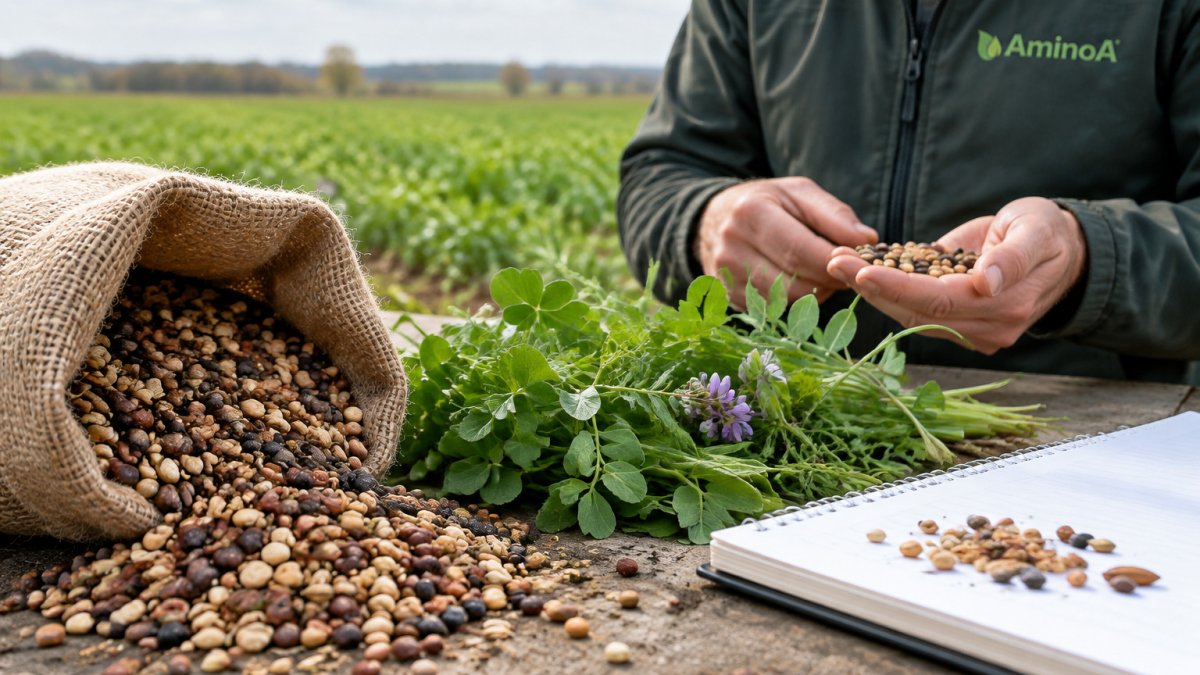
Cover crops are the most direct way to protect bare ground between cash crops. A living canopy breaks the force of rain, and roots bind the topsoil in place. Industry guidance for 2026 highlights cover crops and green manures for cutting soil loss from rain, wind and surface runoff, while also supporting soil biodiversity (Farmonaut, Sustainable Soil Management 2026).
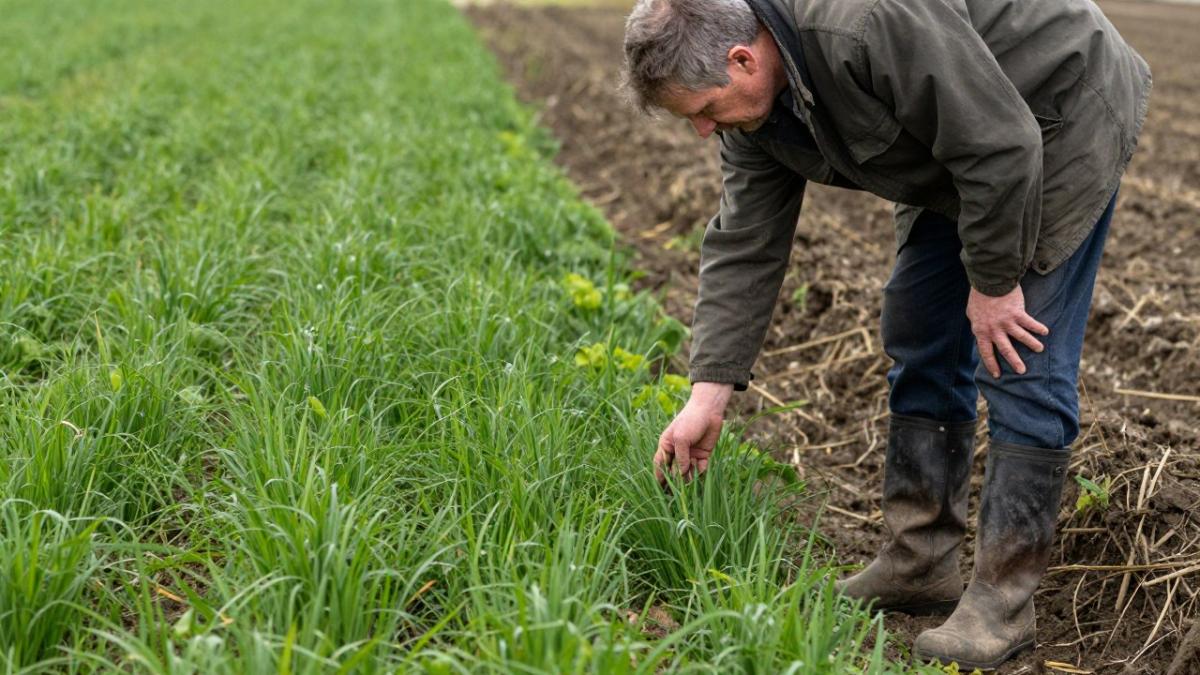
A few practical points:
- Sow cover crops straight after harvest to avoid long bare periods
- Choose a mix with both fibrous-rooted and deep-rooted species
- Include legumes to add nitrogen while the cover is growing
Where soil compaction is also a problem, our guide on using cover crops to reduce soil compaction explains how roots help water infiltrate. If you are planning the mix itself, how to choose cover crop seed mixes for nitrogen fixation covers the species that balance ground cover with nitrogen fixation, and using cover crops to fix nitrogen in farming shows how legumes contribute to crop nutrition.
No-Till Farming and Soil Erosion: Reducing Disturbance
Every pass of a plough or cultivator loosens the soil and leaves it exposed. Reduced and no-till systems keep the surface intact, and that is where much of the erosion benefit comes from.
A systematic review published in ScienceDirect found that seasonal no-tillage ridge practices significantly reduced soil erosion and surface runoff compared with conventional tillage (ScienceDirect systematic review of soil erosion control practices).
Erosion Control on Sloping Fields: Matching Methods to Slope and Soil
Slope changes everything. A method that holds soil on flat ground may fail on a steep field after heavy rain, and the right choice depends on how steep the land is, how long the slope runs, what the soil is made of and how intense local rainfall is.
A practical way to decide is to work through four questions:
- How steep is the slope? Gentle gradients of 2-5% can often be protected with contour cultivation and good ground cover. Slopes of 5-10% usually need strip cropping or grass waterways in addition. Above roughly 10%, terracing or a change of land use is often the only reliable option.
- How long is the uninterrupted slope? Long slopes gather more runoff and accelerate it. Breaking a long slope with a vegetated buffer, a grass waterway or a hedgerow reduces the distance water can pick up speed.
- What is the soil texture? Sandy soils detach easily but drain quickly, so wind erosion and rill formation are the main risks. Heavy clays shed water and are prone to waterlogging and gullying once a channel forms. Silts are the most erodible of all and need the most cover.
- How intense is the rainfall? High-intensity summer storms do far more damage than gentle winter rain. In areas prone to convective downpours, keep the soil covered through the summer and make sure waterways are wide enough for peak flow.
On slopes, consider:
- Contour cultivation, working across the slope rather than up and down it, so each furrow traps water and slows it down
- Strip cropping, alternating protective crops with exposed ones so that any soil moving downslope is caught by the next strip
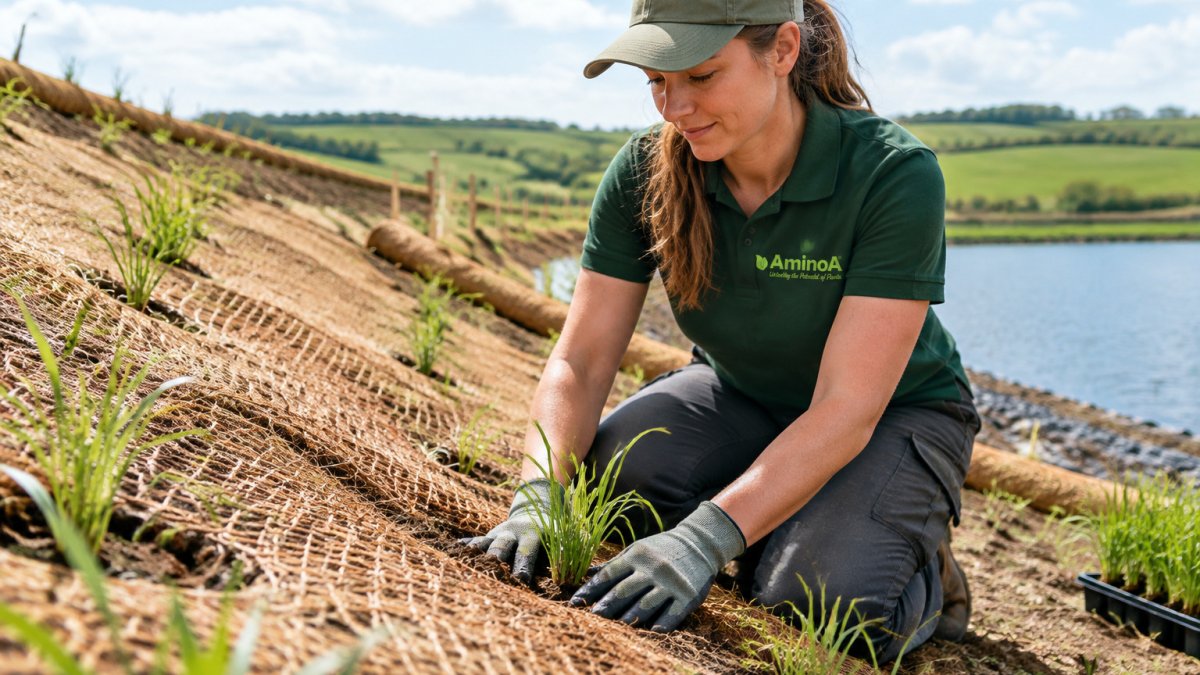
- Grass waterways that carry runoff safely to the bottom of the field without cutting a gully
- Terracing on the steepest ground where other measures are not enough, though it is expensive and needs careful design
A common pattern is to combine two or three measures: contour cultivation with a grass waterway, for example, or strip cropping with a hedgerow at the bottom of the field. The aim is to slow water down and give it time to infiltrate rather than to stop it entirely.
Before committing, test your ground. Once you know where water gathers and how your soil responds, QEN Landscaping can help you connect those observations to practical ways of limiting erosion in your yard.
Managing Agricultural Runoff and Protecting Watercourses
Runoff carries topsoil and nutrients into ditches, streams and rivers. Controlling it protects both your land and the watercourses downstream. Shorter slopes, vegetated buffers between fields and water, and well-managed drainage outlets all reduce sediment leaving the farm.
Buffer strips along watercourses act as a filter. Plant them with grass or perennial cover so sediment settles out before it reaches the water.
Measuring Effectiveness, Costs and Trade-Offs in Your Erosion Plan
You cannot improve what you do not measure, and you cannot choose between methods without knowing what they cost in money, labour and time. This section sets out practical indicators, relative costs and the trade-offs that matter.
Practical indicators of erosion and of success
- Ground cover percentage. Aim for at least 30% cover at all times and 70% or more through the wettest months. Estimate it by laying a marked quadrat or a measured length of string across the soil and recording how much is covered.
- Exposed soil after harvest. Count the days between harvest and the establishment of the next cover. Long bare periods are the single biggest risk factor.
- Rill formation. Walk fields after heavy rain and look for channels deeper than about 5 cm. Fresh rills mean the current measures are not coping.
- Sediment in runoff. Check ditches and watercourse outlets after storms. Cloudy or brown water leaving the field is soil on its way downstream.
Relative costs and labour
Costs vary widely with seed, machinery, labour and the area covered, so ask suppliers for current quotes.
- Mulching and crop residues are low cost where residues are already on the farm, but buying and spreading mulch on a large area adds up quickly.
- Cover crops carry seed and establishment costs, plus the labour of drilling and destruction. They are usually the cheapest per-hectare way to keep soil covered.
- Reduced and no-till save fuel and passes over time but may need different machinery and more careful weed management in the first seasons.
- Grass waterways and buffer strips take land out of production, so the cost is the lost cropping area as well as establishment.
Trade-offs to weigh
- Cover crops take labour and can delay the next crop if destruction timing is wrong; they may also use water that the following crop needs in a dry spring.
- Reduced tillage can increase slug pressure and may need different weed control, and on compacted or poorly drained ground it can leave water pooling for a season or two.
- Buffer strips and grass waterways remove land from production, so the benefit has to be weighed against the lost area.
- Terracing is effective but costly and can be difficult to work with standard machinery.
A sensible approach is to start with the cheapest measures that keep soil covered, measure the effect over two or three seasons, and only invest in expensive earthworks where the evidence shows they are needed. Record what you did, what it cost and what happened after heavy rain, so that each season's decisions are based on your own ground rather than on general advice.
The table below summarises the practical indicators the article recommends for judging whether your erosion measures are working.
| Indicator | Target or threshold | How to check |
|---|---|---|
| Ground cover | At least 30% at all times; 70% or more in wet months | Marked quadrat or measured string |
| Rill formation | Channels deeper than about 5 cm signal failure | Walk fields after heavy rain |
| Infiltration rate | Water should soak in, not run off | Ring test with bottomless tin |
| Soil organic matter | Test every two to three years; rising is good | Laboratory soil test |
| Exposed soil after harvest | Minimise days between harvest and next cover | Count days from harvest to establishment |
Building Your Erosion Control Plan Next Season
Start with the fields most at risk: the steepest slopes, the bare ground after harvest and the edges near watercourses. Set one or two priorities for the coming season rather than trying to change everything at once.
A simple planning sequence:
- Map erosion risk by field, using slope and soil observations
- Choose one cover crop or reduced-tillage trial for the most exposed field
- Set up runoff controls on the steepest or wettest ground
- Record what you did and what happened after heavy rain
- Refine the plan at the end of the season
Good soil management is a long-term commitment. Small, measured steps are more likely to hold than a sudden overhaul.
Frequently Asked Questions
What are the most sustainable ways to prevent soil erosion?
The most consistently effective approaches keep soil covered and disturbed as little as possible. Cover crops and perennial vegetation protect the surface from rainfall impact, while reduced or no-till systems preserve the soil structure and organic matter that resist erosion. Crop rotation, agroforestry and managed surface runoff add further protection. The FAO's Status of the World's Soil Resources 2026 report identifies reduced tillage, cover crops, crop diversification and agroforestry as the key practices. Most farms benefit from combining several of these rather than relying on one measure alone.
How do cover crops help prevent soil erosion?
Cover crops shield the soil from raindrop impact, slow surface runoff and bind particles together with their root systems, which improves infiltration. Industry guidance for 2026 notes their ability to reduce soil loss from rain, wind and runoff while also supporting soil biodiversity. Winter cover such as rye keeps ground protected during the months when bare fields are most vulnerable. Sowing timing, termination method and the choice of species all affect how well they perform on a given field.
Does no-till farming reduce soil erosion?
Yes, when it is managed properly. A systematic review of erosion control practices found that seasonal no-tillage ridge systems significantly reduced soil erosion and surface runoff compared with conventional tillage. Leaving crop residues on the surface is central to this effect. No-till does not solve every problem on its own, however, and it is usually paired with cover crops or residue retention. Weed control and fertility management need planning when tillage is reduced.
How can farmers control erosion on sloping land?
Start by matching the method to the slope, soil type and rainfall intensity of each field. Steeper and longer slopes usually need contour cultivation, strip cropping, grassed waterways or terraces alongside surface cover. Keeping vegetation or residue on the ground during the wettest months is especially important. Reviewing each field after heavy rain shows where water is concentrating, and those points should receive additional protection before the next season.