 how-to
Signs of Nutrient Deficiency in High Yield Crops
Table of Contents
- Why High-Yield Crops Show Nutrient Deficiency Sooner
- Nitrogen Deficiency in Crops: Yellowing That Starts Low
- Potassium Deficiency Symptoms in Crops: Leaf Edge Burn and Weak Stems
- Reading the Leaf: Deficiency Signs vs Disease and Drought
- Plant Tissue Testing for Nutrient Deficiencies: Confirming What You See
- Crop Nutrient Management: Correcting Deficiencies Without Losing Yield
- Frequently Asked Questions
Last Updated: 8 October 2026
Why High-Yield Crops Show Nutrient Deficiency Sooner
High-yield crops show nutrient deficiency sooner because heavy yields pull nutrients out of the soil faster than many growers expect. A wheat crop yielding 10 tonnes per hectare removes far more nitrogen and potassium than one yielding 7 tonnes. The soil runs short first, and the plant shows it second.
This creates a frustrating pattern. Your best fields, the ones that always performed, start showing hunger signs first.
Several factors drive this:
- Bigger canopies need more nitrogen to stay green
- Heavy grain fill draws potassium hard during summer
- Roots can only take up what is available and reachable
- Dry spells stop roots working, even when nutrients sit in the soil
The key point is simple. High yield raises demand. If supply does not rise with it, deficiency appears. And it appears earlier than most growers predict.
Nitrogen Deficiency in Crops: Yellowing That Starts Low
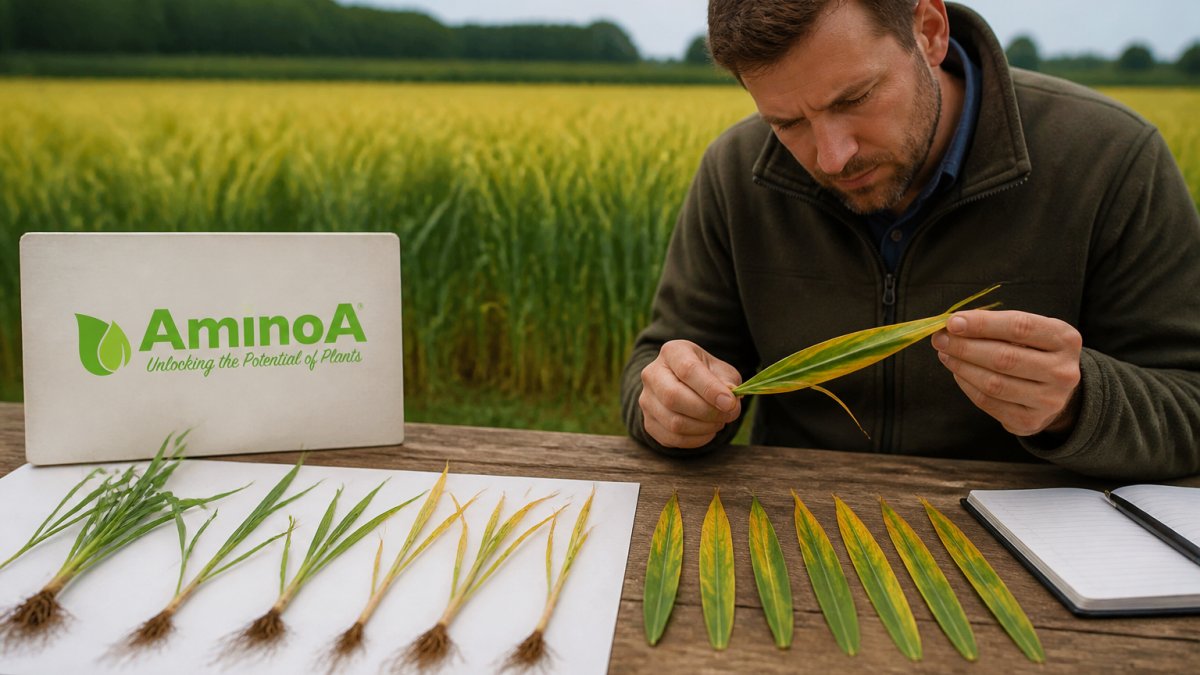
Nitrogen deficiency in crops shows up as yellowing that starts on the oldest, lowest leaves and moves upward. Because nitrogen moves easily inside the plant, the crop steals it from old leaves to feed new growth. The bottom of the plant suffers first.
Look for these signs:
- Pale green to yellow lower leaves
- Yellowing that runs up the midrib
- Stunted, thin stems
- Poor tillering in cereals
A common mistake is to blame drought or disease when the real issue is nitrogen supply. Scorch and drought can look similar at a glance, but nitrogen hunger follows a clear pattern: bottom first, top last.
If you spot yellowing low in the canopy, check your nitrogen plan before anything else.
Potassium Deficiency Symptoms in Crops: Leaf Edge Burn and Weak Stems
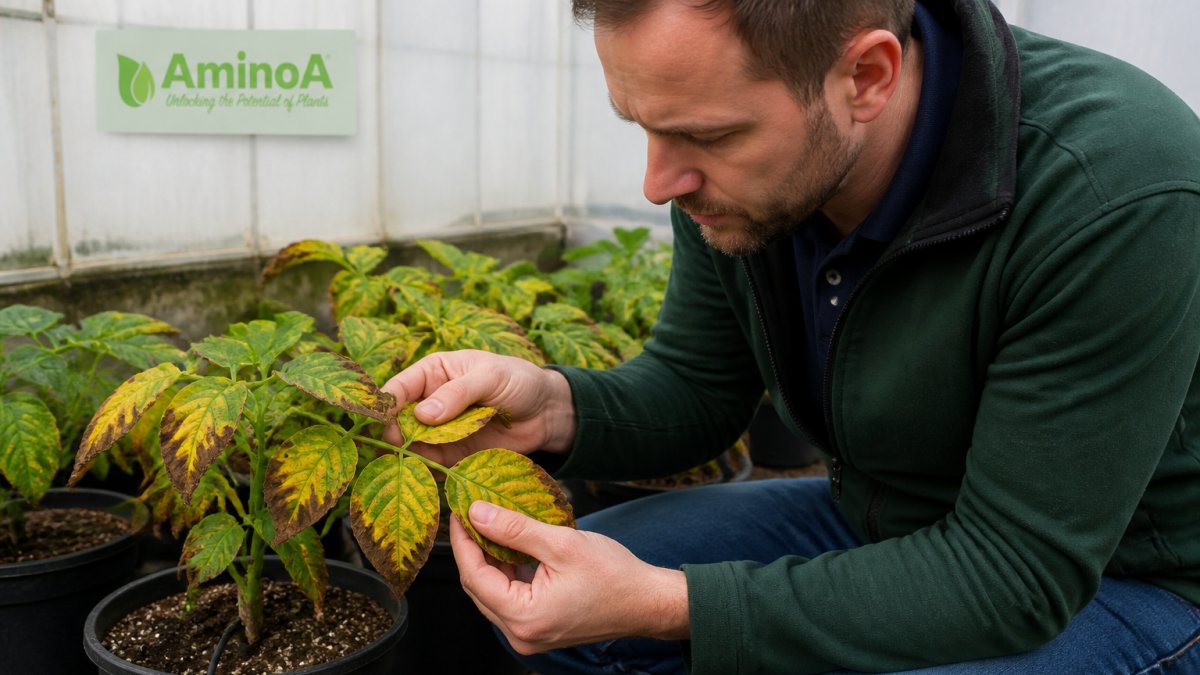
Potassium deficiency symptoms in crops appear as scorched, brown leaf edges and weak stems that lodge easily. The burn starts at the leaf margins and moves inward, often with yellowing between the veins.
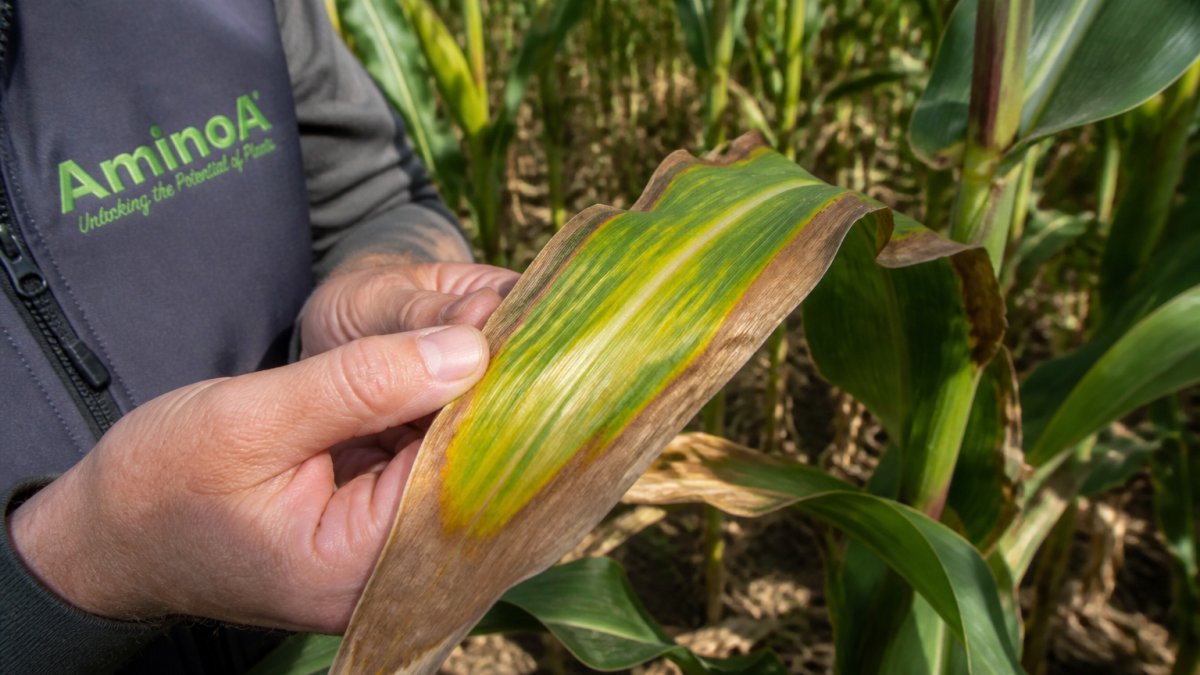
Potassium drives stem strength, water balance and grain fill. When it runs short, plants wilt faster under stress and stems give way under a full head of grain.
Watch for:
- Brown, dead tissue along leaf edges
- Weak, bendy stems and lodging
- Poor grain fill and lighter grains
- Slow recovery after heat or drought
This is where high-yield crops suffer most. A heavy crop pulls potassium hard through summer, and the plant cannot replace it once it is gone.
Reading the Leaf: Deficiency Signs vs Disease and Drought
Reading a leaf correctly means separating deficiency from disease and drought before you spend money on the wrong fix. The three look alike, but they leave different clues.
Use this quick check:
| Symptom Pattern | Likely Cause | What Confirms It |
|---|---|---|
| Yellowing starts on old, low leaves | Nitrogen deficiency | Pattern moves bottom to top |
| Brown, scorched leaf edges | Potassium deficiency | Burn starts at margins, moves in |
| Spots, lesions, fuzzy growth | Disease | Patches spread between plants |
| Whole plant wilts, even leaves | Drought or root stress | Soil is dry, no leaf pattern |
A common mistake is to treat every yellow leaf as disease and spray. That costs money and does nothing if the real issue is hunger.
What most guides miss is the pattern. Deficiency follows a predictable route through the plant. Disease and drought do not.
If the pattern points to hunger, confirm it. Do not guess.
Plant Tissue Testing for Nutrient Deficiencies: Confirming What You See
Plant tissue testing for nutrient deficiencies confirms what your eyes suspect. It measures the actual nutrient levels inside the plant, so you act on facts, not guesses.
The process is straightforward:
- Pick the right plant part, often a specific leaf, for the crop and growth stage
- Sample a representative set across the field, not one weak corner
- Send samples to a lab and compare results against known sufficiency ranges
- Use the numbers to build a correction plan
Timing matters. Sample while the crop is still growing and can respond. A test after harvest tells you what went wrong, not how to fix it.
According to AHDB guidance on tissue analysis, matching samples to the correct growth stage gives the most reliable readings.
Crop Nutrient Management: Correcting Deficiencies Without Losing Yield
Crop nutrient management means fixing the shortage fast enough that the crop never drops yield. The goal is not just to correct the symptom. It is to protect the final tonnes.
Start with the basics:
- Correct the most limiting nutrient first
- Match the fix to the growth stage
- Keep the crop working through stress
- Avoid over-correcting, which wastes money and can harm the crop
Foliar and biostimulant options let you feed the plant directly when root uptake is slow. This matters in dry spells, when soil nutrients sit there but roots cannot reach them.
AminoA provides L-α amino acid biostimulants that support root, leaf and bud development. Our products help crops resist cold, heat and drought stress. Every essential amino acid is present in the L form, produced through enzymatic hydrolysis.
This is where the practical value sits. A crop under stress cannot take up nutrients well. Supporting the plant helps it keep working, so your correction actually lands.
Velcourt trials found that adding AminoA FLO to reduced fungicide rates maintained yields and improved green leaf area in winter wheat. That is the kind of result that matters when you are weighing input costs against output.
If you are weighing amino acids against a standard fertiliser programme, the difference is how the plant uses them. Amino acids feed the plant directly and support it through stress, which is often when yield is won or lost.
Frequently Asked Questions
What are the common signs of nutrient deficiency in high yield crops?
Look for yellowing between leaf veins, scorched leaf edges, stunted growth, and pale lower leaves. Nitrogen deficiency turns older leaves yellow first, while potassium deficiency burns leaf margins. High-yield crops show these signs faster because fast growth demands more nutrients than the soil can supply at peak uptake.
How can you tell which nutrient a crop is lacking?
Start with where symptoms appear. Mobile nutrients like nitrogen and potassium move to new growth, so older leaves show damage first. Immobile nutrients affect new leaves first. Check the pattern: uniform yellowing suggests nitrogen, while brown leaf edges point to potassium. Plant tissue testing confirms the specific deficiency before you apply anything.
Can nutrient deficiency symptoms be confused with disease or drought stress?
Yes, and this is a common mistake. Drought stress causes similar wilting and leaf rolling, while fungal disease often shows spots, lesions, or fuzzy growth. Deficiency symptoms usually appear evenly across a field and follow a predictable pattern on the plant. Tissue testing separates the two, so you treat the right problem.
When should foliar nutrients be applied to a high-yield crop?
Apply foliar nutrients when tissue tests confirm a deficiency and the crop is actively growing. Early morning or late evening reduces evaporation and leaf scorch risk. For high-yield cereals, target key growth stages like tillering or stem extension. Always check tank-mix compatibility before combining with fungicides or insecticides.
High-yield crops demand more, and the soil does not always keep up. Spotting the signs early, confirming them with tissue testing, and correcting fast is how you protect yield. AminoA supports that work with L-α amino acid biostimulants that boost root and leaf development, improve stress resistance, and help crops hold their yield under pressure. Get started with AminoA and give your crop the support it needs to finish strong.