 How-to
How to Improve Soil Microbial Diversity on Your Farm
Last Updated: 5 November 2026
Quick Summary
Improving soil microbial diversity means reducing practices that disturb soil biology and feeding the organisms that remain. Cut back deep or frequent tillage, keep living roots in the ground with cover crops and a diverse rotation, and return organic matter such as crop residues and compost. Measure your starting point first so you can see whether changes are working.
- Reduce deep or frequent tillage, which breaks up fungal networks and exposes organic matter.
- Keep living roots in the ground using cover crops, since root exudates feed soil organisms.
- Return organic matter as crop residues, compost or manure, at rates set by your soil test.
- Take baseline measurements such as organic matter, earthworm counts and soil structure before changing practices.
- Trial any biostimulant against a control strip before trusting claims about soil biology.
Table of Contents
- Why Soil Microbial Diversity Matters for Crop Performance
- Measuring Your Starting Point Before You Change Anything
- Cutting Back on Practices That Erode Soil Biology
- Building Soil Organic Matter to Feed Microbial Communities
- Diversifying Your Rotation and Keeping Living Roots in the Ground
- Where Biostimulants Fit: The Impact of Biostimulants on Soil Health
- Your Next Step: Planning a Soil Biology Plan for Next Season
- Frequently Asked Questions
Why Soil Microbial Diversity Matters for Crop Performance
Soil microbial diversity is the range of bacteria, fungi and other microorganisms living in your soil, and it drives how well your crops feed and defend themselves. Growers who understand this link can make changes that pay back over several seasons.
Most farmers think about soil in terms of nitrogen, phosphorus and potassium. Those nutrients matter, but the soil biology decides how much of them plants can actually reach. Microbes break down organic matter, release nutrients in forms roots can take up, and form partnerships with plant roots.
That is the basic case for soil microbial diversity. Here are the main roles these organisms play:
- Nutrient cycling: microbes convert organic material into plant-available nitrogen and other nutrients
- Root health: beneficial organisms help roots absorb water and nutrients more efficiently
- Disease suppression: a varied community makes it harder for any single pathogen to dominate
- Soil structure: microbial activity helps bind particles into stable aggregates
One point is worth knowing before you spend money. Higher microbial diversity is not automatically the goal. What matters more is the composition of the community, meaning which organisms are present and what they are doing.
So the aim is a soil biology that works well for your crops, not the highest possible count of species.
Measuring Your Starting Point Before You Change Anything
You cannot tell whether a change has worked unless you know where you started. A baseline gives you something to compare against after a season or two.
Simple measurements you can take yourself include:
- Soil organic matter: a lab test shows the percentage of organic carbon in your fields
- Visible earthworms: count them in a spade-sized block of soil in several spots
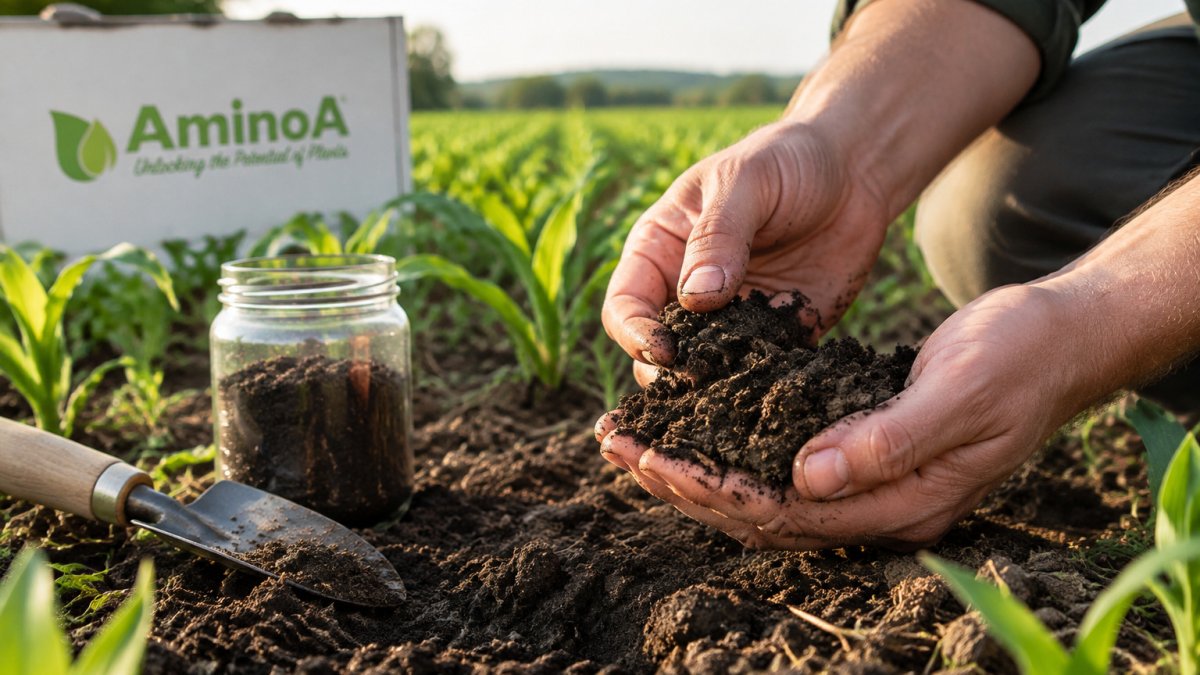
- Soil structure: dig a small pit and check how the soil breaks apart in your hand
- Crop root systems: pull a few plants and look at root length and colour
For more detailed work, a soil lab can run tests on microbial activity and biomass. Ask for the same tests each year so the results stay comparable. Our guide on how to measure rhizosphere microbial activity explains the lab methods in more detail. Tracking microbial activity and biomass over time can show whether practices that support improving soil quality are also building a more diverse soil community.
Write down the field history too. Note previous crops, cultivation depth, fertiliser and spray records. Without that context, it is hard to explain why results changed.
The article lists simple baseline measurements you can take yourself, so here they are at a glance.
| Measurement | How to take it | What it tells you |
|---|---|---|
| Soil organic matter | Lab test for percentage of organic carbon | Current level of microbial food supply |
| Visible earthworms | Count in a spade-sized block of soil in several spots | Activity of the soil community |
| Soil structure | Dig a small pit and check how soil breaks in your hand | Physical condition of the soil |
| Crop root systems | Pull a few plants and check root length and colour | How well roots are growing |
Cutting Back on Practices That Erode Soil Biology
Some common farm practices reduce the living community in your soil. Stopping or reducing them is often the cheapest first step.
Consider these areas:
- Deep or frequent tillage: it breaks up fungal networks and exposes organic matter to rapid decomposition
- Bare fallow periods: soil left without living roots loses its food supply for microbes
- Heavy repeated use of broad-spectrum products: some sprays affect non-target soil organisms as well as pests
- Compaction from heavy machinery: compacted soil holds less air and water, which slows microbial activity
Reducing these practices does not mean stopping farming. Our guide to best soil health practices for sustainable farming sets out a fuller set of practical steps to adopt alongside cutting back on harmful inputs. Many growers move to reduced tillage in stages, starting with one field and checking the results before expanding. Where you do keep spraying, it helps to choose products with a narrower target and to read label guidance on soil and non-target effects.
Once you have cut back, the next question is how to rebuild what has been lost. That brings us to organic matter.
Building Soil Organic Matter to Feed Microbial Communities
Soil microbes need food, and organic matter is their main source. The more of it you return to the soil, the more fuel your microbial community has.
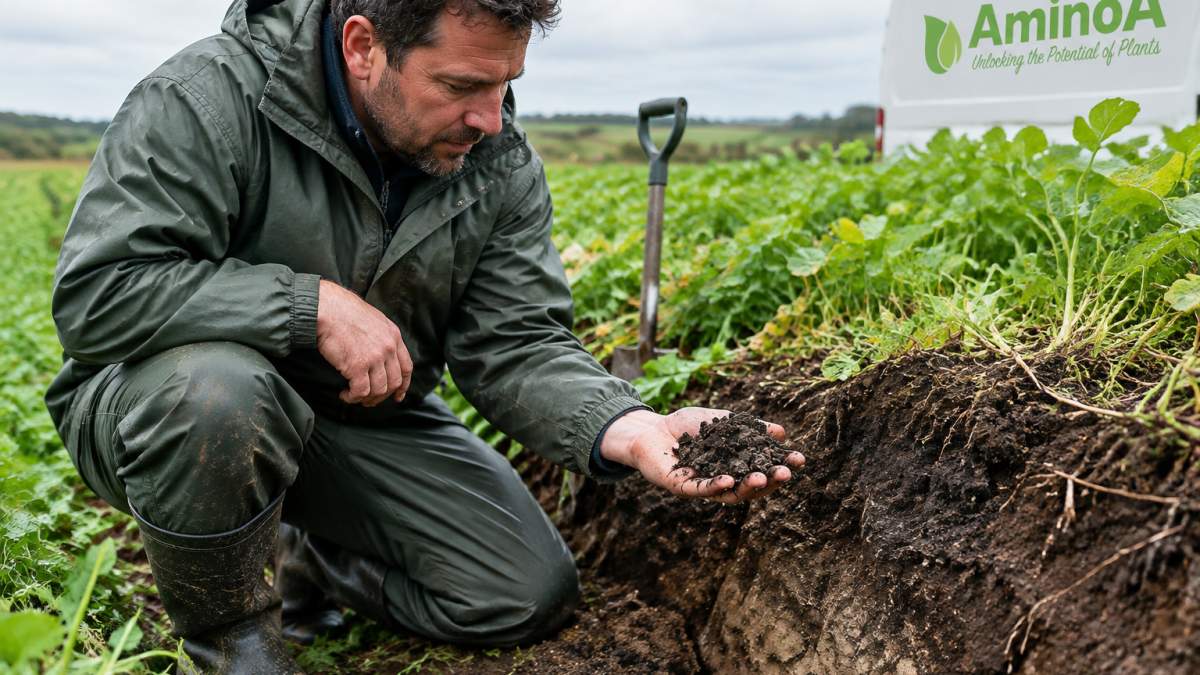
Adding organic material is widely recognised as an important soil-restoration strategy for building an active soil microbiome. Practical sources include:
- Crop residues left on the field after harvest
- Compost, applied at rates that suit your soil test results
- Manures from your own livestock or local suppliers
How much you add and how often depends on your soil type and current organic matter levels. A soil test will show where you stand.
Organic matter helps the community in another way too. It improves water holding and aeration, which creates better conditions for microbes to thrive. Plant residues that are left in place also protect the surface from erosion and temperature swings.
Diversifying Your Rotation and Keeping Living Roots in the Ground
Living roots feed microbes. Root exudates, the sugars and other compounds plants release, are a steady food source for soil organisms. Keeping roots in the ground for as much of the year as possible supports a more varied community.
Two approaches help here:
- Diversify the rotation: adding crops with different root structures and growth habits gives soil organisms a wider range of food
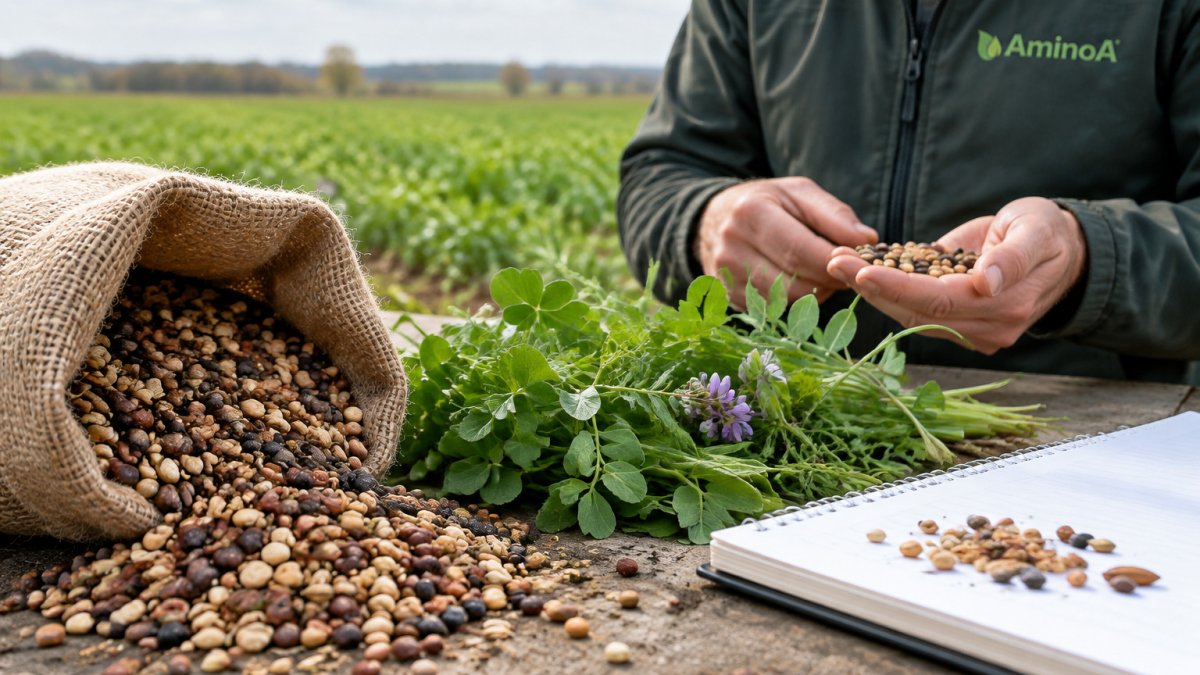
- Use cover crops: growing a cover between main crops keeps roots active during gaps
Legume cover crops deserve special mention. Our article on using cover crops to reduce soil compaction covers how to fit them into a practical system. Growing leguminous cover crops can enhance microbial diversity by improving the quality of residue inputs, including nitrogen and carbon. Our article on using cover crops to reduce soil compaction covers how to fit them into a practical system, and the guide on using cover crops to fix nitrogen explains how legumes contribute to the nitrogen budget.
Plan the cover crop around your main crop calendar. Sow it when the field would otherwise sit bare, and terminate it in a way that suits your system.
Where Biostimulants Fit: The Impact of Biostimulants on Soil Health
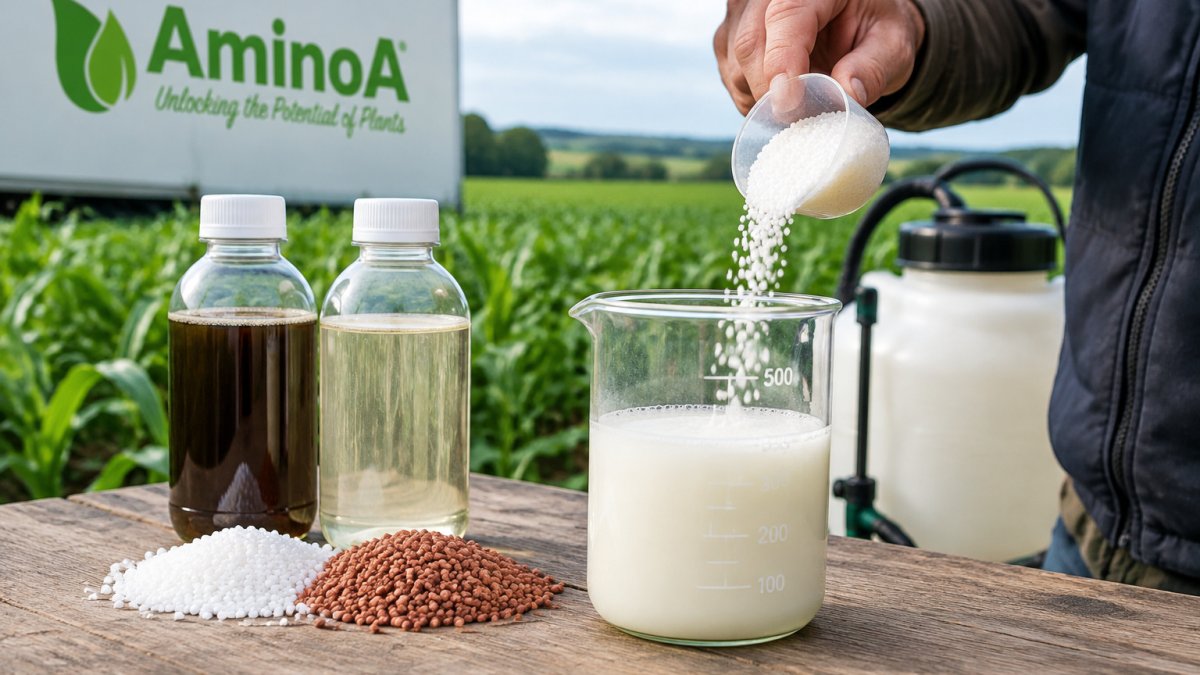
Biostimulants are products applied to plants or soil to support natural processes such as nutrient uptake, root growth and stress tolerance (Biostimulants and plant protection product regulation). They are not a substitute for good soil management, but they can complement it.
Results from biostimulants depend heavily on the product, the crop and the soil, so treat any claim about improved soil biology with caution until you have seen it under your own conditions.
AminoA produces 100% L-α amino acid biostimulants made by enzymatic hydrolysis. The range is designed to support root, leaf and bud development and to help crops cope with cold, heat, drought and agrochemical stress. Velcourt trials found that adding AminoA FLO to reduced fungicide rates maintained yields and improved green leaf area in winter wheat.
Good trial design matters. Run a strip trial on part of a field, leave a control strip without the product, and compare yield and crop condition at harvest. An agronomist can help you set this up.
Your Next Step: Planning a Soil Biology Plan for Next Season
Soil biology changes slowly, so start with a plan you can measure. Pick two or three changes from this guide and set a baseline before you make them.
A simple plan for the coming season might look like this:
- Take baseline soil tests and record field history
- Reduce one tillage pass or one high-impact spray on a single field
- Add organic material based on the soil test results
- Sow a cover crop in a gap period
- Compare the treated field against a control strip at harvest
Review the results after the season and adjust. Soil biology rewards patience, and the best evidence comes from your own fields.
Frequently Asked Questions
What are the primary benefits of high soil microbial diversity?
A more varied soil microbial community helps cycle nutrients such as nitrogen, phosphorus and carbon more efficiently, and it supports the plant-root relationships that help crops tolerate stress. Growing leguminous cover crops can improve microbial diversity by enhancing the quality of residue inputs, including nitrogen and carbon. Diversity is only part of the picture, however, since the composition of the community often matters more than a raw diversity count for crop production.
How do L-α amino acid biostimulants impact soil microbes?
L-α amino acids can serve as a readily available carbon and nitrogen source for soil organisms. AminoA products are produced through enzymatic hydrolysis and contain 100% L-α amino acids. The direct effect on specific soil microbial populations under UK field conditions depends on soil type, moisture and application rate, so growers should review trial results for their own conditions before expecting a measurable change.
How does soil organic matter influence microbial populations?
Soil organic matter is the main food source for most soil organisms, so rising organic matter generally supports larger and more active microbial communities. Adding organic material and keeping living plant cover are both recommended strategies for fostering an active soil microbiome. Increases build slowly over several seasons, so track organic matter through periodic soil analysis rather than expecting rapid change.