 how-to
How to Measure Rhizosphere Microbial Activity
Table of Contents
- Why Measuring Rhizosphere Microbial Activity Matters for Your Crops
- What You'll Need Before Starting
- Rhizosphere Soil Sampling Methods: Collecting Representative Samples
- Soil Respiration Measurement: Assessing Microbial Metabolic Activity
- Soil Enzyme Activity Assay: Detecting Microbial Function
- Soil Microbial Activity Tests: Laboratory Analysis Options
- Common Mistakes to Avoid When Measuring Rhizosphere Microbial Activity
- Interpreting Results and Taking Action
- Frequently Asked Questions
Last Updated: 10 October 2026
Why Measuring Rhizosphere Microbial Activity Matters for Your Crops
Understanding how to measure rhizosphere microbial activity is essential for any grower serious about soil health and yield improvement. The rhizosphere, the narrow zone of soil immediately surrounding plant roots, teems with microbial life that directly influences nutrient availability, disease suppression, and stress tolerance in your crops. When these microbes thrive, your plants thrive.
Most growers rely on visual symptoms or yield results to gauge soil health. By then, problems are already costing you money. Measuring rhizosphere microbial activity lets you detect soil condition changes before they affect your harvest. You gain actionable data to optimise your input strategy and reduce reliance on agrochemicals.
At AminoA, we work with growers across the UK who've discovered that understanding their soil biology transforms their approach to crop nutrition. The science is straightforward. The methods are accessible. And the payoff is substantial.
What You'll Need Before Starting
Before you begin measuring rhizosphere microbial activity, gather the right equipment and materials. You don't need expensive laboratory setups to get meaningful data.
Essential equipment:
- Soil auger or spade for sampling
- Sterile sampling containers (glass jars or plastic bags)
- Thermometer
- pH meter or pH strips
- Incubator or temperature-controlled environment
- Respirometer or sealed jar system
- Basic laboratory glassware (beakers, pipettes, graduated cylinders)
- Distilled water
- Sterile technique supplies (gloves, sterilised tools)
Optional but helpful:
- Soil moisture meter
- Weighing scales
- Microscope (for visual microbial observation)
- Autoclave (for sterilising materials)
Most of these items are standard in agricultural labs or university extension services. If you're starting small, partner with your local agricultural college or consultant who already has the infrastructure. This approach saves capital and ensures your samples receive proper handling.
The timing matters as well. Collect samples when soil temperature is between 10°C and 25°C for consistent results. Avoid waterlogged conditions immediately after heavy rain, wait 48 hours for soil to drain naturally.
Rhizosphere Soil Sampling Methods: Collecting Representative Samples
Collecting the right sample is the foundation of accurate rhizosphere microbial activity measurement. Poor sampling technique undermines everything that follows.
The correct approach:
- Identify the active root zone (typically 5-15 cm from the root surface)
- Use a sterile auger to extract soil cores
- Remove the plant gently and carefully separate roots from adhering soil
- Collect soil that clings directly to roots, this is your rhizosphere
- Place samples immediately into sterile containers
- Keep samples cool during transport
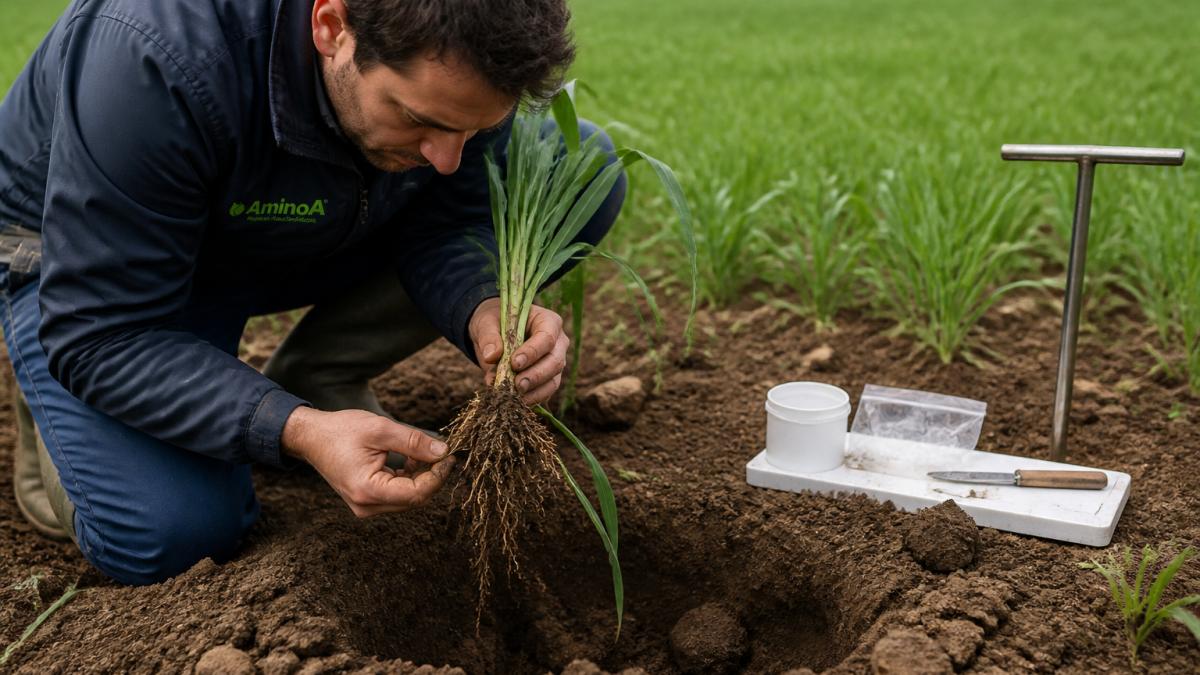
Take multiple samples from different locations across your field. Five to ten samples per field block is standard practice. Mix them gently to create a composite sample that represents your soil condition.
Timing is critical. Process samples within 24 hours of collection. Microbial populations shift rapidly once soil is removed from the root environment. The longer you delay, the less your results reflect actual rhizosphere conditions.
Soil Respiration Measurement: Assessing Microbial Metabolic Activity
Soil respiration is the rate at which soil microbes consume oxygen and release carbon dioxide. It's the single best indicator of overall microbial activity and metabolic health in your rhizosphere.
How it works: Microbes break down organic matter and release CO₂ as a byproduct. More respiration means more microbial activity. More activity means better nutrient cycling and disease suppression.
The method is straightforward. Place a known mass of fresh soil in a sealed jar with a CO₂ trap (typically soda lime or potassium hydroxide solution). Incubate at 20-25°C for a set period, usually 7 to 14 days. Weigh the CO₂ trap before and after incubation. The weight increase equals the CO₂ produced by microbial respiration.
Express your results as milligrams of CO₂ released per gram of dry soil per day. This standardised measurement lets you compare results across samples, fields, and seasons.
What the numbers tell you:
- High respiration (above 5 mg CO₂/g/day) indicates vigorous microbial activity
- Low respiration (below 2 mg CO₂/g/day) suggests dormant or stressed microbial communities
- Intermediate respiration (2-5 mg CO₂/g/day) is typical for well-managed soils
Respiration changes with soil temperature and moisture. Always record these variables alongside your results. A soil at 10°C will show lower respiration than the same soil at 20°C, but the microbial community may be equally healthy.
Soil Enzyme Activity Assay: Detecting Microbial Function
Enzymes produced by soil microbes drive nutrient cycling. Measuring enzyme activity tells you whether your rhizosphere microbes are actually performing their function, not just present, but working.
Common enzymes to measure include:
- Dehydrogenase: indicates overall microbial activity and viability
- Phosphatase: reflects phosphorus cycling capacity
- Urease: shows nitrogen cycling potential
- Cellulase: demonstrates organic matter decomposition
The standard method uses a substrate specific to each enzyme. Add the substrate to your soil sample, incubate, and measure the coloured product formed by the enzyme reaction. The intensity of colour is proportional to enzyme activity. These enzymatic rates often fluctuate significantly depending on how soil amendment practices alter the local nutrient profile in regions where specific vegetable crops are grown.
Results are expressed as enzyme units per gram of dry soil. Higher values indicate greater microbial function and better nutrient availability.
Why this matters for your crops: High enzyme activity correlates with improved nutrient uptake, stronger root development, and better stress tolerance. Growers who monitor enzyme activity often adjust their biostimulant strategy based on which enzymes are underperforming.
For example, low phosphatase activity suggests your soil microbes aren't efficiently cycling phosphorus. Adding a biostimulant that stimulates microbial populations and root development can boost phosphatase activity within weeks, improving phosphorus availability to your plants.
Soil Microbial Activity Tests: Laboratory Analysis Options
Several standardised laboratory tests measure rhizosphere microbial activity. Your choice depends on your budget, timeline, and specific information needs.
Microbial biomass carbon (MBC): This measures the total mass of living microbial cells in your soil. The chloroform fumigation-extraction method is standard. Fumigate soil with chloroform to kill microbes, then extract organic carbon. Compare fumigated and non-fumigated samples to calculate biomass. Higher MBC indicates a larger, more active microbial community.
Substrate-induced respiration (SIR): Add a readily available substrate (glucose) to your soil and measure the immediate respiration spike. This indicates how quickly and vigorously microbes respond to fresh food. Vigorous response suggests a healthy, metabolically active community.
Phospholipid fatty acid (PLFA) analysis: This advanced technique identifies and quantifies specific microbial groups (bacteria, fungi, actinomycetes) by analysing their cell membrane lipids. PLFA gives you community composition, not just total activity, but which types of microbes dominate your rhizosphere.
| Test | Measures | Time Required | Cost | Best For |
|---|---|---|---|---|
| Soil respiration | CO₂ production | 7-14 days | Low | Quick baseline assessment |
| Enzyme activity | Microbial function | 1-2 days | Low to medium | Nutrient cycling potential |
| Microbial biomass | Total microbial mass | 3-5 days | Medium | Community size comparison |
| PLFA analysis | Microbial community composition | 5-7 days | High | Detailed ecological profile |
Most UK agricultural labs offer respiration and enzyme assays. PLFA analysis is less common but available through specialist research laboratories. For practical farm management, respiration and enzyme activity provide sufficient data without excessive cost.
Common Mistakes to Avoid When Measuring Rhizosphere Microbial Activity
Measurement errors are common and easily avoided once you know what to watch for.
Sampling too late after soil disturbance: Tillage and cultivation crash microbial populations temporarily. Wait at least 4 weeks after major soil disturbance before measuring. Otherwise, your results reflect stress response, not baseline conditions.
Ignoring soil moisture: Dry soil shows low respiration even if microbes are healthy, they're dormant, not dead. Wet soil can show artificially high respiration due to anaerobic conditions. Always adjust soil moisture to field capacity (roughly 60% of maximum water-holding capacity) before testing.
Mixing rhizosphere and bulk soil: The rhizosphere is biologically distinct from surrounding soil. If you include non-rhizosphere soil in your sample, you dilute the signal. Carefully separate root-adhering soil from the rest.
Single sampling point: One sample tells you about that spot, not your field. Variability across fields is real. Take at least five samples per field block and composite them.
Measuring at inconsistent times: Rhizosphere activity fluctuates with crop growth stage, weather, and season. Measure at the same growth stage each year for valid comparisons. Spring and early summer typically show peak activity.
Interpreting Results and Taking Action
Raw numbers mean nothing without context. Here's how to interpret your measurements and adjust your crop management accordingly.
Baseline establishment: Your first measurement is your baseline. Establish normal ranges for your specific soil type, climate, and cropping system. Subsequent measurements are meaningful only when compared to your baseline.
Respiration trends: If respiration drops 20-30% year-on-year, your soil biology is declining. Likely causes include excessive tillage, low organic matter input, or overuse of broad-spectrum fungicides. Increase organic matter (compost, cover crops, crop residue retention) and reduce soil disturbance.
If respiration is consistently low but your crops perform well, your soil may simply have a smaller microbial community that's highly efficient. This isn't necessarily a problem, but it may limit your resilience to stress.
Enzyme activity patterns: Low phosphatase combined with adequate respiration suggests microbes are present but not cycling phosphorus efficiently. This often responds well to biostimulant application.
Action steps based on results:
- Low respiration + low enzyme activity → Increase organic matter, reduce tillage, consider biostimulant application
- High respiration + low enzyme activity → Investigate nutrient imbalances or pH issues; enzyme production may be suppressed by stress
- High respiration + high enzyme activity → Your soil biology is thriving; maintain current management
Track your results season to season. Improvements in microbial activity typically precede visible crop improvements by 4-6 weeks. Growers who monitor these metrics gain a competitive edge, they optimise inputs before problems become yield losses.
Measuring rhizosphere microbial activity transforms soil management from guesswork into science. You move from reacting to problems to preventing them. The methods are accessible, the costs are reasonable, and the information is invaluable.
Start with soil respiration. It's the fastest, cheapest way to assess whether your rhizosphere biology is supporting your crops or holding them back.
Frequently Asked Questions
What is rhizosphere microbial activity and why should I measure it?
Rhizosphere microbial activity refers to the metabolic processes of microorganisms living in the soil immediately surrounding plant roots. Measuring it reveals how actively these microbes are functioning, which directly correlates with nutrient cycling, root development, and overall plant health. Active microbial communities break down organic matter, mobilise nutrients, and enhance plant stress resistance. For farmers, this measurement helps you assess soil health, predict crop performance, and optimise biostimulant applications like amino acids.
How do soil respiration measurements relate to rhizosphere microbial activity?
Soil respiration measurement quantifies carbon dioxide released by microbial respiration, which is a direct indicator of microbial metabolic activity. Higher respiration rates suggest a more active microbial community working in the rhizosphere. This measurement is practical because it's relatively straightforward to conduct in the field or laboratory and provides real-time data on microbial function. It's particularly useful for comparing soil health before and after applying biostimulants or changes to management practices.
What's the difference between microbial biomass and microbial activity?
Microbial biomass is the total mass of living microorganisms in the soil, essentially, how many microbes are present. Microbial activity measures what those microbes are actually doing, their metabolic rate and functional capacity. You can have high biomass with low activity (dormant microbes) or lower biomass with high activity (efficient, active microbes). For crop performance, activity often matters more than biomass alone, which is why measuring respiration and enzyme activity provides more actionable insight than biomass counts alone.
Can I measure rhizosphere microbial activity on my own farm, or do I need laboratory analysis?
You can perform basic field measurements like soil respiration using simple incubation methods, but comprehensive analysis requires laboratory facilities. Enzyme activity assays and microbial biomass quantification need specialised equipment and trained technicians. Many agricultural consultants and soil testing laboratories now offer rhizosphere microbial activity packages. A practical approach: start with field-based respiration tests to establish a baseline, then send samples to a laboratory for detailed enzyme and microbial community analysis to build a complete picture of soil health.