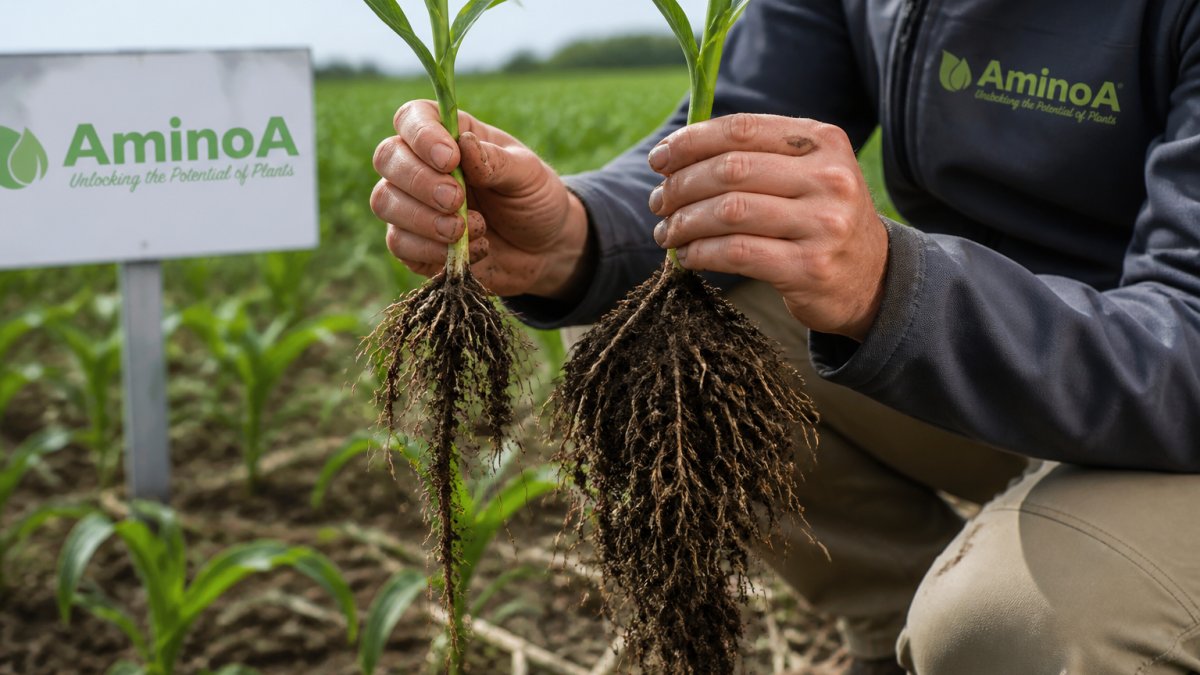
 ultimate-guide
What is an L-alpha amino acid? A guide
Table of Contents
- What is an L-alpha amino acid?
- Amino acid chirality in plants
- L-amino acid biostimulants in crop production
- How plants use L-alpha amino acids
- Abiotic stress resistance in plants
- Examples of L-alpha amino acids in agriculture
- Frequently Asked Questions
Last Updated: September 2, 2026
What is an L-alpha amino acid?
An L-alpha amino acid is an organic compound containing an amino group (NH₂), a carboxyl group (COOH), and a distinctive side chain, all bonded to a central carbon atom known as the alpha carbon. This structural arrangement is fundamental to all life on Earth, every protein in plants, animals, and microorganisms is built from these building blocks.
The "L" designation refers to the three-dimensional orientation of atoms around the alpha carbon, a property called chirality. The "alpha" simply indicates that the amino and carboxyl groups are attached to the same central carbon. Together, these specifications define a molecule with profound biological significance.
At AminoA, we've spent 10 years working with growers who understand that crop performance depends on understanding plant physiology at the molecular level. When you're trying to optimise yields and stress resistance, knowing what L-alpha amino acids actually do, and why their specific structure matters, becomes the difference between a scattered approach and a strategy backed by science.
The structure of an L-alpha amino acid
Every L-alpha amino acid shares a common backbone: the alpha carbon sits at the centre, bonded to four distinct groups. One bond connects to the amino group (NH₂), another to the carboxyl group (COOH), a third to a hydrogen atom, and the fourth to a variable side chain called the R group. This R group is what makes each amino acid unique, it determines whether you're looking at glycine, alanine, leucine, or any of the 20 standard amino acids found in nature.
The three-dimensional arrangement around the alpha carbon creates what chemists call a chiral centre. Imagine the four bonds pointing toward the corners of a tetrahedron. There are two possible ways to arrange them, a left-handed version (L-form) and a right-handed version (D-form). Most amino acids in living organisms exist in the L-form, which is why this designation appears throughout biochemistry and nutrition science (peer-reviewed research).
This structural detail matters practically. Your plants can only utilise L-amino acids directly; D-forms require metabolic conversion or are simply not recognised by plant enzyme systems. When you apply an L-alpha amino acid biostimulant, you're providing a form your crops can immediately absorb and incorporate into growth processes. The specificity of this molecular structure is what makes the difference between a product that works and one that merely sits in the soil.
Why the 'L' and 'alpha' designations matter
The L designation tells you the amino acid will be biologically active in plant systems. Plant enzymes evolved to recognise and process L-amino acids. Feed them the D-form, and those enzymes simply pass it by. This isn't a minor distinction, it's the difference between a compound your crop can use and one it cannot.
The alpha designation confirms that both the amino and carboxyl groups are attached to the central carbon, rather than somewhere else on the molecule. This position is crucial because it's where the peptide bonds form when amino acids link together to create proteins. Alpha-amino acids are the only form capable of building the structural and functional proteins that plants need for growth, stress response, and reproduction.
Understanding these designations also helps you evaluate products in the marketplace. Some suppliers may claim to offer "amino acid blends" without specifying whether they're providing L-forms, D-forms, or a mixture. Others might reference amino acids without clarifying whether they're alpha-amino acids or other variants. When you see L-alpha amino acid on a product label, you know exactly what you're getting: molecules your plants can recognise, absorb, and utilise immediately.
Amino acid chirality in plants
Chirality, the left-handed versus right-handed property of molecules, fundamentally shapes how plants interact with amino acids. Plants have evolved highly selective recognition systems. Their transport proteins, enzymes, and metabolic pathways are calibrated for L-amino acids specifically.
When L-amino acids enter plant cells, they're immediately recognised by amino acid transporters and shuttled to where they're needed. Protein synthesis machinery grabs them and incorporates them into new proteins. Metabolic enzymes use them as substrates for secondary metabolism. The entire system works because the molecular shape matches what evolution has designed the plant to expect.
D-amino acids, by contrast, are largely invisible to these plant systems. A plant cannot efficiently transport them, cannot easily incorporate them into proteins, and cannot readily metabolise them. Some D-amino acids may eventually be converted to L-forms through biochemical pathways, but this requires energy and time, making D-forms far less efficient as biostimulants.
This is why chirality matters in crop production. A biostimulant containing D-amino acids or a racemic mixture (equal parts L and D) will deliver less bioavailable nutrition to your plants than a pure L-amino acid product. You're paying for material your crop cannot use. Precision in molecular form directly translates to efficiency in the field.
L-amino acid biostimulants in crop production
L-amino acid biostimulants function as signalling molecules and metabolic activators within plants. Unlike traditional fertilisers that supply nitrogen, phosphorus, and potassium as raw elements, L-amino acids trigger specific physiological responses that amplify the plant's own growth and stress-management systems.
When applied to crops, these biostimulants stimulate root development, enhance leaf expansion, and promote blossom and fruit formation. They work by activating the plant's own hormone systems, particularly auxins, gibberellins, and cytokinins, which orchestrate growth and development. The amino acids themselves become building blocks for proteins involved in photosynthesis, enzyme production, and structural tissues.
Growers across conventional and regenerative systems report that L-amino acid products complement their existing nutrition programmes. Rather than replacing NPK fertilisers, these biostimulants optimise how plants utilise the nutrients already available in the soil or applied through other means. A Velcourt trial demonstrated this principle: adding AminoA FLO to reduced fungicide rates maintained yields and improved green leaf area in winter wheat, showing that biostimulants can enhance crop resilience alongside conventional crop protection strategies.
The mechanism is elegant: L-amino acids lower the plant's energy cost of growth and stress response. By providing pre-formed amino acids, you reduce the metabolic burden of nitrogen fixation and amino acid synthesis. This freed-up energy can be redirected toward yield, quality, and stress tolerance. For growers managing tight margins or seeking to reduce chemical inputs, this efficiency gain translates directly to improved returns.
How plants use L-alpha amino acids
Plants absorb L-alpha amino acids through specialised transport proteins embedded in root cell membranes. Once inside the cell, these amino acids follow several metabolic pathways depending on the plant's current needs.
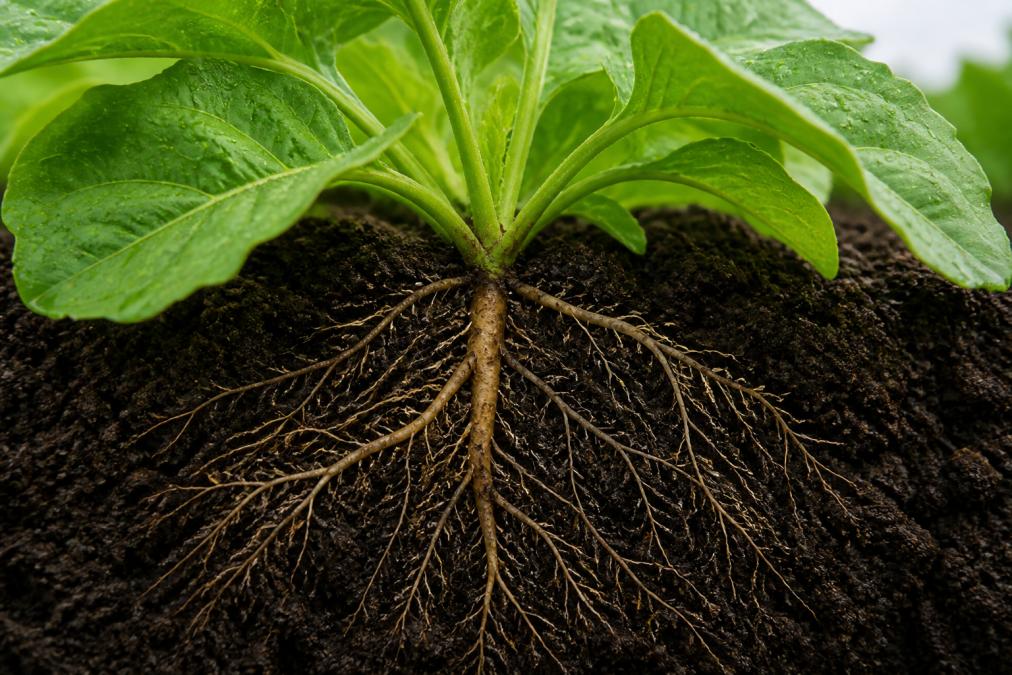
The primary route is protein synthesis (peer-reviewed research). Ribosomes use L-amino acids as direct substrates to build new proteins, enzymes, structural proteins, transport proteins, and regulatory proteins. This is why amino acid availability directly correlates with growth rate and tissue quality. A plant with abundant L-amino acids can synthesise proteins faster and more efficiently than one relying solely on nitrogen uptake and de novo amino acid synthesis.
Beyond protein building, plants use L-amino acids as precursors for secondary metabolism. Phenylalanine becomes the starting material for phenolic compounds that protect against UV stress and pathogen attack. Methionine is converted to S-adenosylmethionine, a critical cofactor for numerous biosynthetic reactions. Glutamate and aspartate serve as nitrogen donors for synthesis of nucleotides, chlorophyll, and other essential molecules.
L-amino acids also act as signalling molecules. Certain amino acids trigger the expression of genes involved in stress response, root development, and nutrient uptake. When a plant detects elevated amino acid levels, it interprets this as a signal that resources are available, activating growth programmes and upregulating nutrient transport systems. This signalling function explains why L-amino acid biostimulants often produce effects beyond simple nitrogen supply. amino peptide structure.
The timing and form of amino acid delivery matter significantly. Applied as L-alpha amino acids, the molecules are immediately bioavailable. Your crop doesn't need to spend energy converting them or waiting for soil microbes to break down organic matter. This is particularly valuable during critical growth phases, when root systems are establishing, when plants are flowering, or when stress conditions demand rapid metabolic adjustment.
Abiotic stress resistance in plants
Abiotic stress, drought, heat, cold, salinity, and soil toxicity, imposes severe metabolic demands on plants. These stresses trigger oxidative damage, disrupt photosynthesis, and force the plant to divert resources away from growth toward survival. L-amino acid biostimulants enhance the plant's capacity to withstand these challenges.

Under drought stress, plants accumulate specific amino acids, particularly proline, which function as osmolytes (peer-reviewed research). These molecules help maintain cellular water balance and protect proteins from desiccation damage. By supplying L-amino acids exogenously, you boost the plant's internal reserve of these protective compounds. The plant can respond more rapidly to water stress, maintaining photosynthetic capacity and preventing yield loss.
Heat stress damages photosynthetic machinery and denatures proteins. L-amino acids support the synthesis of heat-shock proteins, molecular chaperones that stabilise other proteins and prevent aggregation. They also provide substrate for antioxidant synthesis, helping neutralise the reactive oxygen species that accumulate during heat stress. Crops receiving L-amino acid biostimulants typically show greater heat tolerance and faster recovery after stress events.
Cold stress slows metabolism and can trigger ice crystal formation in tissues. L-amino acids support the synthesis of cryoprotective compounds and enable the metabolic flexibility needed for cold acclimation. Winter crops treated with L-amino acid products show improved survival rates and reduced frost damage.
Agrochemical phytotoxicity, damage from herbicides, fungicides, or other chemicals, represents another stress category. L-amino acids accelerate the plant's detoxification pathways and support rapid repair of damaged tissues. This is why growers using reduced fungicide rates alongside L-amino acid biostimulants often maintain or improve yields; the amino acids amplify the plant's own recovery mechanisms.
The practical outcome is measurable: crops receiving L-alpha amino acid biostimulants demonstrate greater resilience across multiple stress scenarios. This resilience translates to more stable yields, improved fruit or grain quality, and reduced crop loss during adverse seasons.
Examples of L-alpha amino acids in agriculture
The 20 standard L-amino acids each play distinct roles in plant physiology. Understanding which ones matter most helps you recognise why comprehensive L-amino acid products outperform single-amino-acid supplements.
Glutamate and aspartate serve as primary nitrogen carriers in plant metabolism. These amino acids donate their amino groups to countless biosynthetic reactions, making them foundational to protein synthesis and secondary metabolism. Crops with adequate glutamate and aspartate availability show strong growth and efficient nitrogen utilisation.
Proline accumulates during stress and functions as an osmolyte and signalling molecule. It's synthesised from glutamate but is often depleted during intense stress conditions. Supplying exogenous proline helps plants maintain turgor pressure and activate stress-response genes.
Methionine is the precursor to S-adenosylmethionine, which is involved in methylation reactions throughout the plant. These reactions regulate gene expression, produce cell wall components, and synthesise polyamines essential for cell division. Adequate methionine availability supports vigorous growth and development.
Phenylalanine and tyrosine are gateways to phenolic synthesis, compounds that provide UV protection, pathogen resistance, and contribute to fruit and vegetable colour and flavour. Crops with strong phenolic profiles show better disease resistance and superior produce quality.
Arginine supports nitrogen storage and transport. It's particularly important during reproductive stages when plants must allocate nitrogen to developing seeds or fruits. Arginine-rich biostimulants enhance seed set and fruit development.
Leucine, isoleucine, and valine are branched-chain amino acids critical for protein synthesis and nitrogen transport. They're often limiting in soils with poor organic matter, making them valuable additions through biostimulants.
Cysteine and methionine contain sulphur, an element essential for enzyme function and glutathione synthesis, the plant's primary antioxidant. Adequate cysteine availability supports stress tolerance and disease resistance.
When you select an L-amino acid biostimulant, look for products containing the full spectrum of essential amino acids rather than a single compound. AminoA's formulations include every essential L-amino acid, ensuring your crops receive the complete molecular toolkit they need for optimal growth, stress response, and yield.
L-amino acid biostimulants represent a shift in how growers approach crop nutrition and stress management. Rather than relying solely on elemental fertilisers, you're now able to supply plants with pre-formed organic molecules that trigger coordinated physiological responses. This approach is particularly valuable as growers seek to reduce synthetic chemical inputs whilst maintaining or improving yields. AminoA's 10 years of experience in the UK market, combined with our commitment to 100% L-alpha amino acids produced through enzymatic hydrolysis, means you're working with a partner who understands both the science and the practical demands of modern farming. To explore how L-amino acid biostimulants might optimise your specific crops and growing conditions, subscribe to our newsletter for the latest research, trial data, and grower insights.
Frequently Asked Questions
What is the difference between L and D amino acids?
L and D amino acids are mirror-image forms (called enantiomers) of the same molecule. The L-form is the naturally occurring version in living organisms and is the only form plants can efficiently synthesise and utilise. D-amino acids, the mirror opposite, are rarely found in nature and cannot be used by plant metabolism. This distinction is why L-alpha amino acids are specifically chosen for biostimulants, they match the form plants recognise and process.
Why are L-alpha amino acids important for plants?
L-alpha amino acids serve as building blocks for proteins essential to plant growth and function. They support root development, leaf expansion, and bud formation, whilst also strengthening plants' ability to withstand environmental stress such as cold, heat, and drought. When supplied as biostimulants, they can enhance nutrient uptake and improve overall crop yield and quality without relying solely on traditional synthetic fertilisers.
Do L-alpha amino acids improve crop stress resistance?
Yes. L-alpha amino acids help plants build stronger cell structures and produce protective compounds that reduce damage from abiotic stress, temperature extremes, water scarcity, and chemical exposure. Field trials have demonstrated that crops receiving L-alpha amino acid biostimulants maintain better green leaf area and yield stability under adverse conditions, making them valuable for managing unpredictable seasons.
How do plants absorb L-alpha amino acids?
Plants absorb L-alpha amino acids primarily through their roots via active transport mechanisms. Once absorbed, they are either incorporated directly into proteins or converted into other amino acids and compounds the plant needs. The L-form is readily recognised by plant transport systems, ensuring efficient uptake compared to other forms or synthetic alternatives.
This article was written using GrandRanker