 comparison
Is Foliar Feeding Worth It for Stress Resistance?
Table of Contents
- What Foliar Feeding Actually Does for Stressed Crops
- Foliar vs Soil Nutrition Comparison: Which Reaches Crops Faster?
- Benefits of Amino Acid Biostimulants for Stress Resistance
- Comparing Foliar Feeding Products for Stress Resistance
- Foliar Feeding Application Best Practices for Maximum Efficacy
- Pros, Cons, and ROI: Is Foliar Feeding Worth the Cost?
- Which Approach Should You Choose?
- Frequently Asked Questions
Last Updated: September 1, 2026
Foliar feeding divides opinion in agronomy circles. Some growers view it as critical for stress management; others see it as expensive duplication of solid soil nutrition programmes. The short answer is yes, but only when you understand what foliar feeding can and cannot do, and when you match the right product type to the right stress event.
What Foliar Feeding Actually Does for Stressed Crops
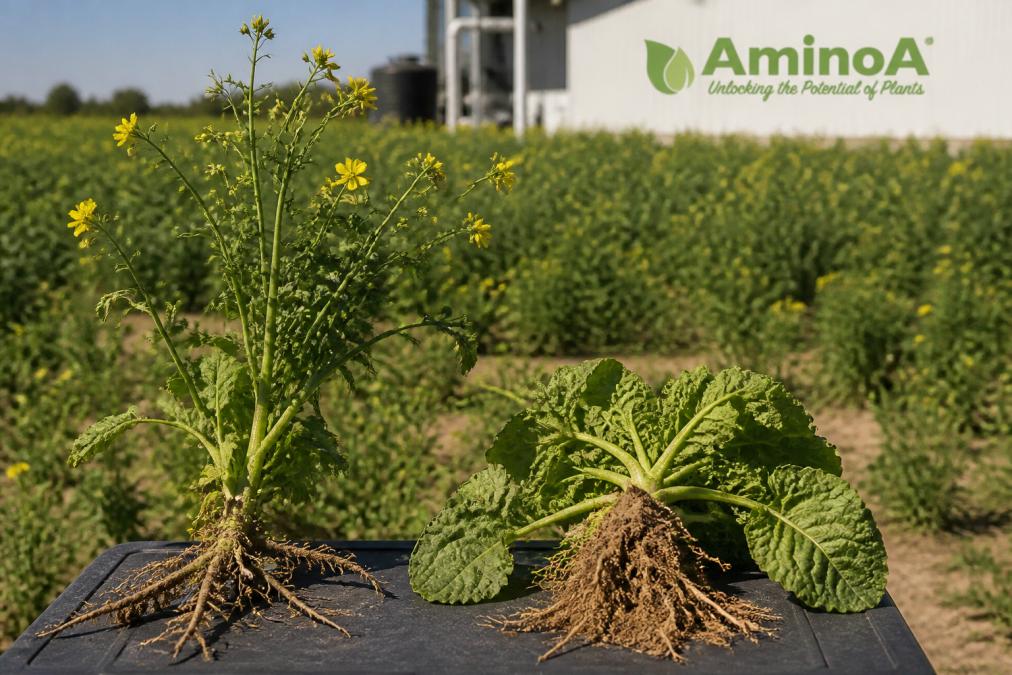
Foliar feeding applies liquid nutrients or biostimulants directly to crop leaves, where they are absorbed through the cuticle and stomata and translocated into plant tissue. Under stress, root uptake breaks down. Heat, drought, waterlogging, and agrochemical phytotoxicity all compromise root function. Foliar application bypasses this bottleneck entirely.
This is the core argument for foliar feeding as a stress management tool. It is not a replacement for soil nutrition; it is a rapid-response mechanism that keeps metabolic processes running when the primary supply route is compromised.
Foliar vs Soil Nutrition Comparison: Which Reaches Crops Faster?
Foliar nutrition reaches plant tissue significantly faster than soil-applied nutrition under stress conditions. Soil-applied nutrients follow a predictable pathway: dissolution in soil water, root absorption, xylem transport, and distribution to metabolically active tissue. Under stress, each step slows or stops. Foliar application sidesteps all of this. Nutrients applied to the leaf surface can enter plant tissue within hours of application.
Soil application falls short in three specific scenarios: acute drought periods where soil moisture is too low for root uptake, waterlogged conditions where anaerobic root environments prevent active nutrient absorption, and post-phytotoxicity recovery where root damage temporarily reduces uptake capacity. In each situation, foliar feeding provides a delivery route that soil application cannot match for speed. However, foliar nutrition cannot compensate for fundamental soil nutrient deficiencies over the long term. The two approaches work best in combination.
According to guidance from AHDB's crop nutrition resources, maximising nutrient use efficiency requires matching application method to crop growth stage and environmental conditions, a principle that supports targeted foliar intervention at defined stress windows.
Benefits of Amino Acid Biostimulants for Stress Resistance
Amino acid biostimulants are the most biologically active category within foliar nutrition. Amino acids are the building blocks of proteins, enzymes, and plant hormones. When a crop absorbs L-α amino acids directly through foliar application, it can redirect metabolic energy away from synthesising these compounds from scratch and towards maintaining critical functions under stress.
Protein synthesis is one of the most energy-intensive processes in plant metabolism. Under heat or drought stress, when photosynthetic capacity is already reduced, the energy saved by supplying pre-formed amino acids can make a meaningful difference to yield. Amino acid biostimulants also improve the uptake and translocation of co-applied nutrients, support root development during recovery phases, and enhance the efficacy of fungicide programmes when tank-mixed appropriately.
L-α Amino Acids vs Seaweed and Mineral-Based Biostimulants
L-α amino acids are produced through enzymatic hydrolysis of plant or animal protein. The enzymatic process preserves the L-form configuration, the biologically active form that plants can absorb and use directly. Products containing D-form amino acids, a common outcome of chemical hydrolysis, offer significantly reduced bioactivity.
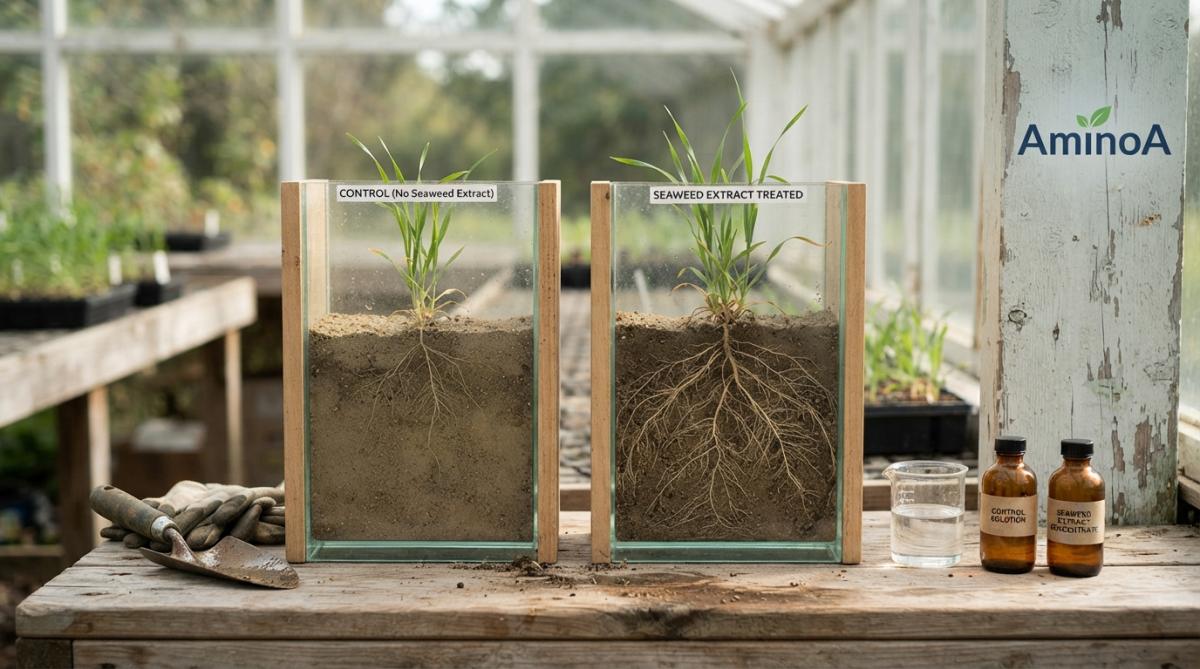
Seaweed-based biostimulants contain cytokinins, auxins, and betaines that stimulate plant growth and recovery. They deliver broad nutritional support and produce rapid visual improvements in stressed crops.
Mineral-based biostimulants provide specific nutrient elements, typically micronutrients like iron, zinc, or manganese, in a foliar-available form. They address specific deficiencies but do not provide the broad metabolic support of amino acid or seaweed products.
For acute stress resistance, L-α amino acid products offer the most direct mechanism. For broad nutritional recovery and visual response, seaweed-mineral combinations perform well. For targeted micronutrient correction, mineral-based products are the right tool.
Comparing Foliar Feeding Products for Stress Resistance
The foliar biostimulant market offers growers several distinct product categories, each with a different mechanism, strength profile, and optimal use case.
| Product | Active Mechanism | Primary Stress Coverage | Best For | Fungicide Uplift |
|---|---|---|---|---|
| AminoA FLO | L-α amino acids and peptides | Heat, drought, cold, phytotoxicity | Broad-spectrum stress relief across major crops | Yes |
| Seaweed-mineral combinations | Hormonal signalling + mineral nutrition | Drought, general stress recovery | Rapid visual recovery, broad nutrition | No |
| Heat and drought specialists | Cellular protection, water balance | Heat and drought only | Potatoes, sugar beet in dry seasons | No |
AminoA FLO: Dual-Action Stress Relief and Fungicide Uplift
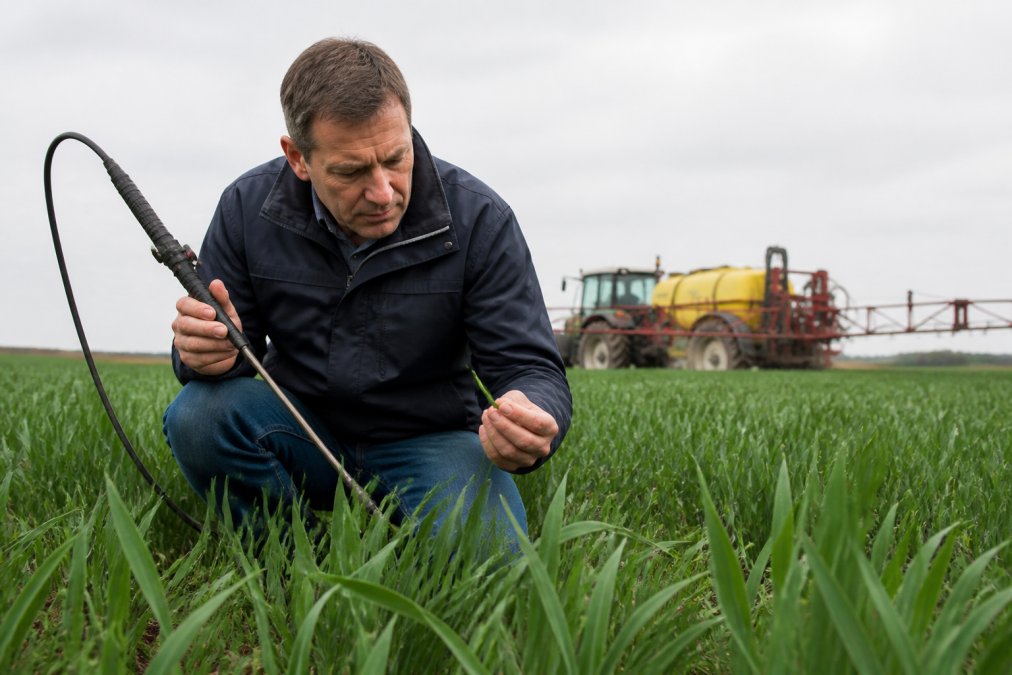
AminoA FLO is a liquid amino acid biostimulant formulated from highly concentrated, biologically active L-α amino acids and peptides. Its design addresses two distinct agronomic needs simultaneously: alleviating crop stress from environmental factors and enhancing the uptake and efficacy of fungicides when tank-mixed.
Velcourt trials demonstrate this approach's commercial validation. Adding AminoA FLO to reduced fungicide rates maintained yields and improved green leaf area in winter wheat. This suggests that the amino acid matrix not only supports crop resilience but actively improves fungicide performance, a genuine agronomic and economic argument for inclusion in a programme.
AminoA FLO is suitable for integration across major crops and backed by AminoA's ten years of UK market experience. Every essential amino acid is present in the L-form, produced through enzymatic hydrolysis to ensure maximum bioactivity.
Pros: Dual-action stress relief and fungicide uplift; L-α formulation for direct plant absorption; compatible with tank mixes; backed by UK trial data.
Cons: Pricing requires direct contact; application rates and timings benefit from agronomist consultation.
Seaweed-Mineral Combinations: Broad Nutrition, Rapid Visual Response
Seaweed-mineral combination products combine mineral nutrition with hormonal signalling compounds naturally present in seaweed extracts, primarily cytokinins and betaines, to stimulate plant recovery and growth. The key strength is speed of visual response. Stressed crops show visible greening and recovery relatively quickly.
The limitation is mechanism depth. Seaweed-mineral products support recovery and stimulate growth, but do not provide the direct metabolic building blocks that L-α amino acids supply. Under acute stress, amino acid products have more targeted action.
Pros: Fast-acting with visible improvements; combines nutritional support with biostimulant properties; suitable for many crops.
Cons: Mechanism is less targeted than L-α amino acids for acute stress; optimal timing may require technical consultation.
Heat and Drought Specialists: Targeted but Narrower Coverage
Some foliar products are designed specifically for heat and drought stress, activating natural cellular defence mechanisms and helping crops manage water balance more effectively. Products in this category suit crops like potatoes and sugar beet in dry seasons.
The limitation is specificity. A heat and drought specialist performs well within its defined stress window but offers narrower coverage across the full range of abiotic stressors, cold, phytotoxicity, waterlogging, that a broader amino acid programme addresses.
Pros: Dual action against heat and drought; maintains critical growth functions; some products include forecasting tools for optimal timing.
Cons: Narrower stress coverage; does not provide fungicide uplift.
Foliar Feeding Application Best Practices for Maximum Efficacy
Getting the application right is where the agronomic value of foliar feeding is either captured or lost. The best product applied at the wrong time, in the wrong conditions, or in an incompatible tank mix will underperform consistently.
Timing, Temperature, and Tank-Mix Compatibility
Timing is the single most important variable. Foliar biostimulants should be applied in advance of a forecast stress event where possible, not after damage occurs. Applying an amino acid biostimulant 24-48 hours before a predicted heat event gives the crop time to absorb and mobilise the active compounds before metabolic stress begins.
Temperature and humidity directly affect cuticle permeability and uptake rate. The optimal application window is typically early morning or evening, when temperatures are moderate and relative humidity is higher. Avoid application in full sun above 25°C, as rapid drying reduces absorption time and increases leaf scorch risk.
Key application conditions:
- Temperature: 10-20°C at time of application
- Relative humidity: above 60%
- Wind speed: below 3 metres per second
- Avoid application immediately before rain (within 4 hours)
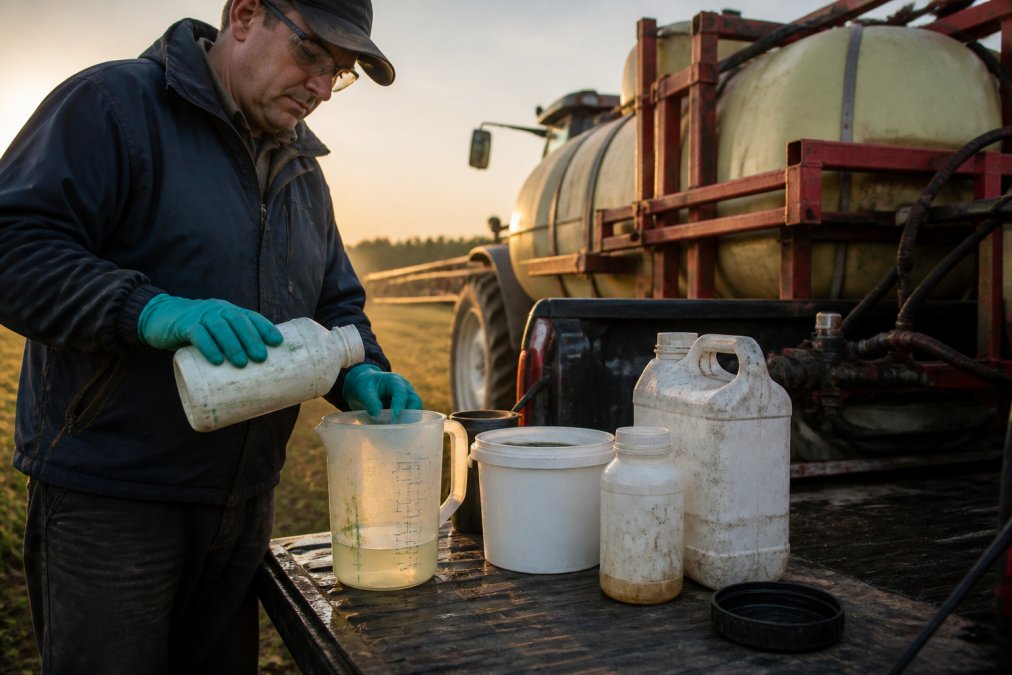
Tank-mix compatibility requires verification before each new combination. While AminoA FLO is formulated for compatibility with standard fungicides and other foliar products, growers should conduct a small-scale jar test before field application if concerned. Mixing order matters: always add products to water in the correct sequence, typically wetter first, then liquid formulations, then powders.
As outlined in guidance from The Agriculture and Horticulture Development Board's agronomy resources, timing foliar applications to match crop growth stage and environmental conditions is fundamental to achieving consistent results.
Pros, Cons, and ROI: Is Foliar Feeding Worth the Cost?
The case for foliar feeding: Delivers nutrition directly to plant tissue when root uptake is compromised; provides measurable protection against yield loss during acute stress events; L-α amino acid products can enhance fungicide efficacy, potentially reducing total fungicide spend needed to maintain yield; Velcourt trial data demonstrates that AminoA FLO maintained yields at reduced fungicide rates in winter wheat, a direct economic argument.
The case against: Foliar feeding does not replace soil nutrition and should not be budgeted as a substitute; cost per hectare is higher than standard NPK applications on a per-application basis; results are most pronounced during stress years; application timing requires agronomic discipline.
The ROI calculation shifts significantly depending on crop value and stress frequency. For high-value horticultural crops, the margin for stress-induced quality loss is narrow, and the cost-benefit of foliar protection is straightforward. For arable crops, the calculation depends on seasonal conditions. Many agronomists find that the most defensible economic case for foliar feeding in arable systems is built around the fungicide uplift mechanism: if an amino acid biostimulant allows a reduction in fungicide rate while maintaining efficacy, the cost of the biostimulant is partially offset by fungicide savings.
According to research published by the British Society of Plant Pathology, plant stress responses and pathogen susceptibility are closely linked, a finding that reinforces the agronomic logic of combining stress management with fungicide programmes.
Which Approach Should You Choose?
The right foliar feeding strategy depends on three factors: your crop type, your primary stress risk, and how you want to integrate foliar nutrition into your existing spray programme.
Here is a practical framework:
| Scenario | Recommended Approach | Reason |
|---|---|---|
| Mixed arable, variable stress risk | AminoA FLO or equivalent L-α amino acid product | Broadest stress coverage; fungicide uplift adds programme value |
| High-value horticulture (strawberries, tomatoes) | L-α amino acid biostimulant, applied preventatively | Narrow quality margins justify proactive protection |
| Crops with specific heat/drought risk (potatoes, sugar beet) | Heat/drought specialist or L-α amino acid product | Both address primary stress type |
| Organic certified systems | Certified L-α amino acid biostimulant | Must verify certification status before purchase |
| Rapid visual recovery needed | Seaweed-mineral combination | Fastest visible response; broad nutritional support |
For most conventional arable systems, a product with dual-action stress relief and fungicide uplift, applied at defined stress windows rather than on a fixed calendar, delivers the best combination of agronomic and economic value.
If you are managing an organic system, verify that any biostimulant carries appropriate certification before including it in your programme. AminoA's natural L-α amino acid formulation, produced through enzymatic hydrolysis, is designed to support sustainable crop management, but growers should always confirm compliance with their specific certification body's requirements.
For further context on the regulatory framework governing biostimulants, the UK government's guidance on plant biostimulants regulation provides the relevant standards that products must meet for use in registered crop production systems.
Protecting yield under stress is one of the hardest problems in modern crop production. The evidence for foliar feeding as a targeted stress management tool is solid, particularly for L-α amino acid biostimulants that provide direct metabolic support and enhance co-applied fungicide performance. AminoA FLO is built specifically for this dual role, backed by Velcourt trial data demonstrating yield maintenance at reduced fungicide rates in winter wheat. For agronomists and growers who want to build a more resilient spray programme without adding complexity, it is a well-evidenced starting point. Subscribe to the AminoA newsletter for seasonal application guidance, trial updates, and agronomic insights delivered directly to your inbox.
Frequently Asked Questions
How does foliar feeding help plants recover from drought stress?
During drought, root uptake slows because soil moisture and nutrient mobility both drop. Foliar feeding bypasses this bottleneck by delivering nutrients and biostimulants directly through the leaf surface. L-α amino acid products such as AminoA FLO supply ready-to-use nitrogen and osmoprotectants that support cellular water balance, helping crops maintain photosynthesis and reduce stress-related yield loss without depending on root-zone conditions that drought has already compromised.
Is foliar application more effective than soil fertilisation for nutrient uptake during stress?
For immediate stress relief, foliar feeding is generally faster. Leaf absorption of soluble nutrients and amino acids can occur within hours, whereas soil-applied nutrients must dissolve, move through the profile, and be taken up via roots, a process that heat, drought, or waterlogging can slow considerably. Soil nutrition remains essential for building long-term reserves, so the two approaches work best together rather than as direct replacements for each other.
What are the limitations of foliar feeding during heat stress?
High temperatures increase the risk of leaf scorch if products are applied in direct sunlight or when leaves are under moisture stress. Stomata close during peak heat, reducing absorption. Application should be timed for early morning or evening when temperatures are below 25°C and stomata are open. Always check tank-mix compatibility and follow label guidance on dilution rates. Amino acid biostimulants with low salt index, such as those produced by enzymatic hydrolysis, carry a lower scorch risk than high-salt mineral formulations.
Can amino acid biostimulants improve foliar feeding efficacy?
Yes. L-α amino acids act as natural chelating agents and surfactants, improving the absorption of co-applied nutrients and crop protection products. Velcourt trials found that adding AminoA FLO to reduced fungicide rates maintained winter wheat yields and improved green leaf area, suggesting the amino acids enhanced fungicide uptake rather than simply substituting for it. This dual effect, stress relief plus improved co-product performance, is a key reason amino acid biostimulants are increasingly included in foliar programmes.
When is the best time to apply foliar nutrients to stressed crops?
Apply during early morning or early evening when temperatures are cooler, humidity is higher, and stomata are open. Avoid application immediately before rain, which washes product off before absorption is complete, and avoid periods of frost. For stress prevention rather than recovery, timing applications ahead of a forecast stress event, such as a predicted dry spell or temperature spike, gives the crop the best chance to build resilience before damage occurs.
This article was written using GrandRanker