 ultimate-guide
How to Reduce Agrochemical Reliance: A Practical Guide
Table of Contents
- Why Reducing Agrochemical Reliance Matters for Your Farm
- Integrated Pest Management Strategies to Cut Chemical Use
- Benefits of Amino Acid Biostimulants in Your Crop Programme
- Organic Soil Conditioners Review: Building Soil Resilience
- Improving Soil Health for Sustainable Yields
- Practical Steps to Phase Out Agrochemicals Without Yield Loss
- Monitoring Progress and Adjusting Your Approach
- References and Further Reading
- Frequently Asked Questions
Why Reducing Agrochemical Reliance Matters for Your Farm
Reducing agrochemical reliance isn't just an environmental choice, it's a business decision that affects your bottom line, soil health, and long-term productivity. Many farmers find that over-reliance on synthetic inputs creates a cycle: higher chemical costs, soil degradation, and diminishing returns on investment. The alternative is a structured approach that maintains yields while cutting unnecessary chemical dependency.
At AminoA, we work with growers across the arable and horticultural sectors who've discovered that strategic reduction of agrochemicals, paired with targeted biostimulants and soil conditioning, actually improves profitability and resilience. This guide walks you through practical, evidence-based strategies to transition away from conventional chemical programmes without sacrificing performance.
Integrated Pest Management Strategies to Cut Chemical Use
Integrated Pest Management (IPM) replaces blanket chemical applications with targeted interventions based on actual pest pressure and crop thresholds. Rather than spraying on a calendar, you monitor populations, use cultural controls first, and apply chemicals only when economic thresholds are reached.
The shift requires discipline. You'll need scouting protocols, record-keeping, and the confidence to leave some pest pressure unsprayed. A common mistake is treating minor infestations as emergencies. In practice, a 5% leaf damage threshold on many crops causes no yield loss, yet many growers spray at 1% out of habit.
IPM typically involves crop rotation, resistant varieties, physical barriers, and targeted biological controls before any chemical intervention. Establishing this system takes a season or two to calibrate, but teams that commit to it report both reduced chemical costs and improved crop health. The real difference between successful IPM and failed attempts comes down to monitoring consistency and willingness to tolerate minor pest presence.
Benefits of Amino Acid Biostimulants in Your Crop Programme
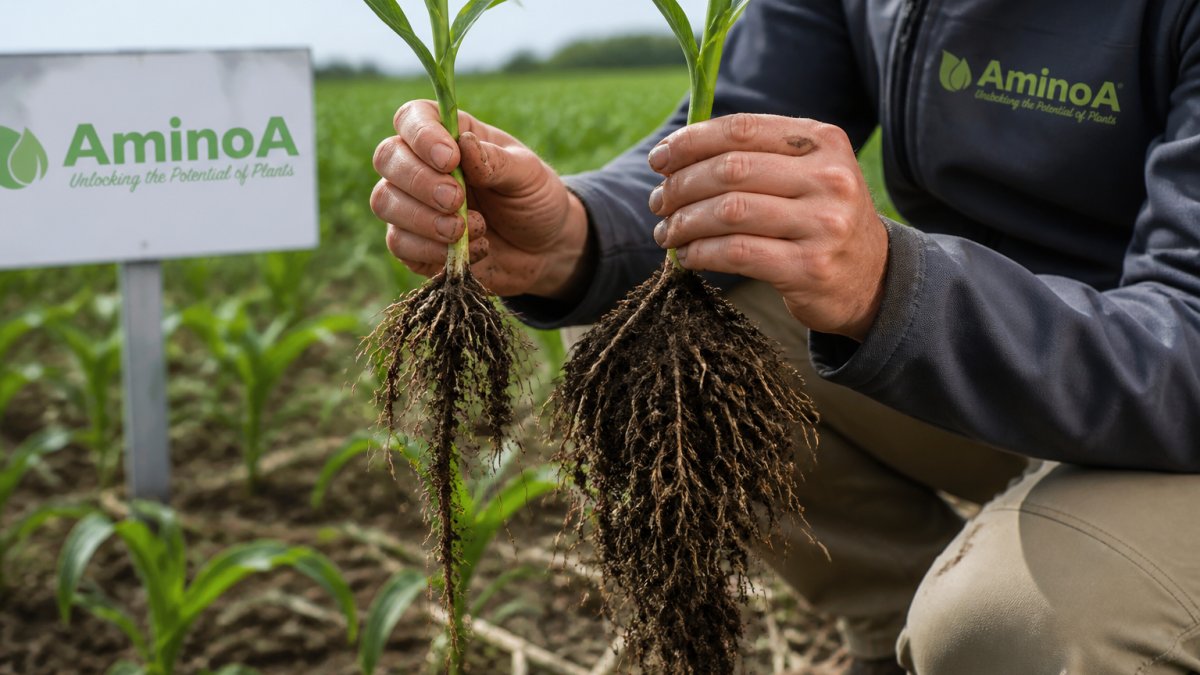
Amino acid biostimulants work by enhancing root development, improving nutrient uptake efficiency, and increasing plant stress tolerance. When crops can access nutrients more effectively and resist environmental stress, they require fewer rescue applications of fungicides and insecticides. This is where reducing agrochemical reliance becomes practical rather than theoretical.
AminoA's L-α amino acid formulations stimulate blossom and fruit formation whilst boosting resistance to cold, heat, drought, and agrochemical phytotoxicity. The result is a crop that performs better under stress, meaning fewer corrective sprays. Velcourt trials demonstrated this principle: adding AminoA FLO to reduced fungicide rates maintained yields and improved green leaf area in winter wheat compared to untreated controls.
The mechanism is straightforward: stronger plants with better root systems and nutrient status are naturally more resilient. They recover faster from pest pressure, tolerate environmental stress without yield loss, and require fewer inputs overall. This is the foundation of reducing agrochemical reliance without gambling with your harvest.
Organic Soil Conditioners Review: Building Soil Resilience
Healthy soil is the foundation of any reduction strategy. Soil conditioners, including composts, biochar, and organic matter amendments, improve water retention, microbial activity, and nutrient availability. Soils with high organic matter and active microbial communities suppress disease naturally and require fewer fungicide applications.
Building soil resilience is a multi-year commitment. You won't see dramatic changes in year one, but by year three, soils managed for organic matter typically show measurable reductions in disease pressure and improved yield stability. The investment in soil conditioning pays dividends through reduced chemical reliance and more consistent performance.
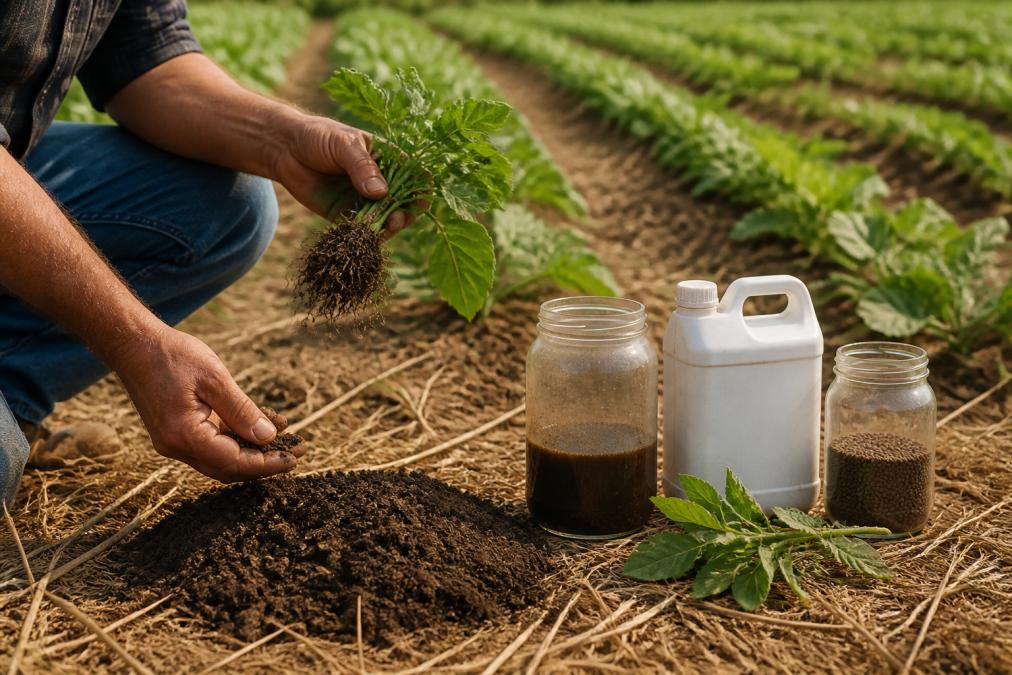
Choosing the right conditioner depends on your soil type, crop, and budget. Compost-based products work well for most situations and integrate easily into existing systems. Biochar is more expensive but offers longer-term benefits for carbon sequestration and microbial habitat. Many growers use a combination: annual compost applications for immediate organic matter, plus biochar for long-term soil structure improvement.
Improving Soil Health for Sustainable Yields
Sustainable yields depend on soil biology, not just chemical inputs. Soils with active microbial communities suppress pathogens, improve nutrient cycling, and increase water-holding capacity, all of which reduce the need for agrochemicals. Building this biological activity requires consistent organic matter inputs and minimising soil disturbance.
Cover crops are one of the most effective tools for improving soil health. A winter cover crop cycle adds organic matter, suppresses weeds, and breaks pest cycles without chemical input. The labour and seed costs are modest compared to the reduction in spring herbicide and insecticide applications. Teams that have adopted cover cropping report both improved soil structure and lower seasonal chemical costs.
Reducing agrochemical reliance whilst maintaining sustainable yields also means adjusting your expectations for perfection. A crop with minor cosmetic damage but excellent internal quality often outperforms a chemically-perfect crop with depleted soil and reduced resilience. This mental shift, from cosmetic perfection to functional performance, is where many growers find their breakthrough. agricultural crop monitoring.
Practical Steps to Phase Out Agrochemicals Without Yield Loss

Phasing out agrochemicals requires a structured plan, not a sudden switch. Start by identifying which chemicals deliver the most value and which are applied out of habit. Many growers find that fungicide applications on low-disease-pressure crops, or insecticide applications below economic thresholds, are the easiest cuts to make.
Year One: Implement IPM scouting, establish baseline pest and disease records, and apply biostimulants alongside your current chemical programme. This gives you data without risk. You'll likely discover that certain applications aren't necessary.
Year Two: Begin reducing rates on chemicals where scouting shows low pressure. Add organic soil conditioners and cover crops. Continue biostimulant use, the combination of better soil, resistant plants, and targeted monitoring typically allows significant rate reductions.
Year Three and beyond: Fine-tune your system based on two years of data. Many growers stabilise at 40-60% lower chemical use than their starting point, with maintained or improved yields. This is where the ROI becomes apparent: lower input costs, healthier soil, and more resilient crops.
The key is patience and data. Rushing the transition risks a poor season that undermines confidence in the system. Moving deliberately, with records, allows you to prove to yourself that reducing agrochemical reliance works on your specific operation.
Monitoring Progress and Adjusting Your Approach
Tracking the right metrics is essential. Record chemical applications by product, rate, and date. Monitor soil health annually, organic matter, microbial counts, and infiltration rates all indicate progress. Crop performance should be measured not just by yield, but by disease incidence, pest pressure, and post-harvest quality.
Many growers use simple spreadsheets or farm management software to log this data. The investment in record-keeping pays off when you can show that reducing agrochemical reliance by 40% maintained yield whilst cutting input costs. This data also helps you identify which strategies work best on your soil and climate.
Adjust annually based on results. If a particular biostimulant doesn't deliver expected benefits in your system, try alternatives. If a cover crop fails to establish, choose a different species. The goal is continuous improvement, not perfection from day one. Teams that treat reducing agrochemical reliance as an ongoing experiment rather than a one-time change typically achieve the best long-term results.
Reducing agrochemical reliance is achievable without sacrificing yields, but it requires a shift from reactive chemical applications to proactive soil and crop management. The strategies outlined here, integrated pest management, biostimulant support, soil conditioning, and careful monitoring, work together to build a more resilient system that needs fewer inputs over time.
AminoA's amino acid biostimulants are designed specifically to support this transition. Our L-α amino acids enhance crop resilience and nutrient efficiency, meaning your plants perform better under stress and require fewer corrective applications. Combined with improved soil health and targeted pest management, biostimulants become the foundation of a lower-chemical farming system that's both profitable and sustainable.
Ready to explore how amino acid biostimulants fit into your reduction strategy? Subscribe to our Newsletter to receive practical guidance on phasing out agrochemicals, soil health updates, and trial data from farms like yours.
| Strategy | Primary Benefit | Implementation Timeline | Best For |
|---|---|---|---|
| Integrated Pest Management | Eliminates unnecessary sprays | 1-2 seasons to establish | All crop types |
| Amino Acid Biostimulants | Enhanced stress tolerance and nutrient uptake | Immediate (season 1) | High-value and conventional crops |
| Organic Soil Conditioners | Long-term disease suppression and soil structure | 2-3 years for full effect | Established operations |
| Cover Crops | Weed suppression and organic matter addition | Annual cycle | Arable rotations |
| Scouting and Monitoring | Data-driven decision making | Ongoing (season 1 onwards) | All systems |
References and Further Reading
According to the UK government's guidance on sustainable farming practices, reducing reliance on synthetic inputs whilst maintaining productivity is a core objective of environmental stewardship schemes. This aligns with the practical framework outlined above.
Research from the University of Bath's agricultural research programme has documented the effectiveness of amino acid biostimulants in improving crop resilience under stress conditions, supporting the rationale for their use in reduced-chemical systems.
For growers transitioning to organic certification, the Soil Association's organic standards provide detailed requirements for approved biostimulants and soil amendments, ensuring compliance whilst reducing agrochemical reliance.
Frequently Asked Questions
How quickly can I reduce agrochemical reliance without losing yields?
Transition timescales vary based on your current system, soil condition, and crop type. Most growers see stable yields within 12-18 months when combining integrated pest management, amino acid biostimulants, and soil health improvements. Start by reducing application rates by 20-30% on lower-risk crops, monitor results closely, and scale the approach across your rotation. Field trials, such as the Velcourt wheat trial using reduced fungicide rates alongside amino acid support, demonstrate maintained yields during transition.
What are the main benefits of amino acid biostimulants for reducing chemical dependency?
Amino acid biostimulants enhance crop resilience to stress, improve root and leaf development, and strengthen natural disease resistance. This means crops can tolerate lower agrochemical rates because they're physiologically stronger. L-α amino acids also improve nutrient uptake efficiency, reducing the need for high fertiliser applications. When integrated with pest management and soil conditioning, they create a system where crops need fewer synthetic inputs to achieve competitive yields and quality.
Is my organic-certified farm allowed to use amino acid biostimulants?
Most L-α amino acid biostimulants derived from natural enzymatic hydrolysis are approved for organic production under UK organic standards (managed by certification bodies like Soil Association). Always verify your specific product's certification status with your certifier before use. AminoA products are designed for certified organic systems, but compliance depends on your certifier's requirements and the product's approval status on their permitted inputs list. Contact your certifier to confirm before implementation.
How does improving soil health actually reduce my need for agrochemicals?
Healthy soil contains active microbial communities that suppress soil-borne diseases, improve nutrient availability, and enhance water retention. This means crops are naturally more resilient and require fewer fungicide, insecticide, and fertiliser applications. Organic soil conditioners, crop rotation, and reduced tillage build soil structure and biology. When combined with biostimulants that support root colonisation by beneficial microbes, you create a self-sustaining system where agrochemical inputs become supplementary rather than foundational.
This article was written using GrandRanker
Frequently Asked Questions
Q: How quickly can I reduce agrochemical reliance without losing yields?
A: Transition timescales vary based on your current system, soil condition, and crop type. Most growers see stable yields within 12-18 months when combining integrated pest management, amino acid biostimulants, and soil health improvements. Start by reducing application rates by 20-30% on lower-risk crops, monitor results closely, and scale the approach across your rotation. Field trials, such as the Velcourt wheat trial using reduced fungicide rates alongside amino acid support, demonstrate maintained yields during transition.
Q: What are the main benefits of amino acid biostimulants for reducing chemical dependency?
A: Amino acid biostimulants enhance crop resilience to stress, improve root and leaf development, and strengthen natural disease resistance. This means crops can tolerate lower agrochemical rates because they're physiologically stronger. L-α amino acids also improve nutrient uptake efficiency, reducing the need for high fertiliser applications. When integrated with pest management and soil conditioning, they create a system where crops need fewer synthetic inputs to achieve competitive yields and quality.
Q: Is my organic-certified farm allowed to use amino acid biostimulants?
A: Most L-α amino acid biostimulants derived from natural enzymatic hydrolysis are approved for organic production under UK organic standards (managed by certification bodies like Soil Association). Always verify your specific product's certification status with your certifier before use. AminoA products are designed for certified organic systems, but compliance depends on your certifier's requirements and the product's approval status on their permitted inputs list. Contact your certifier to confirm before implementation.
Q: How does improving soil health actually reduce my need for agrochemicals?
A: Healthy soil contains active microbial communities that suppress soil-borne diseases, improve nutrient availability, and enhance water retention. This means crops are naturally more resilient and require fewer fungicide, insecticide, and fertiliser applications. Organic soil conditioners, crop rotation, and reduced tillage build soil structure and biology. When combined with biostimulants that support root colonisation by beneficial microbes, you create a self-sustaining system where agrochemical inputs become supplementary rather than foundational.